


Quran Translations in Hungarian: A Brief History
IQNA – With the growing number of Muslims in Hungary, due to both migration and rising interest in Islam among the country’s people, the need for translation of Islamic texts into the official language has increased.

According to the Muslimsaroundtheworld website, Islam entered Hungary in the late 9th century, when Muslims constituted some of the tribes that conquered the land.
Between the 10th and 13th centuries, the number of Muslims who settled in what is now called Hungary rose. But it was in the 16th and 17th century that Islam’s influence there significantly grew during the rule of the Ottoman Empire.
The first Muslim author who has talked about a Muslim community in Hungary is Yaqut Hamawi (1229-1179) who, in his book Mu’jam al-Buldan, has referred to an Islamic seminary students from Hungary studying in Aleppo.
Hamawi quotes him as saying that there were 30 Muslim-populated villages in Hungary then.
In recent decades, Hungary has attracted some Muslims from Bosnia and Herzegovina, Albania and Turkey. Currently, there are some 30,000 Muslims living in Hungary, most of whom are originally Arab or Turk. But the number of Hungarian Muslim converts is also on the rise.
The first translation of the entire Quran into Hungarian was completed in 1831. The 516-page book was a translation from Latin and other European languages. The translators were Georgi Gadion and Amra Bujnai Shidlmire.
Read More:
The second Hungarian translation was done by Istuan Zokolai based on a German version. Published in 1854 and reprinted two years later, this rendering for a long time remained the main source for studying the Quran in Hungary.
In recent years, several Quran translations into Hungarian have been published that include one by Miha Alrui Balas. Published in two volumes in 1987 and reprinted in 1994, 1997, and 2001, it also includes Tafseer (commentary).
Suzana Halima Kays also translated the Quran into Hungarian. It was published in 2010 by a Turkish institute.
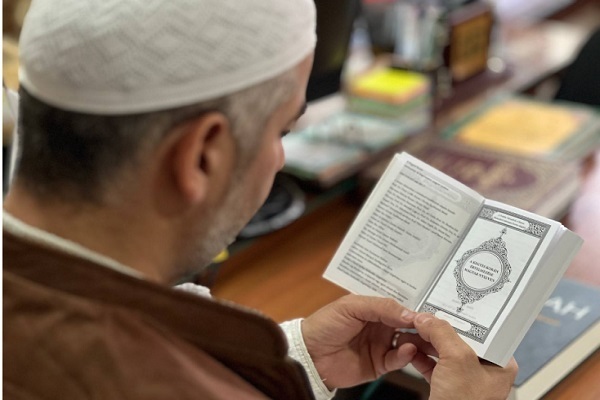
Another new Hungarian translation of Islam’s Holy Book is the one by Sheikh Abdel Rahman Mihalffy, the former president of the European Fatwa Council.
An Islamic Sharia graduate, he has also translated Nahj al-Balagha into Hungarian.
Read More:
He spent 30 years of his life in translating the Quran. While at first his main intention was material gain, the more he read and translated the Holy Book, the more it attracted him and made him contemplate its meanings. In the end, what he gained was embracing Islam, which he says is worth more than all the wealth in the world.
4321713
