


Analyst Highlights Uniqueness of Iranian Model in Field and Diplomacy
IQNA – A Lebanese writer and political analyst highlighted the uniqueness of the Iranian model of government in resisting the US pressure following the US-Israeli aggression on the country.
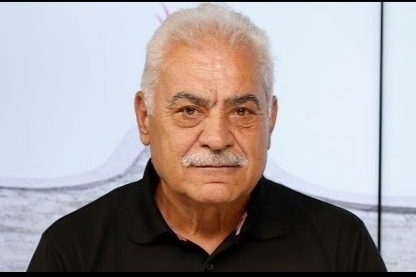
In an article, Mikhail Awad has discussed the situation regarding the US-Israeli war of aggression and the ongoing ceasefire:
Regarding the analysis of the declaration of the end of the war and its possible scenarios in the minds of Donald Trump and his team, not as a sovereign decision but as a declaration unsupported by reality, it should be said that this situation is a preliminary cover for the most dangerous stage, where the battle moves from the level of direct conflict to the space of encirclement. What is declared as the end is redefined in the field as a transitional stage: reducing the density of fire, establishing flexible lines of contact, and maintaining combat readiness at its highest levels.
Within this framework, the command enters into a complex battle management model: tactical redeployment of forces without disintegrating the strike structure, activating indirect pressure tools (economic/naval/information), and opening alternative conflict paths with lower costs and greater capabilities. The aim is not to withdraw from the scene of operations, but to reshape it in such a way as to allow for the control of the keys to escalation and de-escalation according to the exigencies of the moment.
Accordingly, this phase is managed with the logic of operational ambush: forces on standby, postponed engagements, and continuous reconnaissance awaiting a decisive opportunity. Consequently, what is announced is not the end of the battle, but an undeclared operational order that moves the war from open confrontation to more dangerous and painful levels for the people.
First: Analysis of the declaration of the “end of the war”; from diplomacy to field reality
In strategic analysis, the end of wars is not measured by statements, but by three decisive indicators: the withdrawal of troops, the consolidation of a formal agreement, and the de facto cessation of combat operations. The fact is that none of these have been achieved.
The declaration of a ceasefire as the “end of the war” is intended to avoid the limitations of the (US) constitution; In particular, the 60-day deadline that requires the US president to return to Congress has become a constitutional circumvention tool that gives the government the freedom to start a new war later.
The status quo therefore does not end the conflict, but rather creates the legal conditions for the end of one round and the beginning of a new one, giving the executive branch more leeway and delaying its response. Thus, the declaration of a ceasefire becomes a constitutional circumvention tool that keeps the initiative in the hands of the president and preserves the option of escalating the conflict if necessary.
Read More:
Most importantly, the “cessation of war” is not the opposite of war, but a phase in it; the presence of troops, the continued readiness, and the absence of guarantee arrangements are all indicators that the operational environment has not closed, but has been reconfigured at a quieter and more sustainable level. Accordingly, what we are witnessing is not so much the end of war as a transformation in its form: a transition from open confrontation to a “no war/no peace” situation, managed by sophisticated tools such as economic pressure, deterrent messages, and limited engagements, which allow the conflict to be prolonged and its direct costs to be reduced, while at the same time preserving the ability to explode at a calculated moment.
Second: How is the legal possibility of war again provided?
Declaring an end to war is a calculated strategic escape from the constitutional deadlock that limits the US president to conducting operations without congressional authorization for sixty days. This prevents the activation of oversight mechanisms and eliminates the need for the president to appear before Congress to report on the war. This leaves capabilities and buildups on standby, allowing for rapid military action. In fact, the time gap between the “declaration of the end” and the “actual withdrawal” becomes a tactical window in which one can plan for quick strikes without the cost of declaring a new war.
In such a situation, Trump seems to be counting on Iran’s reaction to the naval blockade; if Tehran takes military action in response to the US naval blockade – even if limited – it could be used as a pretext to start a new round of war.
Accordingly, the blockade is transformed from a tool of pressure into a calculated provocation aimed at producing a moment of conflict to re-legitimize the war.
Thus, the declaration of the end of the war is assessed not as an end point, but as part of a phased tactic to manage constitutional time and reopen the conflict under more favorable conditions.
Third: Why doesn’t Iran collapse under sanctions or blockade?
Sanctions, no matter how severe, have not in any major case been a means of overthrowing a political system, but rather a means of long-term pressure that further weakens societies. From Iraq to Syria to Libya to Cuba to Sudan, the same pattern has been repeated: the government remains, while the economy weakens and society decays, and radical change occurs only when a decisive external factor, such as direct military intervention or a violent internal explosion, intervenes.
Read More:
However, Iran is not a fragile, dependent economy, but a system historically adapted to pressure. Its social structure is based on ideological cohesion that gives it an extraordinary ability to bear the cost, where sanctions are transformed from a factor of disintegration into an element of internal mobilization. Moreover, the Iranian economy enjoys a high degree of resilience through relative self-sufficiency, the development of trade and financial bypass channels, and the construction of a parallel economy that limits the effects of isolation. At the same time, geography is a determining factor; a country with great strategic breadth and depth cannot be easily suffocated by traditional means of blockade.
The accumulated experience with sanctions since the victory of the Iranian revolution is also of great importance; in that the pressures have become a stimulus for the reconstruction of the system and its strengthening of its self-sufficiency capabilities in the areas of production, technology, and management. This experience has produced institutions and shock-absorbing mechanisms that make blockade an adaptable challenge, not an existential threat.
Accordingly, the function of the blockade in the American strategy is not as a tool to overthrow the government, but as a combined tool to erode it, aimed at increasing the cost of Iran's policies, slowing its growth, and creating a constant pressure environment that may lead it to make a calculated or sudden reaction. And this is what the United States has counted on to start a new war.
Fourth: The uniqueness of the Iranian model
The structure of the Iranian establishment is a smart combination, in such a way that it has the plurality of political currents (reformist/conservative) within the framework of the system, periodic renewal of the elite through regular elections and the supreme authority of the ruling authority (Wilayat-e-faqih) that resolves contradictions and prevents collapse.
This structure creates a controlled internal dynamic: political conflict without an existential threat to the system.
This clever engineering gives the Iranian system a rare feature: resilience within stability; instead of external pressures leading to an explosion of contradictions, these pressures are absorbed and recycled within the institutions, transforming them into energy for readjustment. In this sense, disciplined pluralism becomes a source of strength, because it allows for changes in policies and figures without compromising the essence of the system.
The strength of a system therefore lies not in its rigidity but in its ability to manage its contradictions without exploding. Systems that succeed in absorbing disagreement within their structure and provide mechanisms for continuous renewal in the presence of a decisive authority are more able to absorb external shocks. And this, fundamentally, explains Iran’s ability to hold together in the face of siege pressure, where external challenge becomes an element that strengthens internal cohesion rather than weakens it.
Conclusion
Modern wars do not end with a decision, but rather transform: from open military confrontation to low-intensity conflict, from direct confrontation to economic erosion, from field combat to long-term management of pressures and balances. Declaring an end, in this context, may simply be a tactical shift aimed at buying time, or circumventing legal constraints, or rearranging the instruments of conflict.
Counting on blockade as a means of overthrow is an approach of limited effectiveness, since experience has shown that regimes do not collapse under sanctions; rather, they adapt to them, while societies bear the greater cost. It is in such circumstances that the most important factor emerges: the structure of the internal system. The ability to manage contradictions, renew elites, and maintain the authority of the ruling class constitute essential elements in remaining resilient in the face of external pressure.
Accordingly, the current landscape cannot be read only with the logic of a "finished war" or an "ongoing war", but rather is placed within a more complex equation: an open conflict whose form is constantly changing, where the outcome is determined not by a quick victory, but by greater resilience and a higher ability to adapt and manage time.
4352154
