


Swedish Fatwa Council Criticizes Gov’t Stance on Islamophobia
IQNA – The Swedish Fatwa Council criticized the Stockholm government’s decision to drop the use of the term ‘Islamophobia’.
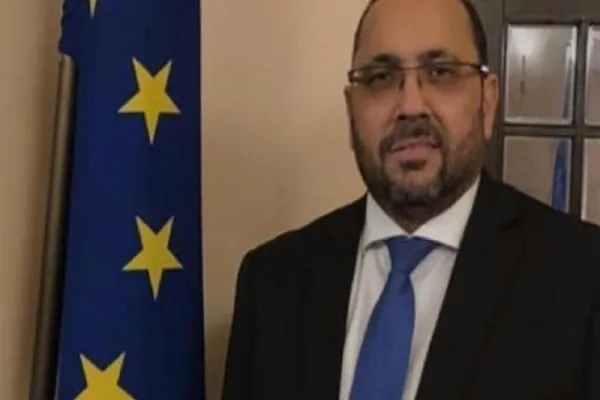
Secretary General of the Swedish Fatwa Council Dr. Hassan Musa, slammed as “problematic” the government’s move to abandon the term Islamophobia and replace it with the phrase "racism against Muslims".
He argued that efforts to cast doubt on the term or empty it of its meaning do not change the reality of the hatred and discrimination that Muslims face, the Roz El-Yousef website reported.
Musa’s comments came in the wake of the controversy over the Swedish government's stance and after Minister of Foreign Affairs Maria Malmer Steinergaard told parliament the word "phobia" may inspire irrational fears of individuals, rather than focusing on discrimination and racism against Muslims.
She also argued that the term could be confused with criticism of religions, something the government is not seeking to limit.
Denying the phenomenon of Islamophobia is not much different from denying any form of racism, Musa emphasized.
“The problem is not the term itself, but the everyday realities that Muslims experience in a number of European countries,” he stated.
Noting that Muslims are facing increasing forms of discrimination and prejudice, he said some are attacked because of their name, their wife's headscarf or their religious practices, while more than 1.5 billion Muslims have been reduced to the image of a “potential terrorist” and this cannot be considered freedom of expression, but rather “hidden hatred”.
Read More:
Musa said the designation of March 15 by the United Nations as the International Day to Combat Islamophobia indicates international recognition that hatred and discrimination against Muslims are a real phenomenon and not an illusion, as some claim.
Criticizing a “moral contradiction” in the treatment of freedom of expression issues, he explained that defending Muslims is sometimes presented as a threat to freedom of expression, while insults and inflammatory rhetoric are justified in the name of that same freedom.
The secretary general of the Swedish Fatwa Council said while it is a legitimate right to criticize ideas, demonizing an entire religion and making its followers the permanent target of fear and hatred cannot be considered simply intellectual criticism, emphasizing that it is a form of incitement and exclusion.
4353218
