


No Hajj from Gaza: Israel Blocks Pilgrims Again
IQNA – Human rights advocates and Palestinian officials are condemning a systematic denial of religious freedom, after Israeli border authorities again prevented thousands of Gazans from traveling to Saudi Arabia for the annual Hajj pilgrimage.
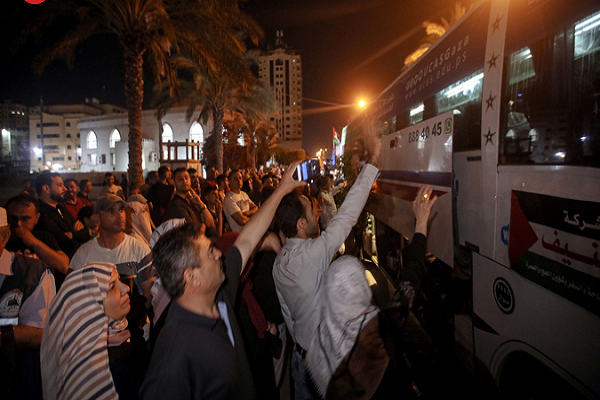
Thousands of Palestinians in Gaza have again been prevented from performing Hajj as Israel continues restricting movement through Gaza’s crossings, Anadolu reported.
As Muslims from around the world arrive in Saudi Arabia for the annual pilgrimage, many Palestinians in Gaza remain trapped by war, siege and displacement.
The closure of crossings and the humanitarian catastrophe resulting from the war have deprived thousands of Palestinians of undertaking one of Islam’s most important religious obligations.
Anadolu highlighted the story of Suad Hajjaj, a Palestinian woman whose years of preparation for Hajj ended in devastating loss.
Before the war, Hajjaj had registered to travel alongside her husband, brother and sister-in-law. But according to the report, her husband was later killed in an Israeli strike, her brother went missing, and their home was destroyed.
Now displaced at Yarmouk Stadium east of Gaza City, Hajjaj said the family savings intended for the pilgrimage disappeared beneath the rubble of their home. She escaped with her children after losing nearly everything.
As pilgrims gather in Mecca, Hajjaj said she had dreamed of completing central Hajj rituals, including circling the Kaaba and standing on Mount Arafat.
She said her loss extended beyond missing the pilgrimage itself, encompassing the death of her husband and the collapse of the life she had hoped to build.
The Gazan woman continues to hope that she will one day perform Hajj.
Read More:
Rami Abu Staitah, Director General of Hajj and Umrah at Gaza’s Ministry of Awqaf and Religious Affairs, said Palestine receives a Hajj quota of 6,600 pilgrims under agreements with Saudi Arabia, with Gaza traditionally receiving approximately 38 percent of those places.
According to Abu Staitah, 2,473 Palestinians from Gaza had passed the Hajj lottery system since 2013 and were waiting for their opportunity to travel.
He said 71 of them died before reaching the pilgrimage, either during Israeli attacks or from natural causes, while 2,402 remain unable to travel.
Abu Staitah described the ongoing denial of Hajj access as “a major setback” for Muslims in Gaza. Many citizens continue contacting the Ministry of Awqaf to ensure their names remain registered in the hope that travel eventually becomes possible.
Before the war, pilgrims from Gaza traveled through the Rafah crossing into Egypt before continuing to Cairo and onward to Saudi Arabia.
The process involved coordination between Palestinian religious authorities and Egyptian and Saudi officials.
However, the Israeli regime occupied and closed the Palestinian side of the Rafah crossing in May 2024, effectively cutting Gaza off from its only direct outlet to the outside world.
Although the crossing later reopened for limited medical cases, civilian travel remains heavily restricted.
Abu Staitah said that continuous efforts were underway with local and international actors to facilitate travel, but these attempts continue facing major obstacles due to crossing closures and severe restrictions.
For many Palestinians, the inability to perform Hajj represents not only a logistical obstacle but also another dimension of prolonged loss and uncertainty under the genocide and growing siege.
Source: palestinechronicle.com
