


NZ Muslim Leaders Say Current Threats Eclipse Past Crises
IQNA – Two decades after the post-9/11 era unleashed a torrent of abuse against local Muslims, New Zealand’s community leaders warn that New Zealand has entered an even more dangerous chapter
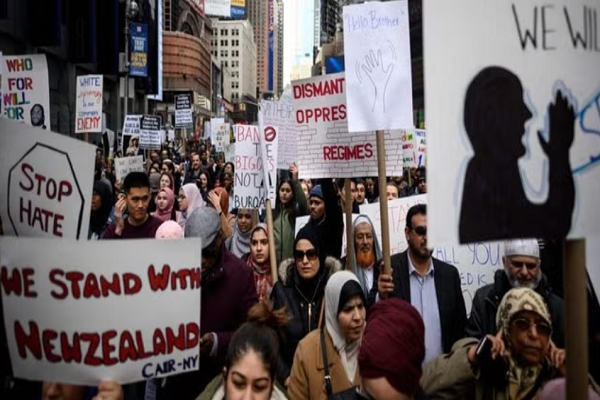
Muslim community leaders are warning that the country is facing the most dangerous environment with the worst anti-Muslim extremism in two decades.
Terror threats have surged, along with online radicalization and hate-fueled crime now eclipsing even the climate before the March 15 Christchurch mosque attacks.
Federation of Islamic Associations chairperson Abdur Razzaq said community leaders were preparing to urgently seek a meeting with the prime minister amid what he described as an "unprecedented" escalation in threats against mosques and Muslim communities nationwide.
"What we are seeing now is a level of threat - really tangible, incredible threats against mosques and Muslims in New Zealand - which we have never seen before," Razzaq said.
"Even before March 15 in 2019, this is a level that we haven't seen."
Razzaq said online hate targeting Muslims had "gone through the roof."
'The hate soup is boiling'
Community leaders said New Zealand is confronting a dangerous combination of factors: rising online extremism, increasingly younger radicalized offenders, imported far-right ideologies and language they fear is normalizing division.
Razzaq described the current climate as "a hate soup boiling over."
"The police and SIS are doing an amazing job," he said.
"But securitization alone cannot solve this. We need education, social cohesion programs and legislative safeguards before this gets worse."
He warned that extremist recruitment was increasingly targeting children and teenagers through gaming platforms, encrypted social media channels and the dark web.
"The age of those getting involved is getting lower and lower," he said.
"Young people are being radicalized online at a frightening rate."
Security agencies had repeatedly flagged the growth of violent right-wing extremism in New Zealand since the Christchurch terror attack in 2019.
Razzaq said the danger now lay not only in organized extremist groups, but in a broader ecosystem of unchecked hate speech and inflammatory rhetoric.
"When someone stands in the middle of Queen Street screaming vile abuse about Muslims or other faiths, and there's effectively no consequence, that creates conditions for violence," he said.
"That is not free speech. That is abusing free speech."
Read More:
Razzaq accused successive governments of allowing reforms to stall, particularly around hate crime legislation, online extremism monitoring and social cohesion initiatives.
"The Royal Commission made it clear that social cohesion is central to New Zealand's national security," he said.
"But funding has disappeared. Programs have been stopped. Some recommendations have simply stalled."
The Minister responsible for the GCSB and NZSIS Chris Penk said the current national terrorism threat level remained at "possible".
"The threat level is continually assessed by NZSIS along with its partners, and can change at any time in response to the intelligence picture in New Zealand and overseas events.''
Penk said the NZSIS publishes an annual Threat Environment Report to provide the public with information on the national security threats facing New Zealand, drawing on intelligence insights and real-world case studies.
''The most recent 2025 Threat Environment Report does not identify any one ideology as presenting a greater current threat than others," he said.
"The government acknowledges that members of the Muslim community continue to carry the trauma and impact of the 2019 Christchurch terrorist attacks, and community experiences are important to acknowledge and understand. The NZSIS engages regularly with faith based and ethnic communities to hear their concerns.''
"Since the 2019 Christchurch terrorist attacks, the NZSIS has made significant changes to its operations, including strengthening how it works with New Zealand Police, speaking more openly about national security threats, and engaging with a wide range of communities, including the Muslim community.
"Ministers and officials across a range of government agencies also regularly engage with community groups and associations, including the Federation of Islamic Associations of New Zealand.''
Read More:
Penk said the government continued to support social cohesion initiatives, including through the Peace and Harmony Accords and the Safer Communities Fund, which supported security upgrades and arrangements at places where at-risk communities gather.
"While initially established as a time-limited one-to-three-year fund, the Safer Communities Fund has received two further $5 million allocations in 2024/25 and 2025/26 in recognition of ongoing community concerns.''
"The public also have an important role to play in keeping all our communities safe. If you see something of concern then report it to police or NZSIS."
'It's not just about funding' – PM
Prime Minister Christopher Luxon said he had seen no intelligence suggesting an increased threat to New Zealand's Muslim community.
He said the government continued to work closely with Muslim communities across the country and met with leaders regularly.
"We have very good relationships with the Muslim community. We meet with them regularly. It's one of the engagements that we do regularly, as you'd expect us to do."
He said the government had implemented all recommendations from the Royal Commission of Inquiry into the Christchurch mosque attacks and highlighted ongoing investment in community support initiatives.
"I'm actually proud of the actual work that we're doing with the Muslim community, and other communities for that matter," Luxon said.
He pointed to the Harmony Accord as an example of efforts to strengthen relationships between government and ethnic and faith communities.
"We've got money and investment going in to those communities to make sure they feel safe and supported."
Read More:
The comments come after FIANZ warned there had been no dedicated funding for social cohesion programs since 2023, describing the investment as critical to preventing racism and division in New Zealand.
Luxon said social cohesion required a broader approach than government spending alone.
"It's not just about funding, essentially. That's an all-of-task, all-of-government decision, all-of-community decision," he said.
"Social cohesion is incumbent on all of us from the grassroots up to build and strengthen social cohesion."
He said the government would continue engaging with Muslim communities and supporting initiatives aimed at improving safety and inclusion.
"We continue to engage with them and continue to do so."
Source: rnz.co.nz
