


Secret to Enduring Voice of Egyptian Qari Minshawi
IQNA – The story began in the 1960s, when Mohamed Siddiq Minshawi recorded a recitation of the entire Quran for the Quran Radio of Egypt.
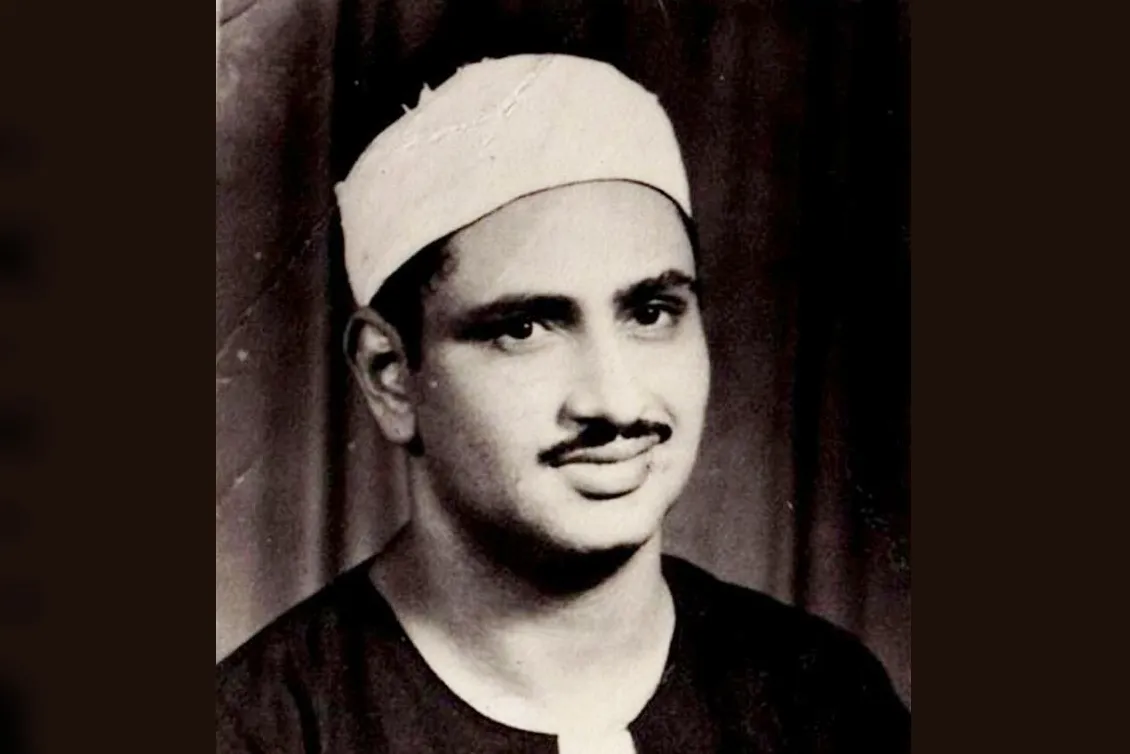
What Egyptian Quran Radio recently broadcast of Master Minshawi’s voice was not simply old recordings taken from the archives, but a new discovery of a voice that, despite its owner’s passing decades ago, has remained in the hearts of millions, according to a report by Al Jazeera..
Since the rare recitation of the Quran by the late Egyptian reciter began to be broadcast on Egyptian Quran Radio, the new recitations have topped the country’s social media content, with Minshawi’s name remaining among the topics of discussion for several days in a row, outpacing major sports and news events. The phenomenon has revived an old question: What is the secret that keeps this face alive after more than half a century?
The story began in the 1960s, when Minshawi recorded a recitation of the entire Quran for the Quran Radio. Although the review committee approved and praised the recitation, the master was not satisfied. After listening to the recordings, he felt that some of the tapes did not meet his standards, so he made a formal request to re-record portions of them.
In a rare move that demonstrated Minshawi’s meticulousness and unwavering commitment to perfection, he personally paid for the re-recording of 32 of the 82 tapes that made up the complete recitation. Upon its completion, the committee officially approved the new version in 1967.
Read More:
However, surprisingly, this version never reached the public; instead, it was stored in the radio archives for decades.
Questions That Cannot Be Ignored
Sheikh Ahmed Issa al-Masrawi, former head of the Egyptian Quran Recitation Authority, believes that this issue raises questions that cannot be ignored. He stressed that Minshawi did not request the re-recording arbitrarily, but rather because he was striving for a higher level of recitation performance.
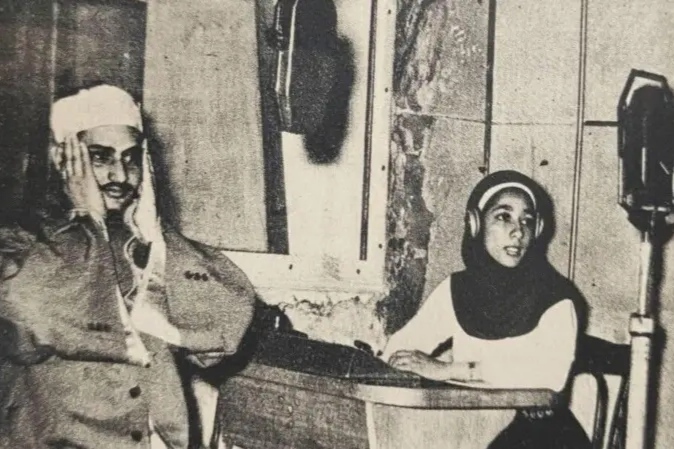
Stating that the sheikh “successfully achieved this goal with the tapes he re-recorded,” al-Masrawi said he personally listened to the new version and noticed “a tenderness and spirituality in his voice that was not present in the previous broadcast of the recitation for decades.”
He emphasized that the differences between the two versions are quite clear, explaining that the new recordings are distinguished by “a brilliant voice, a powerful performance, and a very high level of beauty and spirituality.”
Al-Masrawi believes that these characteristics are obvious to anyone who compares them with the previous recordings.
What most puzzled al-Masrawi, however, was why the tapes had been hidden from the public for so long.
If the sheikh had requested the re-recording, the Quran Radio had agreed, and the committee had officially approved the new version, why had these recordings remained in the archives for nearly sixty years, he wondered.
Stating that this question had troubled him since he had listened to the new recordings, he noted that their late release raises many questions about the fate of other recordings that may still be in the archives.
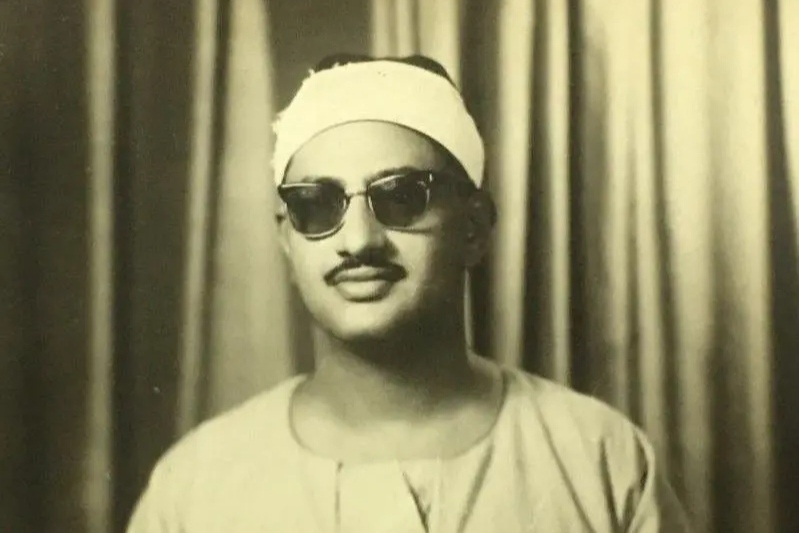
Al-Masrawi did not hide his surprise at the rumors circulating about the existence of other rare recitations by Minshawi with different narrations, confirming that he had previously heard some unreleased recordings of the sheikh and had even received tapes of a recently broadcast recitation years ago, indicating that parts of it had been circulating in a limited circle.
He not only questioned the reasons for the delay in broadcasting the new recitation, but also linked the matter to similar cases in the Egyptian Radio archives, saying that what happened was almost intentional.
Al-Masrawi referred to the experience of the late reciter, Mahmoud Khalil Al-Husari, who had recorded recitations with al-Duri’s narrations from Abu Amr, Warsh, and Qalun in 1963 and 1964, but these recitations were not released until 2001.
He added, “I was recently struck by posts on social media by Sheikh Minshawi’s daughter, Fadia, who spoke about the imminent release of other rare recitations of her father, narrated by Shu’bah from Asim, Warsh from Nafi and Al-Duri from Abu Amr – recordings that she had been unaware of for years.”
Al-Masrawi said that the release of this information now raises more questions about what recordings are in the archives that have not yet been revealed. “This is a matter of mystery, and I do not understand why this is happening now?”
However, al-Masrawi’s words were not limited to the unreleased and forgotten recordings; they also extended to the mystery of Minshawi’s unique place in the hearts of listeners.
Read More:
According to al-Masrawi, Minshawi was not simply a skilled reciter or someone with a beautiful voice, but rather he combined quality of performance, precision, mastery, beauty of voice and deep spirituality all at once.
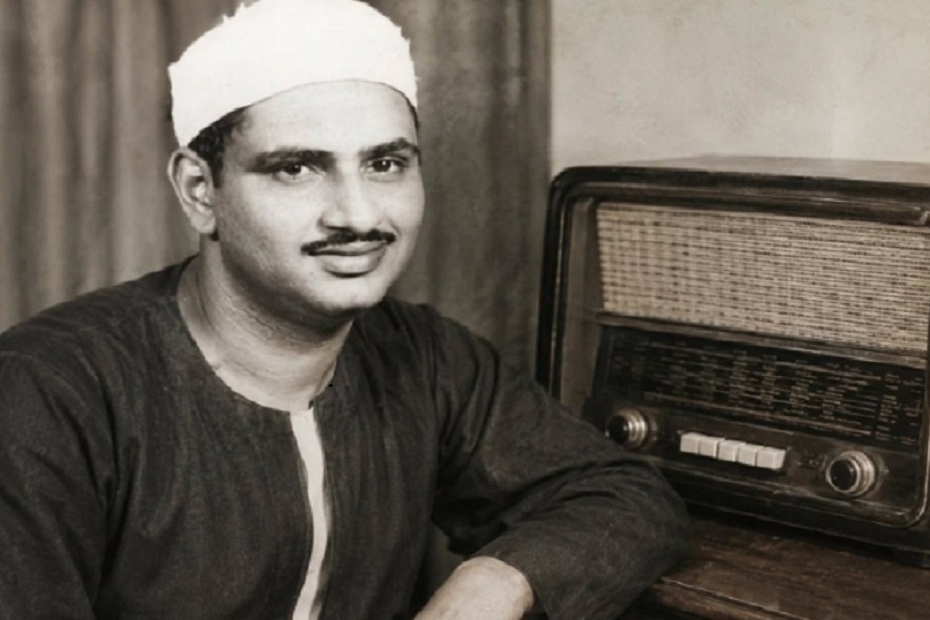
He said there is a special “Quranic spirit” in Minshawi’s recitation that he does not see in the performance of any other qari, even among the prominent figures of the Egyptian school.
Stating that recent years have proven that this exceptional popularity has not diminished, al-Masrawi noted that “it is difficult to enter a place and not hear Sheikh Minshawi’s voice,” because God has granted this reciter a special acceptance that is incomparable to any other reciter.
When the former head of Egypt’s Quran Recitation Authority was asked which of the great Egyptian reciters’ voices was closest to his heart, he answered without hesitation: “Sheikh Minshawi,” explaining that his voice combines qualities rarely found in others: mastery, beautiful delivery, and a spirituality that touches the heart before the ears.
Perhaps for this reason, the re-release of this rare recording became an exceptional event in Egypt and the Arab world. It was not simply the release of old recordings, but the revival of a voice that many still consider one of the greatest moments in the art of recitation in modern times, and that the newly released tapes are a belated echo of a man who sought perfection in his recitation and whose influence still resonates in the ears of listeners sixty years after his death.
Translated by Seyed Hossein Beheshti Shakib
4357036
