

An Egyptian Figure Who Supervised Recording of Quran Recitations by Five Prominent Qaris

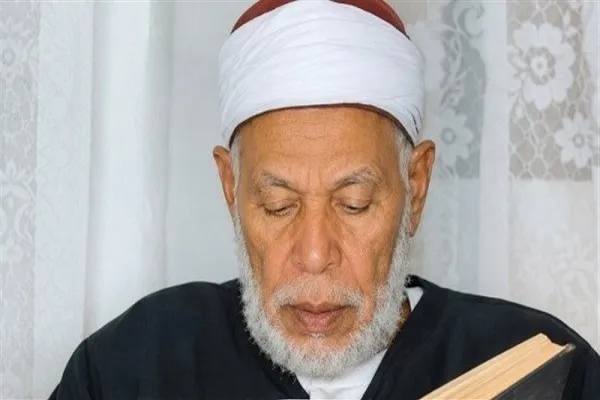
Sheikh Sayid Amir Othman was the former Sheikh (chief) of Quran reciters in Egypt who supervised the recording of the Quran recited by five great Egyptian qaris.
He died in Medina, the city of the Prophet and was buried in that holy city.
In an article published on the Veto news website on the anniversary of the death of Sheikh Amir Othman, Mukhtar Mahmoud wrote:
Sheikh Amir Othman was one of the shining stars of Quran recitation. He was born in May and died in the same month, and lived for eighty-eight years.
Othman was born on May 16, 1900, in a village in the Eastern Province. He died on May 20, 1988, and was buried in the city of the Holy Prophet (PBUH).
Wednesday, May 20, was the thirty-eighth anniversary of his death. Sheikh Amir memorized the Holy Quran at a young age, and is considered one of the most prominent figures in Quran recitation in modern times. In 1935, he established his own study group at Al-Azhar Mosque, until Sheikh Muhammad Ali Al-Dabaa, the Sheikh of the reciters at the time in Egypt, asked him for help in verifying and studying the Quranic recitations due to Sheikh Amir’s extensive knowledge.
Sheikh Amir was a man of great dignity and respect and one of the prominent figures in Quran recitation.
He first learned the Holy Quran in his village from Sheikh Atiyah Salamah, then mastered the art of Tajweed by studying with Sheikh Ibrahim Al-Banasi.
Sheikh Amir learned the ten recitations from Sheikh Al-Banasi according to the methods of Shatibiyyah and Al-Durrah. His passion for knowledge led him to leave Sharqiya and go to Cairo, where he began studying the ten main recitations according to the Tayyiba method with the scholar Ali ibn Abd al-Rahman al-Sabi.
Read More:
The death of Sheikh Sabi prevented him from completing his learning of the art of reciting and memorizing the Quran, and after the death of his teacher, Sheikh Amir continued his studies with Sheikh Sabi’s student, Sheikh Hammam Qutb Abdul-Hadi, and completed his recitations with him in 1927.
Studying at Al-Azhar University
Sheikh Amir enrolled at Al-Azhar University, where he studied Islamic and Arabic sciences. He then began teaching Quran recitation in his home in Cairo, and his home became a destination for Quran students and those interested in learning the Quran. In 1945, he was appointed as a lecturer in the Quran recitation department at Al-Azhar's Arabic Language Faculty, a position he held until 1968.
After that, he held important administrative responsibilities in the Egyptian Quran Recitation Authority, and in 1980, he became the Sheikh of the Egyptian reciters and the successor to Sheikh Mahmoud Khalil Al-Husari, a prominent Egyptian qari.
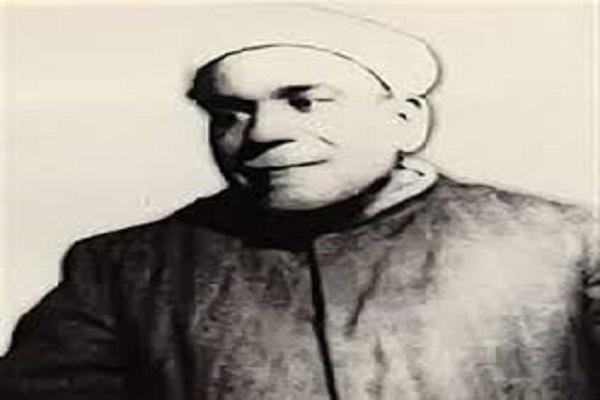
The Egyptian Quran Recitation Authority (Mashikhat al-Qura) was established in 1860, and is responsible for overseeing more than 12,000 Quran recitation centers in major mosques across the country. It has been headed in the past by prominent Quran recitation and teaching figures such as Sheikh al-Dabaa, Sheikh Rizq Khalil Hiba, Ahmed Issa al-Masrawi, and is currently headed by Sheikh Ahmed Nuaina.
Read More:
Sheikh Amr supervised the recording of the Quran recited by five great Egyptian qaris, including Mahmoud Khalil al-Husari, Abdul Basit Abdul Samad, Muhammad Siddiq Minshawi, Mustafa Ismail, and Mahmoud Ali al-Banna. He also supervised the recording of the Quran with Tajweed by other prominent reciters.
In the last quarter of the 20th century, there was almost no Quran printed in Egypt that did not include his name as a proofreader. He was a member of the selection committee for Egyptian Radio and Television reciters and gave valuable lectures on Tajweed and performing recitation in various cities in Egypt.
Among his countless students are Mahmoud Khalil Al-Husari, Mustafa Ismail, Kamel Youssef Al-Bahtimi, Abdul Basit Abdul Samad, Sadiq Qamhawi and Rizq Khalil Hibbah. Each of these names is a reminder of his high position in reciting and teaching the Quran.
After the death of Qari Sheikh Mahmoud Khalil Al-Husari in 1980, Sheikh Amir succeeded him as the Sheikh Al-Qura of Egypt. Four years later, he traveled to Medina to work as an advisor to the King Fahd Quran Printing Association. He remained there until his death, dedicating his life to serving the Holy Quran, and the Quran brought him to a high position in this world and the hereafter.
4353594
