


Noor Mags Content to Become Trilingual on Path of Globalization of Science Production in Iran
IQNA – Emphasizing the implementation of the “Smart Translation of Humanities” project, the director of the scientific group of the Noor Center’s digital libraries, said that so far, about 20% of the target content has been translated.
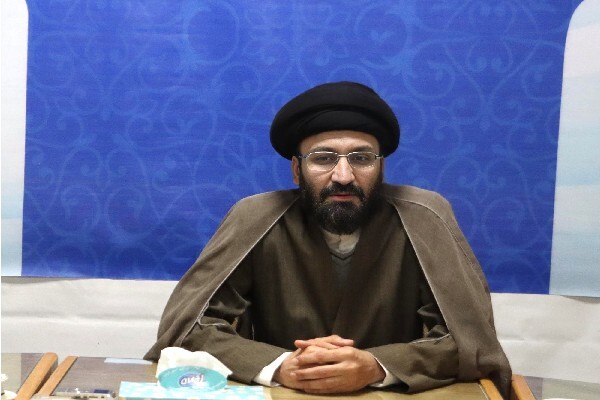
Highlighting the implementation of the “Smart Translation of Humanities” project, the director of the scientific group of the Noor Center’s digital libraries, said that so far, about 20% of the target content has been translated.
Speaking at a press conference at the Noor Center in Qom on Tuesday, Hojat-ol-Islam Seyed Mostafa Tabatabaei said it is expected that the entire Noor Mags database will be available to researchers in trilingual form by the end of the year.
Referring to the missions of the Noor Digital Libraries Group, he said it is responsible for research, support, and scientific development of a set of Noor Center products, which are publicly available to users.
In addition to these activities, specialized scientific groups also operate in various fields, including jurisprudence, history, theology, and other fields of Islamic and humanities sciences, and each of them specializes in its own scientific field, he noted.
“We have no subject restrictions in this center, and any type of content related to Islamic and humanities sciences falls within the group’s scope of activity. In terms of content type, the scope of activity is also very wide, and we have entered almost all types of content.”
Developments of Noor Mags and the use of AI
Referring to the history of the Noor Mags database, he said Noor Mags is one of the first and oldest products of the Noor Center, which was launched from the beginning with the aim of providing the text of scientific journals.
At the time of its launch, Noor Mags was the first site in Iran to publish the text of scientific journals in a serious and specialized manner, he said. “Of course, there were sites that published some articles or magazines alongside their other activities, but the site that specialized in this field was Noor Mags.”
Read More:
From a certain point on, the use of text mining technologies began in Noor Mags; technologies that are known today in the form of a concept called artificial intelligence and are used to optimize data and provide intelligent services to users, he noted.
The scholar said that among the initial measures in this field was the production of machine keywords. “We had designed an engine that examined each article and extracted suitable keywords for it based on text analysis; because the keywords that authors choose are sometimes very diverse or even incorrect.”
Another capability was to identify and suggest articles related to each article, and this system identified similar articles and suggested them to the user, he noted.
“Also, the article recommendation system based on user behavior has been active in Noor Mags for a long time; in such a way that, according to the users’ search and reading records, a list of new or old articles is suggested to them.”
Hojat-ol-Islam Tabatabaei said that following this path and with the expansion of artificial intelligence technologies, new services are also being developed in Noor Mags, including the “article chatbot” which will be launched soon.
“This feature is very similar to the chatbot that is offered in Noorlib.”
The ‘Smart Translation of Humanities’ Project
Pointing out one of the most important projects in this center, he said, “One of the projects we are currently implementing is the use of artificial intelligence to translate articles into other languages.”
He added that the goal is that in the near future, all articles in Noor Mags will be presented in trilingual form; meaning that if an article is written in Persian, its Arabic and English translations will also be presented, and if an article is in Arabic, its Persian and English versions will also be available.
Highlighting the importance of this issue, he said, “One of the current problems is that there are a large number of Arabic articles in Noor Mags that have few views; because many researchers conduct their searches with Persian words and do not have sufficient command of the Arabic language.”
When these articles are translated, users will notice their existence in the initial search and can use their content, he stated.
“Some may say that if someone needs an article, they can translate it themselves using artificial intelligence; but the main issue is that the user must first be informed of the existence of that article. When the translation is done offline and indexed in search engines, the article will appear in search results and will be usable.”
Visibility of Iranian Scientific Production in World
Referring to the state of scientific production in Iran, Hojat-ol-Islam Tabatabaei said Iran ranks high in the world in article production statistics, but many of these articles are not read globally; because they are written in Persian.
“When these articles are translated into English, universities and researchers around the world will be informed of their existence through search engines, and as a result, they will be able to be used and referenced.”
The Qom Seminary researcher continued, “This trend will increase references to Iranian articles, and as a result, the rating of Iranian journals and authors will increase globally.”
Scientific interaction with the Islamic world
As for scientific interaction with Islamic countries, he said that in addition to translating Persian articles, Arabic journals from the Islamic world are also translated so that domestic researchers can be informed about the scientific productions of these countries.
Read More:
Hojat-ol-Islam Tabatabaei added that many Arabic-speaking researchers are active in different countries such as Iraq, Lebanon, Syria, Bahrain, the Emirates, and Egypt, and their access to Iranian articles can lead to scientific exchange and increase scientific interactions.
He said in many academic disciplines, students are required to study different topics in different countries. “When Iranian scientific articles are available in other languages, researchers from other countries can also benefit from Iran's scientific experiences.”
Status of the Translation Project
Hojat-ol-Islam Tabatabaei said about the implementation process of this project that the technical infrastructure of the translation project has been prepared and the articles are gradually transferred to the translation system and placed on the site after translation.
He added that so far, about 20 percent of the target content has been translated and this process is still ongoing.
Currently, all journals of the University of Tehran are available in Noor Mags in trilingual form, and the translation of other journals is also ongoing, he stated.
“Our prediction is that by the end of the year, the entire Noor Mags database will be available in trilingual form.”
Ho0jat-ol-Islam Tabatabaei also pointed out technical limitations and said artificial intelligence tools require very powerful and expensive hardware, and hardware limitations slow down the speed of project implementation.
“The translation engine used is an international engine that has been optimized and localized for the Persian language, and many of its problems have been resolved.”
4358634
