


Comprehensive Manuscript Database to Be Unveiled
IQNA – The deputy of the Qom-based Computer Research Center of Islamic Sciences said a comprehensive manuscript database named Makhtutat (Manuscripts) is planned to be unveiled soon.
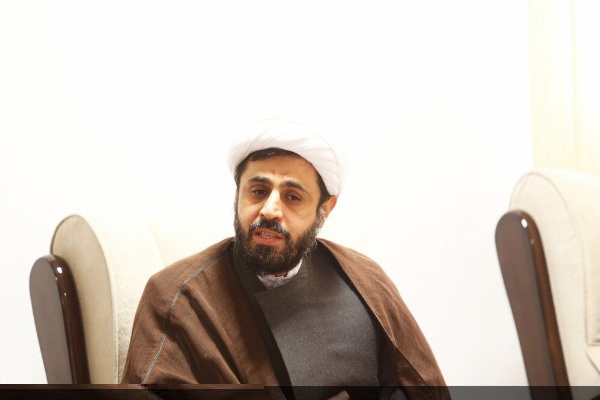
Hojat-ol-Islam Akbar Rashedinia, the center’s deputy research director told IQNA that given the necessity of reviving and preserving old texts and manuscripts, as well as the urgent need of researchers and scholars in the Islamic world and others, the Noor Center, as a pioneer in bringing new technologies to the service of Islamic and human sciences, decided to enter this field with a profound look.
The seminary and university professor added that “by collecting, identifying, and making manuscripts accessible, we have taken the first step towards the intelligent revival of the written heritage of the Islamic world. In the first step, by signing a memorandum of understanding with the University of Tehran’s Central Library and Documentation Center, we began digitizing manuscripts with special research tools, so that, relying on modern technologies and the capacity of artificial intelligence, it provides the basis for researchers to search, analyze, correct, and make wider use of this valuable treasure.”
He said the importance of this database is not limited to collecting manuscripts. “Collecting information on manuscripts, identifying their storage location, integrating data, and providing researchers with access, creates a new infrastructure for rereading Islamic heritage.”
According to the official, for years, some manuscripts have been kept in large libraries and others in small and scattered collections, and this dispersion has made the path of research difficult.
“The comprehensive database of manuscripts can reduce this gap and provide the first clear map of our written assets.”
Hojat-ol-Islam Rashedinia said the main importance of this project becomes more apparent when one considers it as an introduction to the entry of artificial intelligence into the field of manuscripts.
“If the manuscripts are systematically identified and digitized, in the next steps they can be converted into searchable texts, different versions of a work can be compared with each other, and the process of correcting and restoring texts can be facilitated. This is the point where the restoration of heritage turns from a time-consuming and limited task into an intelligent and accelerated process.”
In fact, he stated, the comprehensive database of manuscripts is not just a database but rather the starting platform for restoring the written Islamic heritage to the context of today’s scientific life.
The Qom Seminary professor said the more accurate and comprehensive this infrastructure is, the greater the possibility of discovering unknown works, prioritizing important texts, and utilizing them scientifically.
“From this perspective, this database should not be considered an ordinary project, but rather the beginning of a civilizational transformation in the intelligent preservation and revival of Islamic heritage.”
Read More:
Hojat-ol-Islam Rashedinia stated that the mission of the Noor Center is to facilitate access to Islamic science resources, and in line with this mission, what needs to be done is, first, to identify resources, secondly, to digitize resources, and thirdly, to analyze and enrich resources.
“This work has been underway at the Research Center for almost four decades. Islamic science resources and these documents exist in various formats, including in the form of printed books. During these four decades of activity, the center has been able to identify, digitize, and perform the necessary operations to analyze and enrich about 150,000 books in the field of Islamic sciences, and these resources have been presented on the Noorlib database.”
He noted that some of these resources, especially recent research, have been published in the form of scientific journals, collections of articles, and magazines.
“Nearly two million scientific articles that have been produced in the Islamic world in the last 150 years and published in different parts of the Islamic world have all been identified and digitized and are presented on the Noor Mags database. Also, another part of the scientific content of the Islamic world has been presented in the form of theses, and the Noor Center has been able to launch a database called Noor Doc, in connection with major universities in the country, and provide more than 150,000 theses to researchers.”
4360027
