


Home Quran Learning Becoming Popular in Algeria
IQNA – Algerian families have begun to hire Quran teachers (both male and female) to teach their children at home.
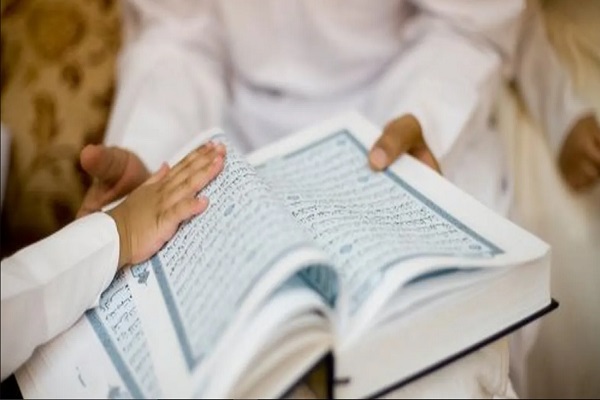
The profession of Quran memorization is entering Algerian homes, according to a report by Al-Shorouk daily.
While this type of education was primarily associated with traditional Quranic schools (Maktabs), mosques, zawiyas (traditional Quranic learning centers) and other Quranic institutions, it has now expanded to homes.
The profession has become necessary due to numerous social, security and educational developments.
This phenomenon was not previously known or widespread in such an organized way, but it has now become the preferred option for many parents who are looking for solutions that guarantee that their children learn the Book of God in a safe environment and under the direct supervision of the family.
Mosques in Algeria have played a central role in Quranic education, training generations of Quranic memorizers under the tutelage of imams, sheikhs, and female Quranic teachers. Traditional Quranic schools have also remained essential spaces for religious education and spiritual values. However, due to changing lifestyles, increasing parental demands, and concerns about children moving around or leaving them outside the home for long periods of time, many are choosing to hire a Quranic teacher.
It has become common for families to have a Quranic teacher one to five times a week to teach children memorization, correct recitation, correct pronunciation, and even basic Islamic principles.
Nourhan, an Algerian mother, says that she hired a Quran teacher from the local mosque for her two daughters and paid him a reasonable fee so that he could spend two hours a day with them at home during the holidays.
“My job does not allow me to take them to Quranic school and wait for it to start, so I chose this option to ensure the well-being of my daughters and allow them to use their time to memorize the Quran and learn English with another teacher.”
Safe learning experience
The most prominent reason for the spread of this phenomenon is the security factor. Many families, especially in big cities, have become more sensitive to the issue of protecting children from various risks, including accidents, exposure to unsafe environments or even harassment in its various forms. Many mothers believe that memorizing the Quran at home strikes a balance between religious education and the psychological and physical protection of children, since the child remains in his or her own safe environment, under the supervision of a parent or a family member.
Read More:
Nourhan says her husband feels more comfortable when he attends their 10-year-old son’s Quran memorization sessions. He can see the teacher’s style and connection with the child, which gives him a sense of security and reassurance.
“That’s why I decided to pay the Quran teacher and asked my husband to give him an hour every day, three times a week,” she added.
Amid the ongoing debate between those who believe that Quran teaching should be voluntary and those who argue that teachers should be rewarded for their time and effort in going to homes, like other professions, this service has become a significant and sometimes main source of income, especially during the summer and school holidays. Many graduates of Islamic universities, theology students and even certified Quran memorizers have found in this field an opportunity for honorable work that combines religious devotion with a financial aspect.
The cost varies according to the number of sessions, the number of children, the geographical area, the level of education required, and whether it is just memorization or memorization with recitation rules. The demand for female memorizers is relatively higher among families, especially when it comes to teaching girls or young children, as parents see greater psychological comfort and confidence in them.
4363100
