


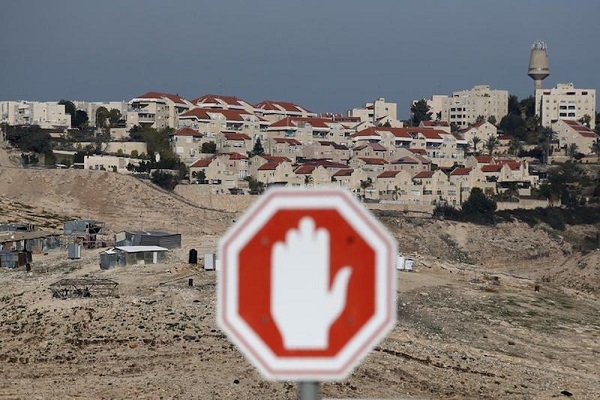
After Monday’s meeting of EU foreign ministers in Brussels, EU foreign policy chief Kaja Kallas said that a proposal to ban trade with Israeli settlements in the West Bank had “got the most support” from members. However, it fell short of the simple majority needed to compel the European Commission to present specific sanctions for member countries to vote on.
“All the 27 member states agree that Israeli settlements are illegal under international law,” Kallas said, adding that the EU’s existing policies have “not done much to limit trade with the settlements” because of inconsistent implementation.
A group of EU countries, including Belgium, the Netherlands and Spain and backed by Kallas, came into Monday’s meeting looking to force the Commission to bring specific measures for them to vote on. But only 11 actually called for concrete measures from the European Commission at the meeting, according to an EU diplomat directly aware of the exchanges — short of the simple majority needed to force the EU executive to propose such measures.
“The situation is starting to be irritating,” said a different diplomat, who hails from a country strongly supportive of further measures against imports from the settlements. “We want to be able to vote on measures and see whether they are supported or rejected. This constant in-between state is worse.”
Inside the Foreign Affairs Council meeting room, the tone of talks among foreign ministers on Israel sanctions was “tense” and “frank” between those who support further measures and those who oppose them, according to two EU diplomats aware of the talks.
The Commission also maintains that imposing any sanctions would require a unanimous vote by member countries, rather than the qualified majority Kallas believes is necessary. The distinction at issue is whether the measures are trade measures or sanctions. The difference is that the former requires only a qualified majority of states to pass, while the latter requires unanimity.
Source: Politico
