


Summer Courses in Iraqi Mosques Aim to Nurture A Quranic Generation
IQNA – When the history of educational activities in Iraq in recent decades is written, mosque-centered summer courses deserve to be recorded as one of the most influential experiences in shaping and nurturing the Quranic-Islamic generations.
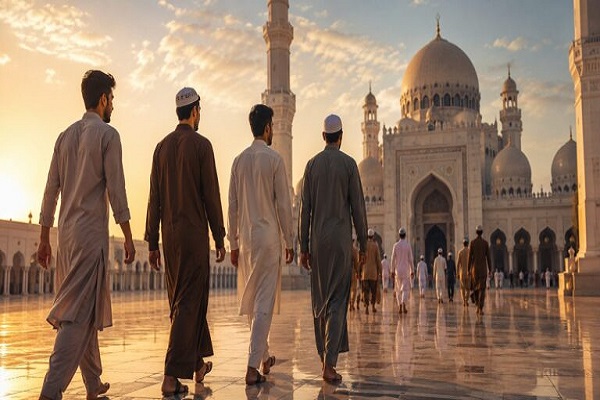
This is according to Saad Al-Halbousi, an Iraqi researcher and a member of the World Union of Muslim Scholars, in an article titled “The Generation That Was Formed in Mosques”.
The article, published on the iumsonline.org news site, discusses the role of summer Quran courses in mosques in shaping the Islamic personality and identity of Iraqi citizens.
The article is as follows:
When the history of educational and Islamic propagation activities in Iraq in recent decades is written, mosque-centered summer courses deserve to be recorded as one of the most influential experiences in shaping generations and nurturing the Islamic personality. These courses, which are both Quran memorization circles and deeply impactful educational programs, leave a lasting impression on thousands of young people who later become carriers of the message of invitation and social reform.
Many attribute the beginning of the summer courses to 1991, while their roots go back to earlier years. In 1976, the Iraqi Ministry of Awqaf launched a program to encourage Quran memorization, offering a reward of 10 Iraqi dinars to anyone who memorized a “chapter” of the Quran; this led to a number of mosques in Baghdad establishing Quran memorization and teaching circles.
These courses continued until 1983, relying on the efforts and individual initiatives of the congregational imams and missionaries, thus laying the foundation for an educational program whose impact expanded significantly in the following years.
At that time, Sheikh Mahmoud Gharib, an Egyptian missionary, became a prominent figure. He was the imam and preacher of the Ibn Baniyyah Mosque in Baghdad, and he realized the importance of using the summer holidays to educate the younger generation. He sought to develop and expand this project with the support of the prominent Binyyah family, who provided buses to transport students from different parts of the capital to the mosque.
He also received help from a number of sheikhs and missionaries, including Sheikh Abdul Moneim al-Janabi, Abdul Qadir al-Fadli, Hashim al-Mashhadani, Mahmoud al-Falahi, and Sami al-Janabi, to run study groups and provide education. Thus, the Ibn Baniyyah Mosque became the main center for holding Quranic courses in Baghdad.
As the number of participants increased, Sheikh Mahmoud Gharib expanded the project to other mosques and areas, entrusting it to a number of sheikhs (Quranic scholars) to transform what had initially begun as small study circles into a comprehensive educational project. Sheikh Mahmoud Gharib is thus recognized as a pioneer in organizing organized summer courses in Iraq and a key figure in establishing and developing this educational activity, a move that paved the way for the expansion of these courses in the early 1990s.
Read More:
A major turning point came in 1991 with the launch of a spiritual campaign (the Faith Campaign), a project that, under the direction of the then ministry of Awqaf, spread to mosques throughout Iraq from north to south. This event marked the beginning of a new phase in the growth and impact of summer courses, as mosques opened their doors to young people during the summer holidays to provide an educational and healthy environment, as well as a constructive atmosphere in one of the most sensitive and decisive stages of their lives, and to connect this group with the Holy Quran and Islamic teachings.
I also participated in these programs in the very first years of their inception; I was a teenager at the time, attending the Ramadi Mosque in Anbar Province in western Iraq, and I still remember the details of that time as clearly and vividly as if it were yesterday.
The program did not have flashy classes or complex curricula; rather, it had an honest spirit and clear goals. The responsibility for teaching and supervising was the responsibility of the Islamic education teachers of the schools, as well as religious missionaries and preachers; Those who combined scientific knowledge with educational skills and provided a practical model of behavior and commitment for the youth to follow.
Combining Quranic Education and Social Behavior
Perhaps the most striking feature of those courses was that they were not focused solely on memorization, but rather aimed to cultivate and elevate the individual’s personality. We studied the Holy Quran, memorized the Prophetic Hadiths, and became familiar with the Prophetic life; but at the same time, we also learned discipline, respect for others, a sense of responsibility, teamwork, love for the mosque, and a sense of belonging to a mission far beyond ourselves.
A large number of congregational imams, preachers, Islamic missionaries, and seekers of knowledge graduated from those courses and later became prominent figures in the fields of Islamic propagation, education, and social reform. It is noteworthy that many of them did not seek position, nor did they seek rewards or salaries; Rather, they voluntarily took on the responsibility of propagating and promoting the religion, filling a huge void that had long existed in the Islamic world in the areas of education, guidance, and character building.
These individuals attended mosques, schools, and educational centers and participated in the upbringing of new generations; as a result, the impact of these courses went beyond the participants themselves and encompassed the entire society.
Furthermore, these courses responded well to one of the major challenges facing young people at that time, namely the problem of wasting time. For many years, summer vacations for young people often turned into a period of wasted time and unused opportunities. But these courses filled that void by providing activities that were beneficial to the religious and secular lives of this generation, providing a healthy and constructive environment in which young people could benefit from good company, appropriate role models, and effective programs.
This initiative was not limited to traditional educational courses; rather, it has undergone a significant transformation in recent years, both in terms of form and content. The custodians of these educational activities realized that the needs of young people had changed and that character building required an environment that was deeper and more continuous than the limited hours of daily attendance at the mosque. As a result, the concept of “training camps” was formed and expanded.
Some programs adopted a model in which students were required to attend full-time and continuously for long periods in order to achieve academic and personal growth. A prominent example of this is the “Raka’at al-Tamkeen” (Pillars of Empowerment) program, which was held for several consecutive years at the Abu Hanifa Mosque in Baghdad and the Al-Shammari Mosque in Fallujah. In this program, participants spent nearly two full months undergoing an intensive curriculum and training program that included systematic study, educational activities, religious programs, and overnight accommodation.
These programs function very much like small educational institutions. In the city of “Amiriyah” in Fallujah, a project entitled “Heirs of the Prophets” has been formed; this project also has a two-month period and combines religious education, scientific training, and character building.
Familiarity with the Quran in Weekly Camps
Weekly camps are also held in various mosques in Baghdad, especially in the “Karkh” area, which last one or two weeks. The basis of these camps is the same main idea; Creating a comprehensive educational environment where young people are exposed to the Quran, religious teachings, and the company of righteous people on a daily basis.
This experience was not limited to a specific format, but the types of camps varied depending on the conditions and available facilities. Some camps, such as the "Al-Radif" project, lasted two consecutive days, others were held from the time of the afternoon prayer to the evening prayer, and another group was held from the morning prayer to the noon prayer. In addition, there are three-day weekend camps as well as regular educational and recreational camps organized by mosque groups with the aim of strengthening the spirit of brotherhood and cooperation among young people.
Read More:
Thus, summer courses have gone beyond the level of classes held solely in the mosque and have become a comprehensive educational system similar to seasonal schools; a system that shapes personality, reveals talents, and cultivates young leaders.
Experience has shown that educational camps are more effective; Because beyond simply imparting knowledge, they provide a space for young people to experience the values they have learned in their lives and apply them in their daily lives.
More than three decades after their inception, summer courses and educational camps continue to be among the most successful missionary projects in Iraq. These programs have succeeded in connecting different generations with mosques, training a large number of missionaries and educators, and saving thousands of young people from confusion and moral deviation. While nurturing and educating religious leaders and officials, they have institutionalized spiritual concepts, knowledge acquisition, and a sense of belonging in individuals, and have laid the foundation for an educational movement whose effects are still evident in mosques, schools, and academic centers today.
4363814
