

Story of Iranian Women's Sacrifice during War Must Be Preserved for Future Generations: Spokeswoman

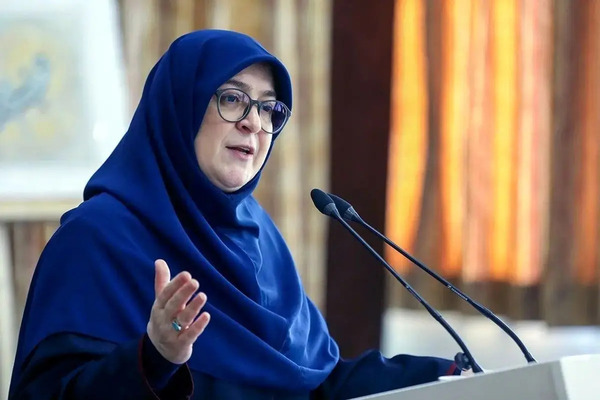
She stressed that these stories should be documented through books, films, and other cultural works so they can be preserved for future generations.
Speaking to Arbaeen Radio, Mohajerani said government agencies are fully prepared to provide services to Arbaeen pilgrims. She noted that, as in previous years, the Central Arbaeen Headquarters has begun its work under the supervision of the relevant officials, with responsibilities divided among different government bodies.
She added that the Ministry of Roads and Urban Development is managing transportation fleets and improving road infrastructure, while the Ministry of Health is providing medical and healthcare services, particularly in light of the hot weather, to ensure a safe and suitable journey for pilgrims traveling both from within Iran and abroad.
Addressing the place of the martyrs in the Arbaeen pilgrimage, the government spokesperson said all pilgrims consider themselves to be performing the pilgrimage on behalf of the nation's martyrs, especially those killed in the recent war and the martyred Leader of the Revolution. She added that the government is committed to honoring their ideals by improving public services, strengthening scientific institutions, enhancing service organizations, and increasing the country's strength.
Referring to her recent visit to southern Iran, Mohajerani said she met with mothers of children suffering from cancer, nurses, healthcare workers, and families of martyrs, witnessing firsthand remarkable examples of patience, sacrifice, and resilience that have received little public attention.
She recalled that after the damage inflicted on Shahid Baqaei Hospital in Ahvaz, some nurses took sick mothers and children into their own homes because their families were unable to remain with them, caring for them personally. She described these acts of sacrifice as stories that have largely gone untold.
She also referred to meetings with families of martyrs and fishermen in southern Iran, saying that mothers of martyrs spoke of their children's deaths with extraordinary patience, while fishermen's families, despite the dangers posed by the conditions, encouraged their husbands to go out to sea to help provide for people's needs. She described these acts of resilience as valuable social assets for the country.
Mohajerani stressed that these women's stories deserve to be told for years to come through films, books, and other cultural productions so that their sacrifices remain alive for future generations.
Speaking about women's responsibilities under the country's current circumstances, she said that resistance is not limited to the battlefield. As managers of their households, women play a crucial role in helping the country overcome difficult conditions.
She added that maintaining peace within the family and properly managing the consumption of energy and plastics are among the most important responsibilities women can undertake at this historical moment, enabling them to make a meaningful contribution to strengthening society's resilience.
Continuing the interview, Mohajerani referred to her recent visit to the port village of Benood in Bushehr Province, where fishing boats had been attacked and set on fire. She said she met with local fishermen both to hear their concerns firsthand and to convey the president's greetings.
According to Mohajerani, the fishermen told her that after their boats were destroyed, the women and girls in their families brought their gold jewelry and urged them to sell it so they could support their families and purchase new boats. She said these acts might appear small on the surface but in reality represent profound examples of sacrifice and family solidarity.
The government spokesperson also said she met with a Sunni cleric who had been injured while helping extinguish the fire aboard the fishing boats. Despite his injuries, he told her that the destruction of the boats would not force him to give up, adding that his wife had urged him to sell her gold so they could rebuild their lives and resume their work. Mohajerani said such support from women has always been an invaluable source of strength for men and a foundation for strong families.
Concluding the interview, Mohajerani emphasized the importance of keeping the Arbaeen pilgrimage route clean. She urged pilgrims to refrain from littering along the walking routes and around the mawakib (pilgrim service stations), saying that following the teachings of Imam Hussein is reflected in discipline, responsibility, and respect for the rights of others.
Source: Radio Arbaeen
