How do you assess Saudi Arabia’s latest military intervention in Yemen, and what consequences could this action have for the region?
The latest Saudi aggression against Yemen, shows the desperation which exists in the Zionist Axis headed by the United States. The Americans are very desperate to have the Saudis and other Arabi regimes join their war against the Axis of Resistance. General Qassem Sulaimani and imam Ali Khamenei geniusity on the creation of the Axis of Resistance has created major challenge for the existence of the Zionist state. For this reason they are pushing the Arab regimes – including Saudi Arabia to join their fight against the allies of the Islamic Republic.
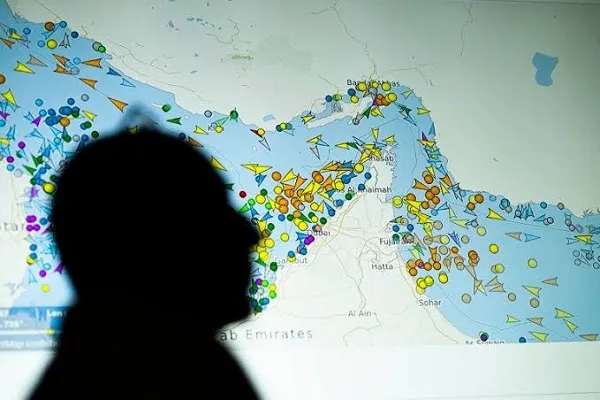
How has the Resistance Axis’s control over the two strategic chokepoints—the Strait of Hormuz and the Bab al-Mandab Strait—enhanced its deterrence capabilities in the region?
Enormously yes. As the Russian Security Council Deputy Chairman Dmitry Medvedev has noted, Iran possesses two nuclear weapons against the Zionist West. The firs is the Strait of Hormuz and the second if the Bab el-Mandeb Strait. By blocking these two Straits, Iran has turned back the clock of history. Iran has replaced the Ottoman Empire and its control over the Arab oil – which the Ottomans did before World War I. By controlling and blocking these two straits, Iran has sent the Anglo-Zionist Empire 112 back in history. The Anglo-American Empire took Basra from the Ottomans in 1914 and since World War I they were in possession of the oil of Islam. By controlling Hormuz and Bab al Mandeb, Iran has turned the Persian Gulf into an Iranian lake – and the Red Sea is now under the control of the Axis of Resistance.This is a massive victory for Islam and Iran against the Zionist control of the Islamic seas.
Why has Yemen’s Ansar Allah movement become a key actor in international security calculations today?
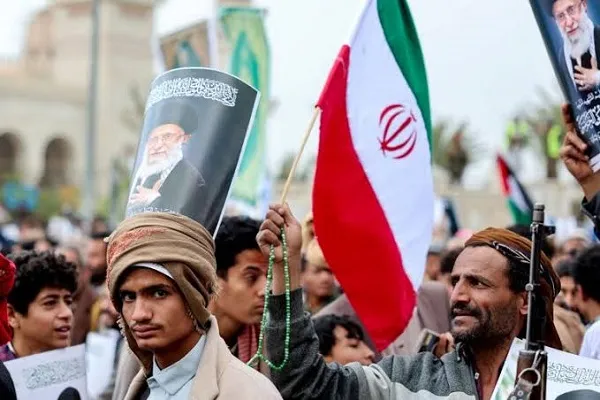
Because of its geography. By joining Iran in its fight for the liberation of Palestine, the government of Northern Yemen has become the major ally of the Islamic Republic in its global fight for the end of the Israeli apartheid. The Anglo-Zionist Empire who invaded in 1839 and defeated again the Ottomans in 1915, now, with the Ansar Allah’s victories and its control over the Red Sea, are facing a defeat which they could not have imagined for the past 2 centuries.By controlling the Persian Gulf and the Red Sea, Iran and Yemen, are changing the history of the Middle East.
How has the Hormuz–Bab al-Mandab equation contributed to the decline of U.S. hegemony in the region?
The control of Hormuz and Bab al Mandab is bring the end of the US hegemony but even its empire. The US Empire survives economically by exploiting, selling and petrodollarizing the oil of Islam. By blocking these two waterways, Iran, is starving the Zionist empire from its major commodity – which is the oil. And without the oil, the Empire will collapse. Its economy will collapse.We are witnessing the 1956 scenario – when Gamal Abdel Nasser took the Suez Canal from the British. By depriving the British from the Suez, the British pound and economy collapse. Iran and Yemen are doing the Suez Take Over 2.0. And now the loser is not the British, but the Americans.
How has Ansar Allah’s transformation into a force equipped with missile and drone capabilities affected the regional balance of power?
By arming itself with missiles and drones, the Ansar Allah has managed to project its power globally. The Muslim fighters of Yemen, now, thanks to Iran, have the power to defend themselves across their borders.
How do you assess the geopolitical importance of the Bab al-Mandab Strait and its impact on the economic security of the Israeli regime?
The Bab al Mandab threatens not only the Arab Zionist alliance and the Anglo-American Empire, but Israel as well. We know that for Israel to have access to Asia, they need to cross through Bab al Mandab. Blocking the Straits to Israeli ships, is a major economic problem for the Israeli regime.
Iran’s move to break the blockade of Sana’a International Airport was seen as a demonstration of the Resistance Axis’s unity. What is your assessment of this development?
Iran’s move to break the blockade of Sana’a International Airport was seen as a demonstration of the Resistance Axis’s unity. Iran should have done it long ago. Nevertheless, the action by Iran, challenged the Arab Zionist alliance. And Iran must repeat this break again.
The United Nations and humanitarian organizations have repeatedly stated that restrictions on the entry of goods, fuel, and humanitarian aid—combined with the ongoing conflict—have severely affected Yemen’s economy and the lives of millions of people. From the perspective of international law, how should the blockade of Yemen be interpreted?
The blockade against Yemen is a crime against humanity. Iran and the Axis of Resistance must respond to this blockade with their own blockade, until the Zionist forces remove their sanctions from Yemen.
In light of recent regional developments, do you believe the latest confrontation between Yemen and Saudi Arabia is likely to escalate into a broader conflict?
Yes. There is a massive escalation coming between the Zionist – Arab alliance and the Yemeni – Iranian alliance. Saudi Arabia acts as a puppet regime of Israel and the United States. Sooner or later they will put the Saudis to fight for Israel against their Muslim neighbours.