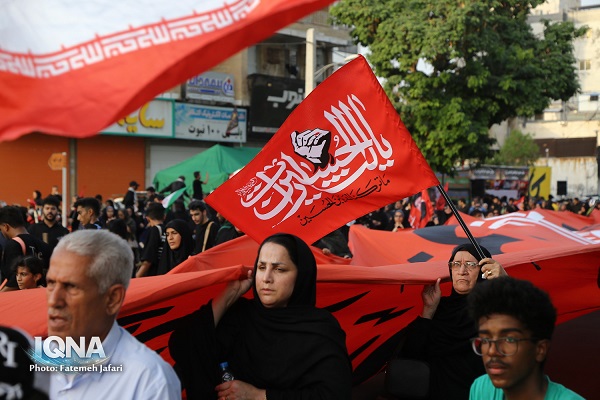
In an interview with Radio Arbaeen, former Iranian foreign minister and current lawmaker Manoucheshr Mottaki said that the first Arbaeen following Imam Hussein's (AS) martyrdom was observed by the caravan of Karbala captives led by Lady Zainab al-Kubra (SA). After enduring the hardships of captivity in Kufa and Damascus, the family of the Prophet (Ahl al-Bayt) returned to Karbala on the fortieth day, where Lady Zainab became the first pilgrim to visit the shrine of Imam Hussein after Ashura.
He noted that this visit carried both emotional and historical significance. While the Prophet's family returned to mourn and renew their covenant, Lady Zainab also continued her mission of raising awareness through her sermons, ensuring that the objectives and message of Imam Hussein's uprising would be preserved for future generations.
Motaki said that since then, Arbaeen has become an enduring symbol of love and loyalty to Imam Hussein, and today the occasion witnesses the largest annual public gathering in the world.
Referring to this year's pilgrimage, he said that according to Iraqi government figures, around 4.8 million pilgrims have participated in the Arbaeen processions, reflecting the extraordinary scale of the movement.
The former foreign minister stressed that the Ashura movement continues to inspire nations, saying recent developments have demonstrated that the message of Karbala remains a source of awakening and mobilization. He added that the Iranian nation has likewise demonstrated its resilience by drawing inspiration from the culture of Ashura.
Quoting Imam Hussein's historic declaration, "One like me will never pledge allegiance to one like him (Yazid)," Motaki said the Imam refused to submit to tyranny until his final moment. Although he was martyred, his name and cause became eternal, whereas Yazid has remained remembered only with hatred, condemnation, and disgrace throughout history.
Referring to the funeral procession of the martyred Leader of Iran's Islamic Revolution Ayatollah Sayyed Ali Khamenei in the Iraqi holy cities of Najaf and Karbala, he said the massive public participation reflected the deep bond between the culture of sacrifice and martyrdom and the Ashura movement, adding that this path will continue with strength and dignity.
Motaki reiterated that Arbaeen is the continuation of Ashura and the renewal of commitment to Imam Hussein's ideals. The massive gathering in Karbala, he said, demonstrates that the followers of Imam Hussein remain committed to his path of dignity, freedom, and honor.
He added that Imam Hussein identified oppression and injustice as the root causes of many human tragedies and rose to restore justice. By sacrificing his life, the Imam proved that the blood of the oppressed is never wasted but instead becomes a force capable of bringing down the foundations of tyranny.
According to Motaki, in the school of Ashura, martyrdom is not the end but the beginning of an enduring and meaningful life. Arbaeen has therefore become both the symbol of this eternal life and the annual gathering where devotees renew their covenant with Imam Hussein.
The Iranian lawmaker further stated that the Islamic Revolution itself drew inspiration from the Ashura movement. Led by Imam Khomeini, he said, the revolution represents a continuation of the culture of sacrifice, resistance, and justice, and its message continues to spread and inspire people around the world.
Addressing regional and international developments, Motaki said that the message of resistance remains alive through the sacrifices of Iran's martyrs, military commanders, scientists, and other fallen heroes, and that future developments will continue to follow this path.
He concluded the interview by saying that the massive Arbaeen gathering is itself the greatest medium for promoting the culture of Ashura, the teachings of Islam, and the ideals of the Islamic Revolution, often having a greater impact than thousands of sermons or books.
Source: Radio Arbaeen