

Consultations with Iraq to Facilitate Next Year's Arbaeen Procession Begin: Official

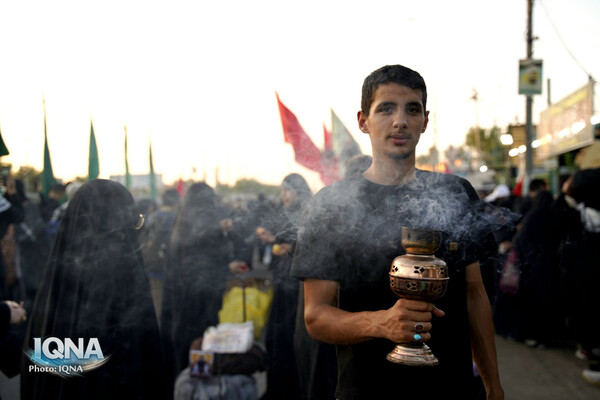
Mojtaba Shahti Karimi, director general for consular affairs at Iran’s Ministry of Foreign Affairs and head of the Political and Consular Committee of the Central Arbaeen Headquarters, said that Iran and Iraq are working through continuous consultations to improve consular services, enhance the safety of pilgrimage routes, and address pilgrims' concerns so that the Arbaeen journey becomes smoother and more convenient each year.
In an interview with Radio Arbaeen, Karimi said that the successful organization of the Arbaeen pilgrimage was, above all, due to the blessings of the Ahl-ul-Bayt (AS), particularly Imam Hussein (AS). He added that the main credit for the magnificent event belongs to the millions of pilgrims and volunteers from more than 70 to 80 countries, especially the people of Iran and Iraq, whose management, patience, solidarity, and demonstration of Islamic civilization made this remarkable gathering possible.
He added that the Political and Consular Committee of the Central Arbaeen Headquarters, alongside the other committees, worked within its mandate to facilitate pilgrims' travel by providing consular services and necessary coordination for the successful organization of the pilgrimage.
Karimi stressed that preparations for next year's Arbaeen have already begun. He said that from the first days following the end of this year's pilgrimage, consultations with the Iraqi government will begin on signing new memorandums of understanding and introducing additional measures to facilitate pilgrims' entry and exit, improve consular services, and address other related issues.
He explained that many of the measures undertaken by the Embassy of the Islamic Republic of Iran, its consulates in Iraq, and the various Arbaeen committees are based on continuous agreements and coordination with the friendly and brotherly government of Iraq to ensure that pilgrims enjoy a safer, easier, and more orderly journey.
Referring to his recent visit to Iraq, Karimi said the main objective was to conduct field inspections of consular services and visit border crossings, operational headquarters, and Iranian diplomatic missions in Iraq in order to identify and resolve any existing problems through consultations with Iraqi officials.
The Director General for Consular Affairs noted that some of the problems encountered by pilgrims stem from failing to follow travel guidance and public advisories. He emphasized that the media, particularly Radio Arbaeen, play an important role in raising public awareness and that travel guidance should continue throughout the year.
He identified one of the most important recommendations for pilgrims as writing their personal details and contact information on their backpacks, passports, or mobile phones. During visits to several operational centers, he observed that many lost bags and personal belongings carried no identifying information, making it difficult to return them to their owners.
Karimi said that observing such simple measures can prevent many problems and that this practice should become a common culture among pilgrims.
He also referred to the performance of the "Hamyar Arbaeen" (Arbaeen Assistant) system, saying it was launched through cooperation between the Hajj and Pilgrimage Organization's Registration and Dispatch Committee and several other bodies, including the Political and Consular Committee. According to him, the system played an effective role this year in returning a significant number of lost belongings to pilgrims.
Highlighting the participation of millions of pilgrims, Karimi said effective crowd management, the sincere efforts of Arbaeen volunteers, and coordination among various organizations ensured that this year's pilgrimage was conducted more smoothly, orderly, and peacefully than in previous years despite the significant increase in attendance.
In another part of the interview, he explained that several months before the Arbaeen pilgrimage begins, directives are sent to Iran's embassy and consulates in Iraq instructing them to coordinate with Iraqi authorities to improve services and facilitate pilgrims' travel.
He added that one of the key elements of these directives is for Iranian diplomatic missions to consult with governors of Iraqi provinces located along pilgrimage routes, as well as officials of the Iraqi government, to improve safety and the quality of services.
Karimi said these discussions focus on issues such as road rehabilitation and maintenance, installing and completing traffic signs, increasing police presence along major routes, and strengthening safety measures so that pilgrims can travel with greater peace of mind.
Referring to the results of these efforts during this year's Arbaeen, he said his field visits across different parts of Iraq showed clear improvements. Roads were in better condition than before, traffic signs were more complete, and as a result, traffic accidents had declined noticeably compared with previous years.
He also praised the cooperation of the Iraqi police, noting that one effective measure involved police vehicles regulating traffic speeds by driving ahead of other vehicles, which encouraged motorists to maintain safe speeds. Combined with speed cameras and improved road signage, this significantly enhanced road safety.
The Director General for Consular Affairs emphasized that all of these measures are aimed at ensuring that pilgrims of Imam Hussein (AS) experience a safe, convenient, and dignified journey, which remains a key objective of the country's officials.
Karimi concluded by saying that the close cooperation between the Islamic Republic of Iran and the friendly and brotherly government of Iraq in areas such as road safety, traffic management, and pilgrim services has contributed to the increasingly efficient and orderly organization of the Arbaeen pilgrimage each year, and that this cooperation will continue with determination in the years ahead.
Source: Radio Arbaeen
