


100th Anniversary of Poland Islamic Religious Union Celebrated
IQNA – The Islamic Religious Union of Poland has celebrated its 100th anniversary by organizing an exhibition about mosques.
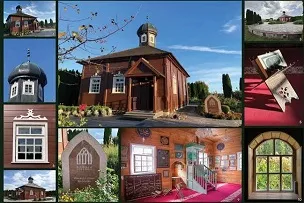
According to the Muslimsaroundtheworld website, on the occasion of the 100th anniversary of the establishment of the “Islamic Religious Union” in the Republic of Poland, the union has organized an exhibition entitled “Mosques and Prayer Places in Poland”.
This exhibition, in the form of eight panels, depicts a collection of the most prominent mosques, Islamic centers, and prayer places, and offers visitors a picture of the Islamic heritage of the Tatars and the contemporary presence of Muslims in various cities in Poland.
This exhibition is a combination of images and information; each panel includes a set of numbered images of each place, along with its history, architectural features, religious and cultural function, and the characteristics of the owners of the images.
Through these places, the exhibition displays a clear diversity in the forms of Islamic presence, from wooden mosques that are tied to the history of the Tatars in Poland to modern mosques and centers that serve Muslims in large cities, reflecting the continuity of Islamic religious life and the evolution of its institutions over time.
This expo introduces the Białystok Mosque as one of the important centers of Muslim religious, cultural and educational life in this city. Located on Płastówska Street, the mosque was built in 1934 as a private house. It then became the property of the Białystok Muslim community in 1981 and, after renovation and expansion, a minaret was added in the next stage.
The Bohunice Mosque is one of the most prominent signs of the Islamic presence of the Tatars in Poland and one of the oldest surviving historical wooden mosques in the country.
The history of Bohunice is linked to the settlement of the Tatars in this region. With its unique wooden architecture, the mosque incorporates traditional elements such as a dome and minaret, a mihrab, a pulpit and prayer facilities.
The Kruszyniany Mosque is another example of a historic wooden mosque associated with Tatar Muslims in Poland, known for its green color and traditional architecture.
Read More:
The history of the site is tied to the settlement of Tatars in the region, and the current mosque dates back to the 18th and 19th centuries. The mosque has separate sections for men and women, a mihrab, a pulpit, and other interior elements of traditional Islamic architecture.
The mosque continues to be a place of prayer and meeting for members of the Tatar and Muslim communities, and is a highlight for visitors wishing to learn about the history and Islamic heritage of the Tatars in Poland.
The Gdańsk Mosque is also an important center for Muslim religious life in the Pomerania region. Although the history of Muslims in the city is older, the current mosque, with its modern form, combines contemporary architecture with traditional Islamic elements.
The mosque has a dome and minaret, and its interior is decorated with oriental decorations, Arabic calligraphy, woodwork, and decorations imported from Turkey. In addition to prayer spaces, the Gdansk Mosque provides facilities for religious and educational activities, including a women's section and a library, thus combining worship, education, familiarization with the history of the Tatars, and contemporary Islamic life.
4370739
