


‘Knowing the Other Instead of Conflict’ Main Strategy of Imam Reza in Managing Differences
IQNA – Dialogue is the art of transforming differences into opportunities for understanding.
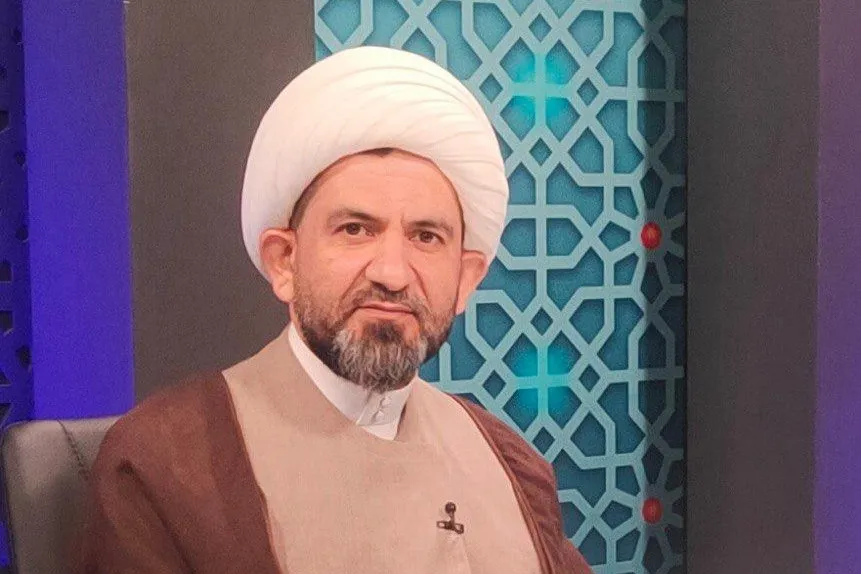
Imam Reza (AS) highlighted the Quranic strategy of “knowing the other instead of conflict” in managing differences with his own example, both in the field of dialogue with others (religions) and in the field of confronting deviations during the Abbasid era.
This is according to Iraqi scholar Hojat-ol-Islam Haidar Al-Shammari. He is a lecturer at the Najaf Islamic Seminary and a professor at Imam Sadiq (AS) University in Iraq
Speaking to IQNA, he examined Imam Reza’s (AS) style of debating with followers of different religions and his citation of mutual sources, discussing how the experience of the Infallible Imam (AS) can be used to confront the spread of hatred and the crises of interfaith dialogue in today’s world.
“I believe that the life and legacy of Imam Ali ibn Musa al-Reza (AS) represent a decisive moment in the history of Islamic thought, as this period was accompanied by a wide openness to different cultures, religions, and philosophical schools, as well as significant activities in the fields of translation and scientific and intellectual debates. In such an environment, Imam Reza (AS) considered differences and disagreements not as a factor for isolation, but rather as an opportunity to prove the strength of Islamic reasoning, institutionalize the culture of dialogue, and safeguard the dual authenticity of divine revelation and reason,” he said in the interview, excerpts of which are as follows:
IQNA - Thank you for the opportunity you have given us. First of all, what method did Imam Reza (AS) usually use in his debates with followers of other religions to prove the legitimacy of Islam?
One of the distinctive features of Imam Reza’s (AS) debate style was that he did not begin the discussion by forcing the other party to accept his beliefs; rather, he argued with each group based on their own intellectual and religious framework. In his debates with the followers of the Torah, he relied on the Torah, and in his debates with the followers of the Gospel, he relied on logical arguments that their own intellect accepted. This method is a clear example of the Word of God Almighty, which says: “Invite to the way of your Lord with wisdom and good exhortation, and argue with them in a way that is best.” (Surah An-Nahl: 125)
This approach is clearly evident in his debates with Christians, Ra’s al-Jaaloot (a great Jewish scholar), Imran al-Sabi (a famous theologian), and others, because the Imam had extensive knowledge of the beliefs and sacred texts of others. Therefore, his dialogues were not based on slogans or emotional reactions, but on knowledge, logical arguments, and understanding the other side before the debate began.
IQNA - So, considering Imam Reza’s (AS) approach in his debates, what do you think is a practical solution to face the challenges of interfaith dialogue in today's world?
In my opinion, Imam Reza’s (AS) experience offers us a comprehensive model that can be called “dialogue based on knowledge, reasoning, and respect”. The problem with some of today’s interfaith dialogues is that they are sometimes reduced to mere diplomatic pleasantries; whereas true dialogue does not mean eliminating differences, but rather managing them in a rational and ethical manner. The Holy Quran has laid a vital foundation for this matter: “Say: O People of the Book, come to a word that is equal between us and you…” (Aal-Imran: 64).
A set of practical principles can be derived from the life of Imam Reza (AS): the necessity of truly understanding the “other”, returning to common ground, relying on logical reasoning instead of accusations, respecting the dignity of the other, and distinguishing between criticizing an idea and despising the owner of that idea.
Read More:
Today’s world, especially in a situation where we are witnessing the spread of hatred, Islamophobia, and religious extremism, needs this model more than ever. The desired scientific dialogue is not one that merges and destroys identities, but one that turns differences into an opportunity for mutual understanding, not an excuse for conflict; and this is in line with the words of God Almighty, who says: “And We have made you nations and tribes that you may know one another” (Surah Al-Hujurat: 13).
IQNA - You mentioned mutual understanding between those with different ideological views. In your opinion, what are the key strategies for strengthening convergence between Islamic schools of thought, as manifested in the life of Imam Reza (AS)?
Imam Reza’s (AS) approach to convergence is based on several pillars, the most important of which are Muslims' return to the Quran as the ultimate authority and also reliance on common Islamic values. Convergence does not mean eliminating sects or forcing individuals to abandon their beliefs; rather, it means preventing scientific, jurisprudential, and theological differences from turning into social conflicts, hostility, and ruptures in the body of the Islamic Ummah.
Several strategies can be derived from the character and life of that Imam (AS) in the Abbasid era: prioritizing commonalities over divisive issues, especially the Holy Quran, the message of the Holy Prophet (PBUH), the direction of the Qiblah, and fundamental moral values; managing differences through awareness and logical reasoning, since many sectarian conflicts are rooted in mutual ignorance; Respecting the other party while having a difference of opinion and avoiding insulting them, in line with the Quranic command: “And do not revile those who call upon other than Allah” (Al-An’am: 108); and distinguishing between scientific disagreement and political conflict, given that many seemingly sectarian differences are in fact political exploitation of religion and sect.
IQNA - You mentioned that many sectarian conflicts are rooted in mutual ignorance. What role did Imam Reza’s (AS) debates with followers of other religions and sects play in promoting the Shia school and the formation of Islamic civilization?
The importance of Imam Reza’s (AS) debates is that they elevated the status of the Ahl-ul-Bayt (AS) school from a purely religious and social presence to an intellectual and widespread presence in the sphere of Islamic thought. Through these debates, Imam Reza (AS) demonstrated that the school of Ahl-ul-Bayt (AS) is not defined by emotions and loyalty alone, but rather by reason, reasoning, and knowledge. His debates with religious scholars and representatives of various schools of thought led to his being introduced as a scientific and intellectual authority who is able to interact with Muslims and non-Muslims and can engage in dialogue with theologians, philosophers, and scholars of different schools.
Read More:
This is vital for the formation of civilization, because civilization is not built solely on material power, but also on the capacity to produce knowledge, manage diversity, and respond to fundamental questions facing humanity. Hence, the scientific presence of Imam Reza (AS) helped to establish the position of the “School of Ahl-ul-Bayt (AS)”.
It contributed greatly to the intellectual atmosphere of the Islamic world and to the strengthening of the role of reason, debate and rational reasoning in Islamic culture.
4369652
