


Renowned Qari Ahmed Nuaina Recites Quran on Egyptian TV Program
IQNA – Ahmed Ahmed Nuaina, the Sheikh al-Qurra (Chief Reciter) of Egypt, appeared on the country’s talent show “Dawlet El Telawa (State of Recitation)”.

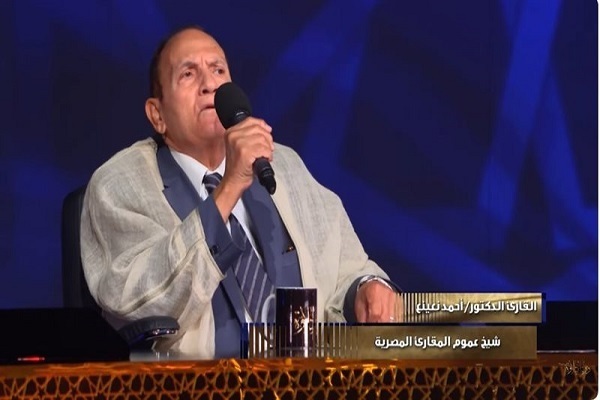
He appeared on the 12th episode of the TV program and recited verses from Surah Al-Adiyat, al-Watan reported.
This recitation, which was broadcast at the beginning of the program, was praised by the competition judging committee.
Nuaina performed his recitation in a distinctive manner that expressed humility and beautiful voice. This recitation gave a spiritual atmosphere to the program and viewers were fascinated by the beauty and power of the Quranic performance of this Egyptian qari.
Also, in this episode, in honor of master Nuaina, his biography and outstanding efforts in serving the Quran and teaching the sciences of recitation were reviewed and explained in the form of a video clip.
In this clip, it was emphasized that Nuaina has an impressive and special voice that, while being humble in recitation, calls the listener to ponder and reflect on the verses.
Read More:
The State of Recitation program is produced in cooperation with the Ministry of Awqaf and the United Media Services Company in Egypt, with the aim of identifying talents and outstanding reciters from different provinces of the country.
This program is broadcast on the satellite channels Al-Hayat, CBC, Al-Nas, Misr Al-Quran Al-Karim, and the “watch it” platform, and the broadcast time of this program is 9 pm on Fridays and Saturdays every week.
It offers a total prize pool of LE 3.5 million. The first-place winners in both the recitation and intonation categories will each receive one million pounds, in addition, they will have the entire Quran recorded in their voices and broadcast on the “Misr Quran Karim” channel.
Read More:
They will even be given the honor of leading the Taraweeh prayers at the Hussein Mosque during the upcoming month of Ramadan.
The program features a high-level judging panel comprised of prominent religious and scholarly figures from the Islamic world: Hassan Abdel-Nabi, Taha Abdel-Wahab, Mostafa Hosny, Taha Al-Nuamani.
It also includes a number of special guests: Osama al-Azhari, Nazir Mohamed Ayyad, Ali Gomaa, Ahmed Nuaina, Abdel-Fattah al-Tarouti, Jaber al-Baghdadi, the British scholar Muhammad Ayoub Asif, and Morocco’s Omar al-Qazabri.
4324555
