


Pakistani Scholars Express Concern over Al-Azhar’s Stance on Aggression against Iran
IQNA – A group of Pakistani Shia scholars, in a letter addressed to the imam of Egypt’s Al-Azhar, expressed concern about the recent statement of the institution’s Fatwa Council on the US-Israeli aggression against Iran.
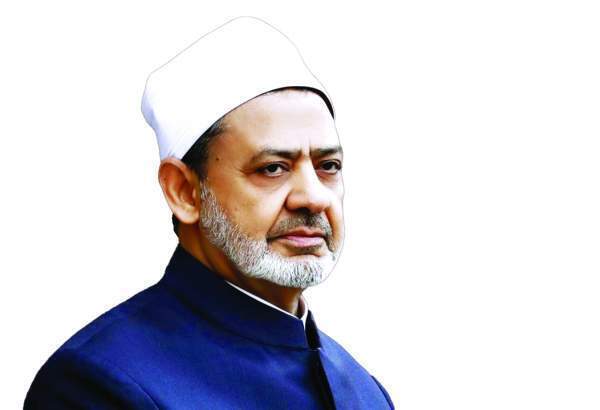
“If the lands, airspace or military installations of a Muslim country are used as a means of aggression against another Muslim country, this act falls under the legal title of aiding and abetting sin and aggression,” the scholars said, referring to some regional countries’ allowing their land to be used by the US and the Israeli regime in the attacks on Iran.
Following is the letter to Sheikh Ahmed al-Tayyeb by the Pakistani scholars:
In the name of God, the Most Compassionate, the Most Merciful
We, the Shia scholars of Pakistan, send this message to Your Eminence with a sense of scientific, jurisprudential and moral responsibility, expressing our deep concern over the recent statement of the Al-Azhar Fatwa Council. This statement has been issued at a very sensitive and complex time for the Islamic Ummah, which is facing unprecedented aggression. This aggression is not limited to direct military domination by foreign powers, but also extends to the misuse of the lands of some Muslim countries as platforms for aggressive operations against other Muslim countries. This issue cannot be reduced to a political dispute or a traditional military conflict. Rather, in the light of Islamic jurisprudence, it falls under the scope of detailed and serious discussions such as the use of Muslim lands in aggression against Muslims and the use of Muslims as human shields.
First, the basic premise, the use of Muslim lands and the Sharia ruling:
If the lands, airspace or military installations of a Muslim country are used as a means of aggression against another Muslim country, this act falls under the legal title of aiding and abetting sin and aggression. God Almighty says: “And do not help in sin and aggression” (Surah Al-Ma’idah, Verse 2).
Commentators such as Imam Tabari, Qurtubi and Allamah Tabataba’I unanimously agreed that any cooperation that leads to oppression is forbidden in the eyes of Islamic law. Similarly, Sheikh al-Islam Ibn Taymiyyah stated in his important fatwas that anyone who helps the infidels against the Muslims is liable to Sharia questioning, which is in line with the rulings of the Imamiyyah scholars on the prohibition of aiding the enemy.
Second, using Muslims as human shields:
If the aggressor forces intentionally use Muslim lands or population centers as shields to protect their military operations, this situation is known in Islamic jurisprudence as the issue of shielding (tatarrus).
The issue of shielding:
This issue has been examined by figrues such as Imam Shafi’i, Imam Ahmad ibn Hanbal, and Ibn Qudamah in al-Mughni. They ruled that if the enemy uses Muslims as human shields and there is no other way to repel them, then this action is permissible out of necessity, provided that the intention is to repel the enemy and that no harm is done to the Muslims. This is fully true of the current situation where Islamic lands are being used to attack another Islamic country. Imami jurists such as Muhaqqiq al-Hilli and Shahid al-Thani have ruled that this is based on the principle of necessity and the precedence of the more important over the important.
Read More:
Third, the Quranic, legal, and consensus basis for the right to defense:
The Holy Quran affirms the legitimacy of defense and even considers it obligatory in some cases as mentioned in Surah Hajj, Verse 39, Surah Al-Baqarah, Verse 190, and Surah Al-Baqarah, Verse 194. These texts establish the principle of defensive war and regulate it based on the principle of proportionality and prohibition of initiating aggression, which is something that Islamic schools of thought agree on.
Fourth, the principle of repelling the aggressor, not causing harm, and taking away the means of attack:
Among the established legal principles is the obligation to repel the aggressor. Ibn Qudamah has explicitly stated the obligation to defend oneself, even if it leads to war. In addition, the principle of “La darar wa la dirar (there shall be no harm nor reciprocating of harm)” in Islam requires repelling harm from individuals and groups, and this is confirmed by the words of God Almighty in Surah An-Nisa, Verse 141. This is essential to prevent the enemies from dominating the Muslims.
Fifth, Determination of Responsibility and Direct Cause:
One of the fundamental principles is that a ruling, whether it exists or not, revolves around its main cause and responsibility is tied to the direct cause. Shatibi has stated that the basis of a ruling is the effective cause. Therefore, if an aggression is committed by a specific party, the defensive response is attributed to that party and it is not permissible to hold the defender responsible while ignoring the aggressor.
Sixth, International Law and the Right to Defense:
International laws, including the United Nations Charter in Article 51, recognize the right to self-defense. Furthermore, the theory of just war recognizes the legitimacy of defense. If the provisions of Islamic Sharia and international law converge on this principle, its violation poses a clear scientific problem.
Seventh, loyalty and non-commitment in the political and military field:
God Almighty says: “The believers should not take the unbelievers as guides in preference to the believers”, (Surah Al-Imran, Verse 28) and “Believers, take neither Jews nor Nazarenes for your guides” (Surah Al-Ma’idah, Verse 51). The commentators have explained that this prohibition includes any kind of support that harms the Muslims. Therefore, enabling hostile forces to use Muslim lands for aggression is not merely a political issue, but a clear violation of Islamic law.
Eighth: Enjoining good and forbidding evil and the rule of silence:
The Messenger of God (peace and blessings of God be upon him and his family) said: “Whoever of you sees an evil deed, let him change it with his hand.” (Narrated by Muslim). This indicates the obligation to take a stand against injustice. Remaining silent against aggression while condemning those who defend themselves contradicts this principle.
Read More:
Ninth, the goals of Islamic law and preserving the nation’s order:
As Shatibi stated, among the goals of Islamic law are the preservation of religion, life, and public order. Defense achieves all of these goals, and therefore, condemning it contradicts the spirit and goals of Islamic law.
Tenth, Quranic justice and rejecting double standards:
God Almighty says: “Be just, for that is closer to piety” (Surah Al-Ma’idah, Verse 8). Justice cannot be achieved by ignoring the aggressor and blaming the defender, because this is a deviation from the level of justice that God has commanded.
Conclusion: His Eminence, the Grand Imam, we sincerely ask you to examine this issue in light of the legal texts, basic principles and objectives of Islamic law and adopt a position that is in line with the unity, dignity and justice of the Muslim Ummah, because history and future generations will testify to this. Our positions today will be a benchmark for measuring our sincerity in supporting the truth.
Peace be upon you, may God have mercy on you and bless you
Shia scholars in Pakistan
Syed Iftikhar Hussain Naqvi, Member of the Council for Islamic Thought and Head of the Muntaha Center for Research
4350684
