


Iran Education Minister Stresses Technology-Driven Expansion of Public Quran Education
IQNA – Iran’s Education Minister Alireza Kazemi said on Tuesday that while significant progress has been made in the Quranic field, the country should leverage modern technology to achieve a major breakthrough in making Quranic instruction widely accessible.
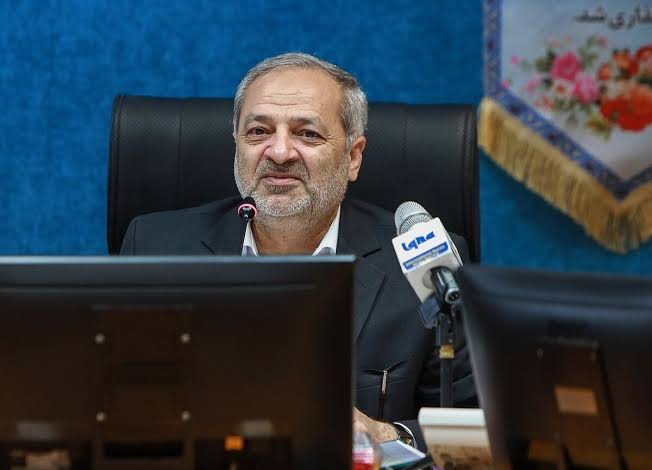
Kazemi made the remarks in the 66th session of the specialized commission for the development of public Quran education, held in Tehran on June 30. The meeting was attended by senior Quranic, religious and parliamentary officials.
More than 1,000 Quranic managers and working group secretaries from across the country participated virtually in the session.
Kazemi, who is the head of Iran’s Public Quran Education Commission, described the gathering as the largest conference of Quranic managers in the field of public education.
“This itself shows that the issue of public Quran education has become a national concern,” he said.
He highlighted ongoing efforts within the education system, noting that beyond inter-agency programs coordinated with commission members, the Education Ministry has launched extensive initiatives to improve Quran instruction and deepen engagement with the Holy Scripture.
A key program is “Etghan”, which aims to enhance the Quranic literacy of teachers, particularly those at the elementary level. Kazemi said the first phase of the project is currently underway, with more than 40,000 teachers receiving training.
He emphasized that all commission activities are carried out within the framework of the comprehensive document on public Quran education.
“We hope that the outcome of these actions—shaped by collective wisdom and numerous expert sessions with specialists in this field—will pave the way for a new leap in making public Quran education universal,” he said.
Kazemi pointed to the establishment of specialized working groups across the country's provinces and educational districts, and said these groups are working with high motivation to realize the commission’s goals.
In addition to their assigned missions, he said, they are pursuing innovative executive plans. He suggested that a dedicated unit should be formed to collect and share successful experiences from provincial managers with other regions.
The minister also addressed the creation of Quran memorization-focused schools, which are mandated under the country’s Seventh Development Plan.
The process of establishing and equipping these schools is progressing well, Kazemi said. “We hope that by the end of the Seventh Plan, their number will reach 1,200.”
He said this effort began last year alongside the Etghan project and significant quantitative and qualitative progress has been made.
However, he acknowledged that challenges remain. “We still have a long way to go to reach the desired point,” he said.
He expressed confidence that the commission’s strong structure and the capacity of working groups in provincial centers and educational districts would accelerate the momentum.
Read More:
In his concluding remarks, Kazemi stressed the urgent need to integrate modern technology into the field of Quranic education.
“To make public Quran education universal across all levels and among all segments of society, we need to make extensive use of available technologies,” he said.
He warned that without a comprehensive public Quran education system, many valuable efforts would not reach their full potential.
“In my view, until a comprehensive public Quran education system is launched and all segments have the opportunity to benefit from its content, a significant portion of the valuable actions taken will not be seen as they deserve to be,” Kazemi said.
4361298
