


Martyred Leader’s Unifying Thought Cornerstone of Resistance Axis: Yemeni Analyst
IQNA – A Yemeni political analyst said martyred Leader of the Islamic Revolution Ayatollah Seyed Ali Khamenei’s unifying thought formed the main pillar of the creation of the Axis of Resistance
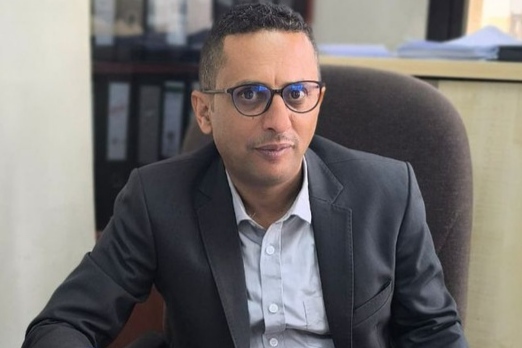
Speaking to IQNA, Adnan Abdullah Al-Junaid, a Yemeni writer and political researcher, secretary general of the Arab and Free Writers’ Association, and a member of the International Association of Political Experts and Analysts, said it is an axis that goes beyond sects and denominations.
He emphasized that unity is the precondition for the Muslim Ummah’s survival in the era of the hostile behavior of global arrogance.
He said Ayatollah Khamenei paid special attention to the issue of the unity of the Islamic Ummah and the rapprochement between Islamic schools of thought, and in this regard, he was one of the main supporters of holding the annual International Islamic Unity Conference in Iran.
“In addition, the World Forum for the Proximity of Islamic Schools of Thought was established in 1990 at the initiative of the martyred Leader of the Revolution. Over the years, this forum has played an important role in reducing religious tensions and differences, supporting the cause of Palestine and al-Quds, and promoting the unity of the Islamic Ummah.”
Al-Junaid noted that the martyred Leader believed that unity was not a moral issue or a political slogan, but rather a prerequisite for the survival of the Muslim Ummah during the global onslaught.
“He considered unity a shield against divisive projects and a strategic weapon in confronting domination, and he believed that the enemy does not win with its own strength alone, but also tries to disperse and weaken the Islamic society through internal division. Only a united Ummah is capable of protecting its faith, sovereignty, and revival. Therefore, he considered unity a religious obligation and a historical necessity that cannot be postponed.”
Asked what the martyred leader considered to be the main obstacles to rapprochement between Islamic sects, he said Ayatollah Khamenei identified the obstacles with the precision of a conscious revolutionary. “From his perspective, these obstacles include: sectarian bigotry, religious justification of ignorance, and politicization of differences.
Read More:
“Martyr Khamenei believed that arrogance creates differences, then finances and fuels them through mercenary platforms and toxic media. He warned against turning ideological differences into fault lines in Muslim society and emphasized that the most dangerous enemy is ignorance when it hides itself under the guise of religion. From his perspective, the battle begins in the field of awareness before moving to the battlefield.”
The Yemeni analyst continued, “The fight against division and disunity was a constant theme in the discourse of Martyr Ayatollah Khamenei (may God be pleased with him), not an occasional stance. He considered sectarianism, regardless of its appearance, a betrayal of the Ummah, and any word that ignites discord, as a bullet to the heart of resistance. In his view, division is more dangerous than military aggression because it destroys society from within.”
Al-Junaid said the martyred Leader linked unity and dignity through a historical causal relationship, as a united nation imposes its own conditions, while a scattered nation is subject to the dictates of others.
“He believed that scientific, military, and political progress cannot emerge from scattered and disparate environments. Unity turns nations into an active force, and division turns them into an arena of influence and proxy conflicts.”
Regarding the steps taken by the martyred Leader of the Islamic Revolution to bring Islamic sects closer together, he said, “He did not rely solely on slogans, but rather took steps towards organized and institutional action. He supported unity conferences and interfaith dialogue and issued strict fatwas prohibiting insults to religious sanctities and symbols. He opened the doors to scientific and religious exchange. Thus, he transformed unity from a theoretical concept into a daily practice.”
Read More:
He went on to say that in the view of the martyred Leader, the role of scholars and religious elites in achieving rapprochement between schools of thought was very important.
“He placed a historical responsibility on the shoulders of scholars to be guardians of knowledge and not merchants of differences. He called on scholars to resolve differences logically, not to inflame them. He also called on scholars to guide the Ummah towards common ground, not towards conflict. He considered the pulpit to be a trust, speech to be a responsibility, and silence in the face of differences to be complicity in serving the interests of arrogance.”
4361509
