


Name of Martyred Leader Forever Associated with Resistance, Independence
IQNA – The name of martyred Leader of Islamic Revolution Ayatollah Seyed Ali Khamenei will forever be associated with resistance, independence, and the rejection of domination, a Palestinian scholar said.
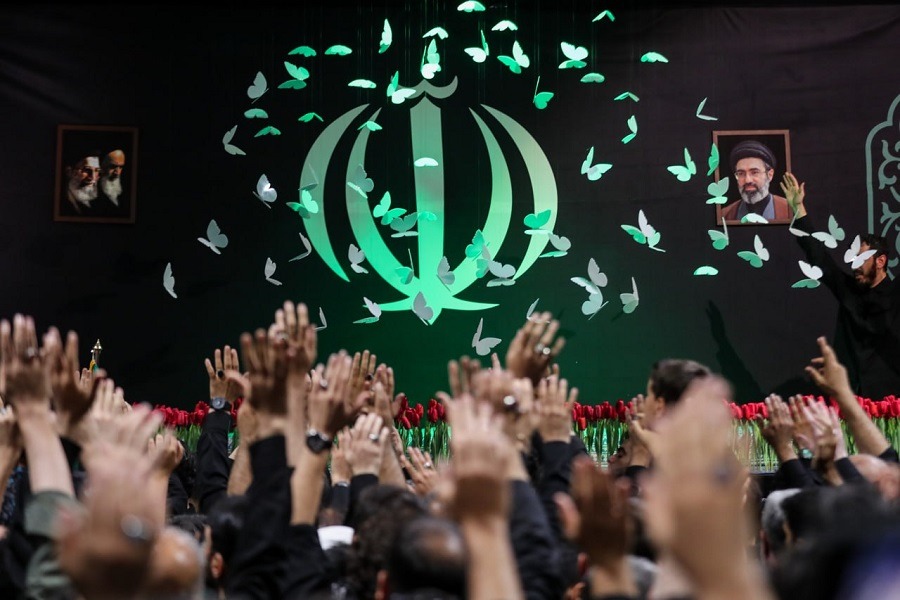
Muhammad al-Ayoubi, a Palestinian law professor and journalist, made the remark in an article about the martyred Leader, which is as follows:
History does not write the biographies of leaders at the moment of their death; rather, it often begins to write the most complex chapter of their lives after their loss. Therefore, when nations face the death of great leaders, they do not simply bid farewell to individuals, but rather examine their consciences, reassess their paths, and chart their future horizons.
In this context, the martyrdom of Grand Ayatollah Imam Seyed Ali Khamenei (may God be pleased with him) is more than a transitional event in the history of a state or group; it is a pivotal moment in the consciousness of an entire nation and marks the end of a transformative era in one of the most complex and turbulent regions of the world.
Regardless of the different perspectives on his experience, and however diverse the interpretations of his legacy, the central question remains: How can we understand this man’s role in shaping the regional landscape over the past four decades? And what lessons can be learned from his story, whether in terms of state-building, conflict management, or presenting an alternative civilizational vision in the face of Western hegemony?
An exceptional figure in an exceptional time and place
What distinguishes the martyred Leader, Seyed Ali Khamenei, from other leaders of the contemporary world is that he embodied multiple dimensions that are rarely found in a single leader. On the one hand, he was a religious authority carrying the banner of jurisprudence and religiou knowledge; on the other, he was a political leader holding the highest executive position in a system based on the Wilayat-e Faqih; And above all, a revolutionary and ideological icon who, for decades, presented the bravest face in the face of imperialism and Western hegemony, not only in his statements but also in his actions, decisions and strategic directives.
The Philosophy of Resistance: From Theory to Practice
If there is a key to understanding Imam Khamenei’s political thought, it lies in the concept of “resistance” as a comprehensive project, not simply a military or political response. For him, resistance is not an end in itself, but a means to achieving national independence, restoring dignity and building a model of independent development that relies on self-reliance, believing that true liberation begins with the liberation of the mind and knowledge, before the liberation of the land and institutions.
Read More:
Herein lies the multifaceted aspects of his discourse: despite his harsh revolutionary tone, he remains remarkably realistic in his recognition of the challenges facing the Islamic world. He does not simply condemn Western hegemony, but offers a precise diagnosis of the causes of backwardness and weakness, and place science and knowledge at the top of the priorities for revival. This connection between the ideological and the practical is what has given the project, despite all the pressures and criticisms it has faced, a degree of continuity and influence.
Legacy lies at the heart of historical assessment and future predictions
Amid this momentous scene, the most important question remains: how will history interpret Imam Khamenei’s experience? Will his image in the collective consciousness remain unchanged or will it transform over time?
The truth is that any serious historical assessment requires sufficient time distance, a careful deconstruction of the context, and a clear distinction between theoretical perspective and practical application. Imam Khamenei, like other great leaders, was a product of his environment, and his perspective was shaped by the challenges of his time. He responded to pressures and assumptions that were not entirely within his control.
However, what can now be confirmed is that he left an unforgettable impact on developments in the Middle East, and his name will forever be associated with the meanings of resistance, independence, and rejection of hegemony, regardless of whether one agrees with him or not. His experience will also be a rich source of material for scholars and researchers in the fields of international relations, political sociology, the philosophy of revolutions, and political theory in Islam.
Finally, the martyrdom of Imam Khamenei (may Allah be pleased with him) remains a pivotal moment in the history of Iran and the Islamic world, and indeed, in the history of the entire region. A man who spent decades formulating a transcendent political and intellectual project; he was not just an ordinary leader, but a complex and exceptional phenomenon that reflected the complexities of his region and world, answering profound questions while simultaneously raising larger ones.
History may be the final judge, but there is no doubt that this figure played a role in shaping the consciousness of an entire generation, inspiring millions on the path to liberation and dignity, and leaving behind a legacy of ideas and experiences that will be the subject of conversation, critique, and inspiration for future generations. While the current scene is one of farewell, the lessons learned from this journey will live on and be renewed with each new turning point in the nation’s path to reclaiming its civilizing role. In this light, the martyrdom of Imam Seyed Ali Khamenei is not only a farewell to a figure who played a pivotal role in Iranian history, but also a testament to a fateful phase in the history of the region; one that will be studied and analyzed for years to come.
4361830
