

Arbaeen Procession A Project to Cultivate Mankind’s Intellectual, Spiritual Dimension

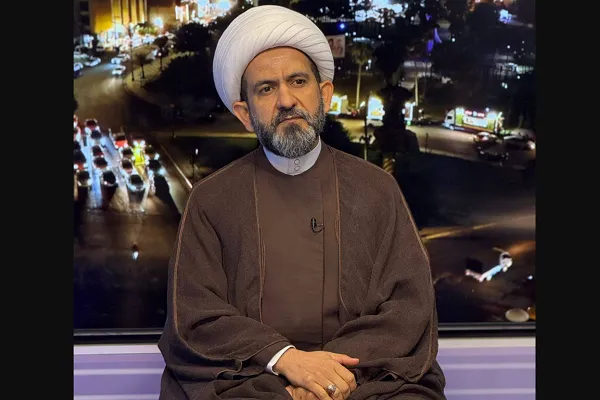
Sheikh Haidar Al-Shammari, a university professor, lecturer at the Najaf Seminary and Imam Sadiq University (AS) and head of the “Taj Al-Hadarah” Strategic Studies Center, spoke to IQNA about the importance of the Arbaeen pilgrimage and the cognitive dimensions of this great spiritual event.
He said this procession presents a brilliant image of Islam as a religion of mercy and human dignity.
The interview is as follows:
IQNA - What is the philosophy and importance of the Arbaeen pilgrimage?
I believe that the Arbaeen pilgrimage represents the largest annual voluntary gathering of humanity in the world. This is not simply an opportunity to commemorate a historical event, but a comprehensive civilizational project that encompasses the continuation of the message of Imam Hussein (AS). Arbaeen confirms that the values for which Imam Hussein (AS) was martyred, such as upholding justice, preserving human dignity, and resisting oppression, are alive in the conscience of the Ummah. This pilgrimage also reflects the depth of the spiritual connection with the Ahl-ul-Bayt (AS), transforming the concept of loyalty from mere sentiments to practical behavior based on sacrifice, altruism, and service to humanity.
From a social perspective, this creates enormous social capital based on cooperation, solidarity, and volunteer work. From a political perspective, it shows that nations that are able to preserve their cultural memory are best equipped to safeguard their future.
IQNA - What are the most important moral and spiritual etiquettes and recommendations for pilgrims during the Arbaeen pilgrimage?
The Arbaeen pilgrimage is a moral lesson before it is a physical journey. Therefore, the pilgrim must observe a set of etiquettes, the most important of which are: sincerity of intention for God Almighty, using the journey to remember God, reciting the Quran and supplications, cultivating patience, good character and respect for others, performing prayers at the appointed times, observing public cleanliness and respecting property, avoiding extravagance and ostentation that contradict the sanctity of the pilgrimage, serving others and being humble before them, because serving the pilgrims of Imam Hussein (AS) is one of the greatest acts of worship, and reflecting on the goals of the uprising of Imam Hussein (AS) and his blessed revolution, so that the pilgrimage becomes a turning point for changing behavior, not simply performing a ritual.
Therefore, I always emphasize that the success of the pilgrimage is measured by its impact on the individual's personality after returning to daily life.
IQNA - How do you evaluate the importance of learning the correct recitation of the verses and Surahs of the Quran and Islamic rulings at the Quranic stations set up during the Arbaeen pilgrimage?
It can be said that these initiatives are among the most important cultural achievements of the Arbaeen Walk, as they transform the route into an open Quranic university.
The Holy Quran is the intellectual basis of Imam Hussein's (AS) uprising, and he himself declared that his goal was to reform the Holy Prophet’s (PBUH) Ummah, which is a completely Quranic goal. Therefore, teaching the correct recitation of the Quran, the rules of recitation, and the jurisprudential and doctrinal foundations connect this Husseini ritual to its Quranic roots.
Read More:
These Quranic stations show that the Arbaeen pilgrimage is not just a large gathering, but a project for the intellectual and spiritual development of individuals, giving millions of pilgrims the opportunity to learn in a rich atmosphere of spirituality that is difficult to replicate on other occasions.
IQNA - What is the role of the Arbaeen pilgrimage in strengthening the closeness between Islamic sects and the unity of the Islamic Ummah?
The Arbaeen pilgrimage has an exceptional ability to unite Muslims around common values, because Imam Hussein (AS) is an Islamic symbol that is revered by different Islamic sects. This occasion confirms that national unity does not mean eliminating sectarian diversity, but rather cooperation on common principles, including justice and equality, human dignity, confronting injustice and defending holy places.
Furthermore, the diverse presence of visitors from different countries and sects creates a real space for dialogue and mutual understanding, breaking down many of the stereotypes created by political conflicts or extremist rhetoric.
IQNA - In your opinion, what is the most important message and main lesson of this spiritual movement and what are its cultural and social impacts on global public opinion?
The main message of Arbaeen is that moral values are capable of creating a global mass movement without coercion or material benefits.
Read More:
The world is witnessing millions of people walking hundreds of kilometers with faith and love, while millions of others provide them with free services. This is a rare phenomenon in human history. Culturally, the Arbaeen pilgrimage presents a shining image of Islam as a religion of mercy, solidarity, and human dignity. Socially, it promotes a culture of volunteerism, cooperation, altruism, and social responsibility.
At the level of global public opinion, it dispels many negative stereotypes about Islam and presents a practical model of a civilization based on forgiveness, not conflict.
IQNA - How can the participation of followers of other religions in the Arbaeen pilgrimage provide a platform for dialogue and understanding between religions?
It can be said that the participation of followers of different religions demonstrates the universality of the values for which Imam Hussein (AS) stood. Justice, freedom and the rejection of injustice are not values exclusive to Muslims, but are common human values. When a Christian, a Mandaean or another person participates in serving the pilgrims, this opens a door to practical dialogue based on mutual respect and away from theoretical debates.
Therefore, we emphasize that real dialogue begins when people cooperate in the service of humanity, and this is what the Arbaeen pilgrimage achieves in a unique way.
IQNA - Can the presence of followers of different religions and nationalities in Arbaeen be considered a form of public diplomacy to spread a culture of peace in the world?
The Arbaeen pilgrimage can undoubtedly be considered one of the most prominent examples of popular diplomacy or public diplomacy. The participants, especially since they come from diverse countries, bring back to their homelands an experience they have experienced firsthand, beyond media and political narratives.
This experience builds bridges of trust between people and presents a realistic image of Iraq, Islam, and the school of the Ahl-ul-Bayt (peace be upon them), as a school that calls for mercy, justice, and service to humanity. Thus, the impact of Arbaeen transcends religious boundaries and becomes a global message for building peace based on justice and mutual respect.
IQNA - How can the experience of providing services to pilgrims in the Husseini Moukebs (service stations), with the participation of followers of different religions and sects, provide a new model for social solidarity?
The Moukebs offer a unique model of human solidarity because they are based on pure volunteerism and without discrimination based on nationality, sect, or religion. Service during Arbaeen is not offered based on identity, but on the humanity of the individual. This reinforces the concept of moral citizenship and affirms that religious differences do not prevent cooperation in the service of the common good.
This model can be studied by social and humanitarian institutions around the world, as it shows that societies are capable of creating vast networks of mutual support and cooperation when moral values are the driving force.
In my opinion, the experience of the Husseini Moukebs represents one of the most successful forms of contemporary social solidarity. It offers the world a practical lesson in altruism, coexistence, and building trust between people; these are values that humanity desperately needs, given the conflicts and polarizations that the world is witnessing.
4366705
