

Report: 25 Muslims Killed in Anti-Muslim Hate Crimes in India in 3 Months

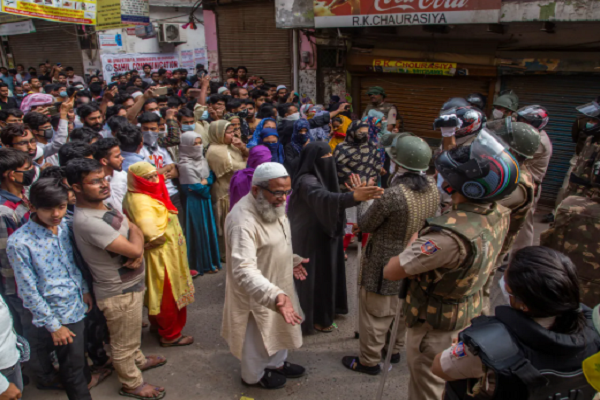
This is according to the South Asia Justice Campaign's India Persecution Tracker.
The tracker said the figures put 2026 on course to become the deadliest year for anti-Muslim hate crimes since it began recording such killings in 2022.
According to the tracker, the total death toll in the first seven months of 2026 now stands at 44, including 19 Muslims killed by state actors and 25 by Hindutva assailants.
The report said the period saw state actors continue to deploy the “full, long-documented repertoire of coercion against Muslims”, including “killing them in staged police ‘encounters’ and in custody,” detaining hundreds of people, “bulldozing their homes and places of worship,” and “forcing families through the border fence into Bangladesh at night,” particularly in Uttar Pradesh, Assam, Kashmir and increasingly West Bengal.
At least 23 Muslim religious structures were demolished in less than two months across six states, while more than 1,000 Muslim homes, businesses and religious structures were razed in at least 21 demolition episodes across eight states, taking the total number of such structures demolished in 2026 so far to over 3,000, according to the report, which also noted that the Supreme Court declined to enforce its own demolition safeguards and instead remitted the contempt petitions to the High Courts.
In Kashmir, security forces detained more than 2,500 people within 48 hours of a militant attack in July and demolished two families’ homes with explosives, while across at least six states, police responding to nationwide student protests allegedly selectively arrested Muslims.
Among the 25 Muslims killed, 15 were killed by police and security personnel and 10 by Hindu extremist actors in religiously motivated hate crimes across five states, including an 11-year-old girl and a 16-year-old boy.
The tracker further alleges that anti-Muslim rhetoric from senior political figures contributed to the climate of discrimination. It cites warnings from UN Special Rapporteurs that rhetoric around "infiltrators" risked conflating Indian Muslim citizens with foreign nationals and could amount to incitement to discrimination under international law.
They also highlighted what they described as the quarter’s “most consequential act of judicial courage,” a Muslim judge sentenced 14 cow vigilantes to life imprisonment for a lynching, but later required police protection after receiving threats from Hindu extremists.
“Through legislation, policy and official rhetoric, India’s highest public officials continued to condemn Muslims as a racialized outsider group—presumptively foreign in their own country, their belonging in India permanently conditional, the construction upon which every register, form and demolition order then goes to work,” the report noted.
Read More:
Communal mob violence targeting Muslims was reported in five states, with West Bengal witnessing the worst of it, according to the report.
West Bengal’s new BJP government and anti-Muslim targeting
In the days following the BJP’s first-ever state election victory there, attacks on mosques, Muslim-owned businesses and hawkers’ settlements killed at least two people, including one who was killed while trying to protect a mosque.
The new government also introduced measures affecting Muslims, including citizenship screening linked to welfare benefits, changes to the reservation list, a 62% cut in the minority-affairs and madrasa budget, and restrictions on cattle slaughter.
Police were instructed to hand detained alleged “infiltrators” to border forces without producing them before a court, while the government claimed 4,800 “deportations” in its first month; 77 Muslim communities were also removed from the backward-classes reservation list and madrasas placed under surveillance.
They noted that the state machinery targeting Bengali-speaking Muslims operated through voter-roll deletions and expulsions, with the Special Intensive Revision (SIR).
It further reported that the government restricted cattle slaughter days before Eid al-Adha and charged protesters during the NEET paper-leak protests, 13 of the 14 arrested being Muslim, under a new preventive-detention law, while the Chief Minister Suvendu Adhikari referred to them as “those Friday people.”
Assam “Pushbacks” and citizenship concerns
In Assam, the “pushback” expulsions continued, with the Chief Minister claiming that 1,679 people had been ‘sent back’ over two years, while Human Rights Watch documented Indian forces taking families, including children, through gaps in the border fence at night.
The report also highlighted continuing anti-Muslim rhetoric from senior officials, noting that UN Special Rapporteurs had warned that the “Detect, Delete and Deport” rhetoric around alleged “infiltrators” conflated Indian Muslim citizens with foreigners and could amount to incitement to discrimination under international law.
Legal architecture of exclusion
It said the legal framework affecting Muslim rights had also expanded, with Assam and Madhya Pradesh enacting Uniform Civil Codes that override Muslim personal law, while Parliament made ‘insulting’ the song Vande Mataram punishable by up to three years in prison.
The report also cited a High Court ruling declaring the centuries-old Kamal Maula Mosque a Hindu temple and ending Friday prayers, while at least 23 Muslim religious structures were demolished in less than two months across six states.
Read More:
Fresh judgments during the quarter reinforced a pattern of impunity in older cases, with appellate courts upholding the acquittal of all 22 accused—21 of them police officers, in a 2005 staged-encounter triple killing, as well as the acquittal of five men accused of burning a Muslim man alive in 2002, while newer cases showed a similar pattern, including custodial deaths recorded as accidents, investigations targeting victims themselves, and efforts to shield powerful perpetrators.
It further noted that public calls by Hindu extremists for the genocide of Muslims at a mass gathering near Delhi received no police action.
They called the Union government's decision to block Karnataka’s legislative attempt to strengthen hate-speech laws “unnecessary.”
The South Asia Justice Campaign, a non-partisan human rights movement, also noted growing international concern over India’s human rights record, with UN bodies and experts raising concerns over the crackdown on protesters, mass voter-roll deletions and the treatment of minorities.
Source: maktoobmedia.com
