


Imam Khomeini’s Movement Changed Global Power Balance
THERAN (IQNA) – Croatia’s deputy Mufti praised the role of Imam Khomeini (RA) in elevating Muslims’ status in the world politics.
Speaking to IQNA, Professor Mevludi Arslani said that after the victory of the Islamic Revolution of Iran led by Imam Khomeini (RA), Muslims in many countries rose up (against injustice and oppression) and established Islamic movements and parties.
Therefore, he said, Imam Khomeini’s movement played a major role in changing the world’s balance of power.
"When the Islamic Revolution achieved victory, I was 7 years old and did not know much about the revolution but I heard a lot about it from my father.
"My father said Iran’s Islamic revolution helped Muslims become a fundamental factor in world politics and this came after centuries of Muslims’ absence from the global stage.”
He also highlighted the influence of the Islamic Revolution in the Balkans, saying that Muslims in the region were very happy with the triumph of the revolution and considered it their own victory.
He further said that bringing about unity in the Muslim Ummah was one of the objectives of Imam Khomeini’s movement, and that the late founder of the Islamic Republic of Iran believed that Islamic unity would strengthen the Ummah.
Elsewhere, Professor Arslani stressed that Imam Khomeini (RA) regarded a return to Islamic teachings and rules as the way for Muslim’s progress and success.
The Croatian scholar also praised Imam Khomeini’s support for the Palestinian cause, saying that the Islamic Revolution of Iran stood by the Palestinian people.
Professor Arslani’s comments came as millions of Iranians on Friday held ceremonies across the country to commemorate the 27th departure anniversary of Imam Khomeini (RA).
Imam Khomeini passed away on June 4, 1989 at the age of 87.
Grand Ayatollah Seyyed Rouhollah Mousavi Khomeini, better known as Imam Khomeini, was born to a family of religious scholars in 1902 in the central Iranian city of Khomein.
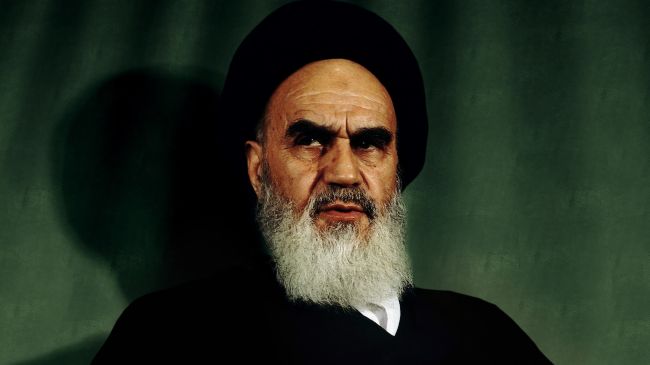
Imam Khomeini contributed many years of his life to resistance against the US-backed Pahlavi dynasty, and eventually paved the way for its downfall in the 1979 Islamic Revolution.
In the pre-Revolution era, Imam Khomeini spent more than 15 years in exile for his stiff opposition to the last monarch, Mohammad Reza Pahlavi, mostly for his association with Western imperialists.
While in exile, the politico-religious leader, who enjoyed immense public support in the country, continued to guide the uprising against the Pahlavi regime.
He was not allowed to return to homeland during Pahlavi’s reign, and only came back home on February 1, 1979 after the monarch finally gave into angry popular demonstrations and fled the country, never to return.
The Pahlavi dynasty fully collapsed 10 days later on February 11. Iranians then voted in a national referendum in April that year for the country to become Islamic Republic, an establishment architected by Imam Khomeini.
