


Utah Muslims: What Islam’s holy book really says — and doesn’t say — may surprise you
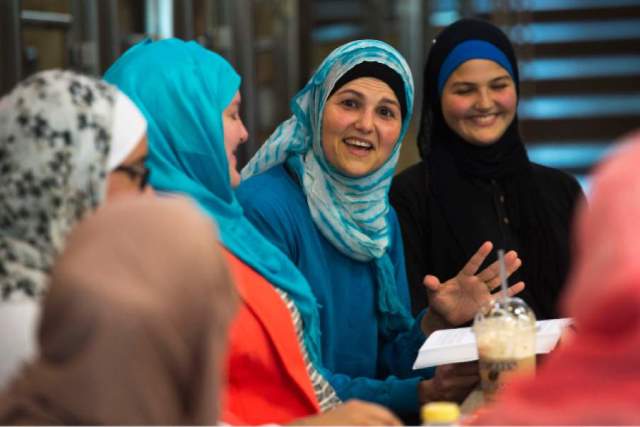
TEHRAN (IQNA) – Utah Muslims held a discussion about the Holy Quran at the Millcreek Libraryin Salt Lake City.
What most Americans think they know about Islam's holy book is that it endorses violence against nonbelievers and the oppression of women.
Because of such assumptions, Utah Muslims often get these questions: Where does the Quran say that people should blow themselves up for God? Where does it argue women should be kept inside or cover themselves completely? Or that Muslims should launch jihad against their enemies?
What most Americans don't know about Islam's sacred volume is its statements about tolerance, its condemnation of suicide, its retelling of biblical stories, its view that Jesus was a divine messenger who will be resurrected or its progressive approach to women's inheritance rights.
"The problem with many Muslims today," Shuaib Din, imam at the Utah Islamic Center in Sandy says, is that they see the Quran as a "blessed book and rewarding but not as personally life-changing or used to better society."
Starting Monday, though, more than a billion Muslims worldwide will have another chance to explore the text upon which their faith is built.
As part of their 30-day Ramadan experience — which also includes fasting from dawn to dusk — they are expected to read, recite or listen to the entire 600-page book.
Though Muslims receive blessings for every letter in the book they recite, Din says, that isn't why followers should read it.
The Quran, originally written in classical Arabic, has teachings about "how to solve issues like racism and injustice," he says. "It should have some practical implementation."
Pakistani mother Shehnaz Ali, a North Salt Lake resident who has read the book at least 25 times, believes it carries the same message as all religious books: Be good, worship God, take care of others, live an ethical, noble life.
Because Ali is not a native Arabic reader, she is studying the language, its cadence, rhymes and diction to get the most from Quranic verses.
"When you hear the sounds and feel [the teachings] with your five senses," says the Sunday school teacher at West Valley City's Khadeeja Islamic Center, "you feel like Allah [God] is talking to you directly. It's a face-to-face communication."
Source: SLTrib
