


Essence of Hajj Lies in Renouncing Worldly Attachments: Scholar
IQNA – An Iranian scholar and researcher described the Hajj pilgrimage as far more than a physical journey, stating that its true essence lies in temporarily renouncing worldly attachments to achieve spiritual closeness to God.
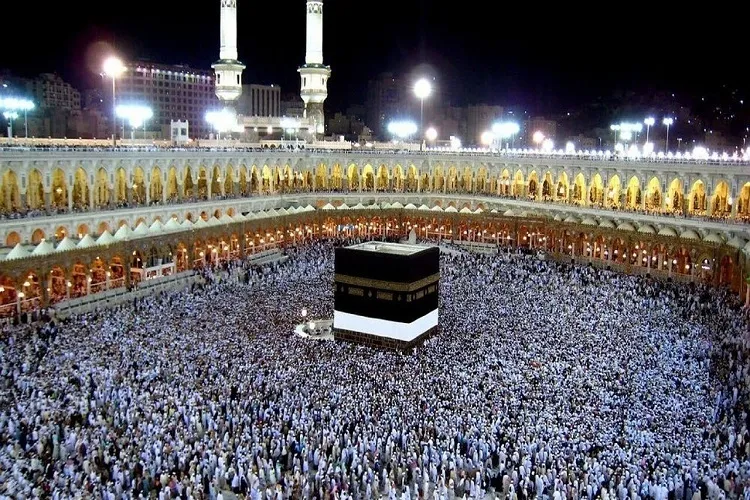
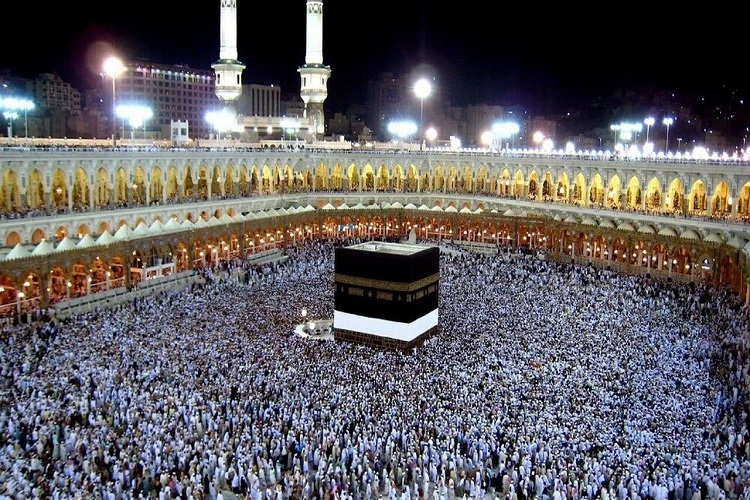
Discussing the importance of Hajj in Islam, Hojat-ol-Islam Mozaffar Barsalani told IQNA that Hajj has deep spiritual, social, and political dimensions.
He said Hajj is not merely a physical journey but its true essence lies in renouncing worldly attachments.
He noted that from the very start of the pilgrimage, a person separates from their family and daily concerns.
The pilgrim then reaches the stage of ‘Miqat’, a sacred boundary where they enter a state of ritual purity known as Ihram.
“Once a person enters Ihram, even their spouse becomes Haram (forbidden) to them,” he noted. “This shows that Hajj is not just an outward movement.”
Hojat-ol-Islam Barsalani said Hajj has several important dimensions, which include political, social, economic, and spiritual aspects.
“Hajj is a display of unity and cohesion among the world’s Muslims,” he said. “It is the greatest university for human development.”
He added that the various dimensions of Hajj help introduce Islam to people of other faiths.
The scholar also spoke about the moral and spiritual lessons of Hajj.
Hajj is performed in conditions in which there is no room for arrogance and pride and this means a person’s ego is broken, he stated.
He explained that regardless of their status, all pilgrims wear the same simple garments and perform the same rituals.
“A unity occurs in all aspects of the pilgrimage,” he said.
Barsalani described the social dimension as another key part of the journey, saying people from different groups around the world come together during Hajj and important exchanges take place, creating a massive synergy among Muslims.
Read More:
He also stressed that the political dimension should not be ignored.
“Hajj is a declaration of disassociation from polytheists. It is a continuation of the struggle in favor of Islam against disbelief.”
The researcher noted that Hajj also has a significant economic dimension. “This is the enormous financial circulation that occurs during the pilgrimage.”
He explained that approximately 2.5 million people participate in Hajj each year, with many sacrificing a sheep as part of the rituals.
“The carcasses are then sent to poor Muslim countries. This is a blessed achievement that only occurs during the Hajj journey.”
Hojat-ol-Islam Barsalani concluded by emphasizing that Hajj represents unity and cohesion among Muslims worldwide.
4351827
