


Imam Hussein’s Movement beyond A Historical Uprising
IQNA – The movement of Imam Hussein (AS) had many lofty goals and ideals, and went beyond an only historical uprising.
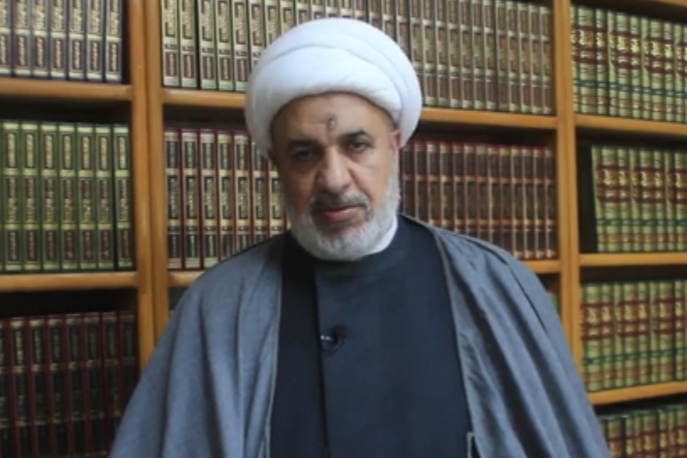
This is according to Sheikh Ali Al-Fatlawi, a lecturer at Warith Al-Anbiya University, Karbala, who, in an article, discussed the permanence of the Husseini movement and its impact on public opinion.
His article is as follows:
Before discussing the factors that contributed to the permanence of the Husseini movement, which played an important role in its continuation, we must first understand the concepts of movement and revolution. Is there a distinctive feature among them?
Definition of Nahdha (movement)
Linguistically, Nahdha means rising, being alert and active, rising up against the enemy, rushing to confront it, resisting and moving on the path of progress, and idiomatically, Nahdha is a positive description of the changes that are created by those who initiate it.
Linguistically, Inghilab (in Arabic) means rising, surging, expanding; gushing water, etc., and idiomatically, it is a fundamental change in the political or social order carried out by the people.
If we examine these two concepts, we find a clear difference between them, a difference that is not easily discernible: a Nahdha is a positive description of a state of change characterized by development and progress, while an Inghilab is a state of rebellion and revolt against the existing order, regardless of whether it is positive or negative.
When we consider the Ashura movement, we can apply the concept of Inghilab to it, because it was a rebellion against a corrupt order, but it was a positive situation full of characteristics that lead society to perfection, development and progress. Therefore, it encompasses the concept of Nahdha.
Factors Affecting the Permanence of Movements
Many movements occurred before and after the uprising of Imam Hussein (AS), but none of them achieved that permanence. None of them reached the same level of respect and honor, nor did they reach the same level of imitation and role model as the uprising of the Master of the Martyrs (AS). In this blessed movement, we find countless elements that serve as exemplary models in all fields - religious, social, military, psychological and emotional. In fact, we clearly see that the principles and values of previous movements have been integrated into the uprising of the oppressed grandson of the Prophet (PBUH). It is no exaggeration to say that the Ashura of Imam Hussein (AS) is the essence and culmination of all noble movements, which is why it has remained dynamic throughout the ages. This permanence is due to the fundamental factors on which this perfect divine movement was built. Among these factors are the following:
1. Divine Principles: By examining the verses of the Holy Quran, it becomes clear that God Almighty has destined for Himself the victory of His companions who call people to support His word, implement His path, adopt His principles, and spread His religion, the religion of truth, as He has said in His word: (Verse 28 of Surah Al-Fath)). There are many noble verses that clearly state the necessity of adopting the divine principles found in the religion of truth, and this is what Imam Hussein (AS) did in his uprising. But regarding the explicit guarantees mentioned in the verses of the Holy Quran, such as the statement of Allah the Almighty in Verse 7 of Surah Muhammad and other verses, this brief study cannot cover them all. Other verses confirm the occurrence of divine victory and the realization of what Allah the Almighty has guaranteed, such as His statement in Verse 123 of Surah Al-Imran. Many noble hadiths have been added to this example of verses from the Quran. For the sake of brevity, we will limit ourselves to what is stated in the Quran.
From the above, we learn the necessity of God Almighty’s approval of the principles of any revival or call to Islam and the obligation to follow them in various aspects of life, both public and private, in the path of obedience to God Almighty, His Prophet (PBUH) and Ahl-ul-Bayt (AS). We also learn that divine victory is not limited to military victory alone, but victory at all levels, including the continuation of the revival so that it can remain as a beacon of guidance.
2. The Personality of the Leader: All the characteristics of leadership are embodied in the divinely appointed leader who is the true representative of God on earth and the final proof for the Ummah. The Prophet (PBUH) said about Imam Hussein (AS): “Hassan and Hussein are the Imams of my Ummah after their father.” Hence, the extent to which the success of the Husseini movement depends on its leader becomes clear. He is the infallible Imam, the most perfect, the most pious, the most devoted, the most courageous, the most knowledgeable, the most generous, the most pious, the most ascetic, and the most capable human being; in fact, he possesses all the characteristics of the perfection of a divinely appointed leader.
From the second point, we learn the necessity of a worthy leader who surpasses his peers in all or most of the characteristics necessary to achieve a complete and successful movement. We also learn that a nation that wants its people to be successful in carrying out their duties, or a family that wants its children to assume leadership positions, must draw inspiration from the personality of the Imam (AS) to support them in building their character. This responsibility falls on the parents, especially the mother, who is constantly in contact with her child.
3. Planning: Without a doubt, planning is one of the important foundations on which the success of a movement or revolution depends; in fact, it is the secret of its success. Hence, it becomes clear that careful planning and study are essential for a revolution or movement and identify the elements and factors that contribute to its success. This extends to the necessity of planning in the personal lives of those who want to achieve their goals and objectives without failure, setbacks or obstacles.
This is confirmed by the Prophet's (PBUH) statement regarding Imam Hussein (AS) to inform the Ummah of his status and encourage them to support him in the future: “This son of mine - Hussein (AS) - will be killed in the land of Iraq. Whoever of you is present at that time must support him.”
This is a kind of planning to support the Imam (AS). What Aba Abdullah (AS) did in determining the time of the movement, announcing the revolution and its goals, and the method of selecting his companions is an element of this planning.
4. Media Participation: The significant support of the media, especially from the family of the Prophet (PBUH) and his companions, played a significant role in the success and sustainability of the movement. This is especially true of the media role of Imam Zayn al-Abidin (AS) and Hazrat Zaynab al-Kubra (SA), as well as the military assistance of Abbas ibn Ali (AS) and Ali ibn al-Hussein (AS). Moreover, the participation of the members of the Hashemite family who were martyred in Karbala and the participation of many companions such as Habib ibn Mazahir al-Asadi, Muslim ibn Awsjah, and others, serve as convincing evidence for those who believe in the guardianship of Imam Hussein (AS). Going into the details of the lives of these figures would take us beyond the point of our discussion, and focusing solely on their contributions would distract us from our intended goal. Therefore, we limit ourselves to a general overview of their roles in order to reach one key conclusion: The full support of the elders of the Ummah, or those who have influence and authority, is essential to ensure the success of our efforts and the achievement of our goals, both at the social and individual levels.
There are other factors that have played a significant role in the survival of the Husseini movement, but these factors are not relevant to our current discussion and we have refrained from mentioning them for the sake of brevity.
The Goals of the Movement and Its Impact on Public Opinion
The holy Husseini movement had many lofty goals and ideals, some of which were explicitly stated by the Imam (AS) and others were even deeper. It is worth mentioning some of what Imam Hussein (AS ) stated so that we can consider them as a guiding light in our social, jihadi and individual lives:
1. Overthrowing the oppressive Umayyad government and reviving the just Islamic government: This is clear from his saying: “The Messenger of God (PBUH) said: ‘Whoever sees a tyrant ruling who considers the forbidden things of God permissible, breaks the covenant of God, opposes the Sunnah of the Messenger of God, behaves sinfully and transgresses among the servants of God and does not rebuke him with his actions and words, it is upon God to put him in the (lowly and tormenting) position of that tyrant.’”
2. Refraining from granting legitimacy to the oppressor, whether through allegiance or silence, as stated in his statement: “One like me will never give allegiance to one like him (Yazid).”
3. Performing religious duties, because of the significant benefits that this will have for all of humanity until the Day of Judgment. This is what he emphasized in his statement: “God willed that I be seen killed.”
4. Saving the Ummah from the disastrous consequences that the Umayyad regime imposed on them, as is clear from his statement: They abandoned obedience to God the Most Gracious, spread corruption, ignored God's limits, appropriated the spoils of war for themselves, and made lawful what God had forbidden and unlawful what He had made lawful.
5. Educating the Ummah to free itself from the shackles of the oppressors. This is what he emphasized in his statement: No, by God, I will not submit to them like a coward, nor will I submit to them like a slave.
6. To state the right of the Ahl al-Bayt (a.s.) to the caliphate, because they are worthy of it. This is what the Imam (a.s.) stated: We will wake up and you will wake up and we will see who is more deserving of the caliphate.
7. The general goal that connects the previous and subsequent goals is to preserve the religion of Islam. This is made clear by his statement: Whoever sees a tyrant ruling who considers the forbidden things of God as lawful, breaks the covenant of God, opposes the Sunnah of the Messenger of God, behaves sinfully and transgresses among the servants of God, and does not reciprocate with him through his actions and words, it is upon God to put him in the (lowly and tormenting) position of that tyrant. In another statement, he said: The Sunnah has been suppressed and innovation has been revived. In order for these corruptions to change and for matters to return to their former state, namely the righteousness, the life of the religion, the rule of the Book and the guidance of the Sunnah, there must be a revolutionary and a hero who understands the sanctity of the religion, the greatness of the Book and the purity of the Sunnah and fulfills his duty towards them. Other goals have also been mentioned by some scholars that do not go beyond what has been said before, but for the sake of brevity, we will refrain from discussing them.
Other goals have also been mentioned by some scholars that do not go beyond the scope of what has been mentioned, but for the sake of brevity, we will not discuss them.
Objectives
Imam Hussein (AS) wanted to instill a set of noble values and concepts that Islam calls for in the generations that lived during his time and those that came after him. Among these are the following:
A. Rejection of any government that is not based on legitimacy, logic, and merit.
B. Granting legitimacy to those who do not deserve it is not permissible.
C. Silence in the face of injustice is not permissible, because this perpetuates injustice and destroys justice.
D. Supporting the oppressed, warding off harm, oppression, and pain from them, and restoring rights to their original owners.
E. Getting rid of the spirit of defeatism and submission, and not risking health at the cost of losing principles and values.
F. The need to choose the most worthy people and support those qualified to accept responsibility.
G. Sacrificing the most precious things for the sake of preserving religion.
H. The obligation to perform religious duties without needing to know their wisdom.
I. The ruler must be characterized by piety, honesty, and external and internal purity.
4360209
