


In Cities of Iran, Time Stands Still for Martyr of Karbala
IQNA – As the crescent moon heralds Muharram, the rhythmic thud of chests beating in unison echoes across Iran’s cities and towns, transforming bustling avenues into riverbanks of mourning.
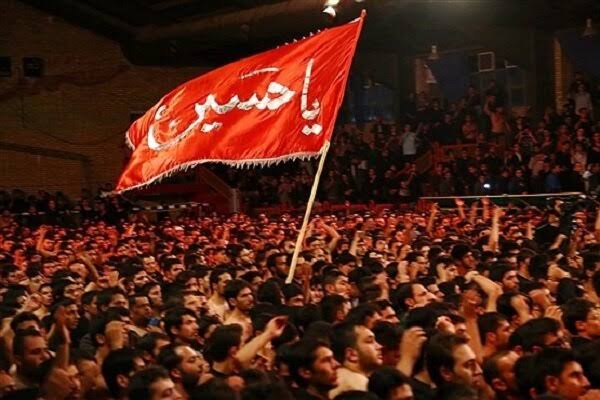
For ten profound days, the nation’s pulse aligns with the desert of Karbala, ensuring that the cry of “Ya Hussein!” transcends the thirteen centuries that separate the living from the martyred.
Following is a report on Muharram mourning rituals in Iran:
Each year, during the month of Muharram, millions of people across Iran come together to commemorate the martyrdom of Imam Hussein (AS), the third Imam of Shia Muslims, and his loyal companions, who were martyred in the Battle of Karbala in 680 CE.
Yet the annual Muharram commemorations in Iran are far from a uniform tradition. They extend well beyond processions, black banners, and the rhythmic beating of drums that often symbolize the mourning season.
Across the country, from major cities to small towns and remote villages, communities have developed their own distinctive mourning rituals over centuries, blending religious devotion with local customs and cultural heritage.
Some ceremonies, such as Yazd’s renowned Nakhl-Gardani ritual, have achieved international recognition and draw visitors from around the world each year.
Others remain largely unknown beyond the communities that have preserved them for generations, hidden gems of Iran’s rich spiritual and cultural landscape.
While no single account can capture the full diversity of Muharram traditions practiced across the country, the following ceremonies rank among the most distinctive, enduring, and fascinating expressions of mourning in Iran.
Gel-Mali (Mud anointing ritual)
One of the most visually striking Muharram traditions in Iran is Gel-Mali, or ritual mud anointing, practiced across parts of western Iran, particularly in the provinces of Lorestan, Kermanshah, and Ilam, as well as in areas of Khuzestan, Markazi, and Hamedan.
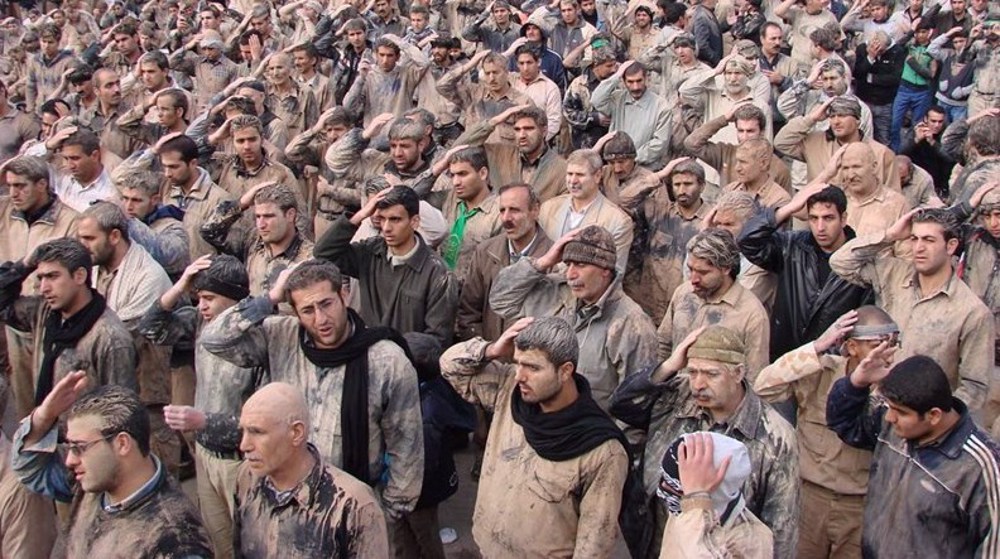
In the days leading up to Ashura, mourners prepare large clay pits filled with soft mud. On the day of Ashura, the tenth of Muharram, participants cover their bodies and clothing with the mud before joining processions, chest-beating ceremonies, and lamentations commemorating the tragedy of Karbala.
For participants, the ritual symbolizes profound grief and humility in the face of Imam Hussein’s (AS) martyrdom. Covered in mud, mourners embody a state of mourning and sorrow, expressing their solidarity with the suffering endured by the Imam, his family, and his companions.
In Khorramabad and surrounding areas, the tradition begins several days earlier with a ceremony known as Tarash-e Abbas (Abbas’ Shaving). During this ritual, mourners bathe, groom themselves, and put on clean clothing as a symbolic act of spiritual and physical preparation for the days of mourning ahead.
As part of the preparations, participants also collect firewood from local households to build large communal fires. These fires serve both a practical and symbolic purpose, providing warmth for mourners after the mud ritual, particularly during colder years, while also reinforcing the collective spirit and communal participation.
Chok-Choko (Stone-clashing ritual)
Among Iran’s most distinctive Muharram traditions is the Chok-Choko ceremony, practiced in the city of Estahban in Fars province as well as in several other parts of the country.
During the ritual, mourners gather in large circles and move in a synchronized rhythm while striking two stones – or, in some cases, specially crafted wooden pieces – together in time with elegies and mourning chants.
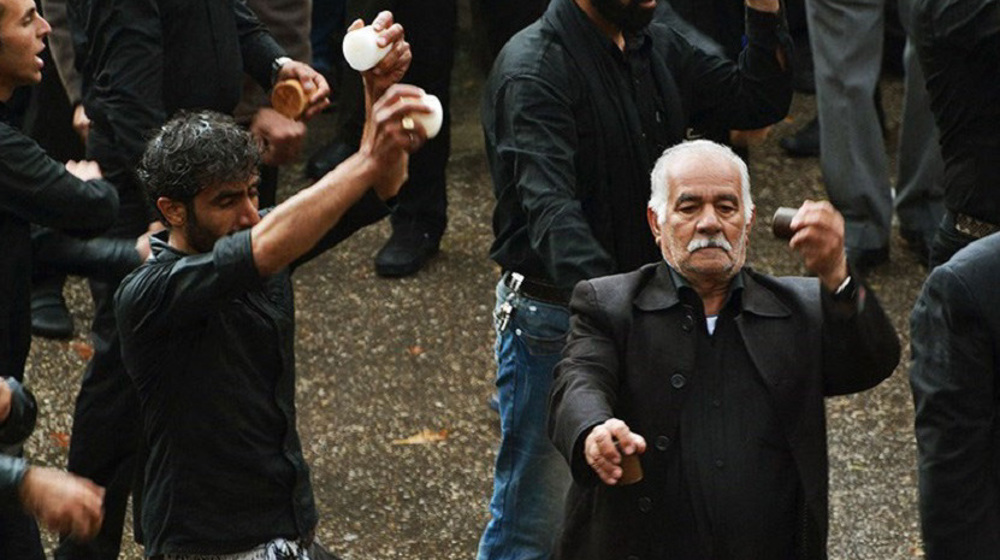
The resulting sound creates a solemn and powerful atmosphere that sets the ceremony apart from more familiar forms of Muharram observance.
According to local tradition, Chok-Choko symbolizes the tragic aftermath of the Battle of Karbala, particularly the trampling of the martyrs by the horses of Yazid’s army following the battle. Through their coordinated movements and rhythmic strikes, participants seek to evoke the sorrow and anguish associated with one of the most painful episodes in history.
Led by an elegy reciter, mourners raise the stones above their heads, strike them together, bow, and repeat the motion in carefully synchronized steps forward and backward.
With a history stretching back nearly two centuries, the Chok-Choko ceremony has become an enduring symbol of Muharram mourning in the region. Its cultural and historical significance has also earned it recognition as part of Iran’s national intangible cultural heritage, helping preserve the tradition for future generations.
Bil-Zani (Spade ritual)
Another unique Muharram tradition is Bil-Zani, a centuries-old mourning ceremony practiced in Khusf County in South Khorasan province.
With roots dating back approximately 200 to 250 years, the ritual combines symbolic movement, community-centric mourning, and historical remembrance in a distinctive expression of devotion to Imam Hussein (AS).
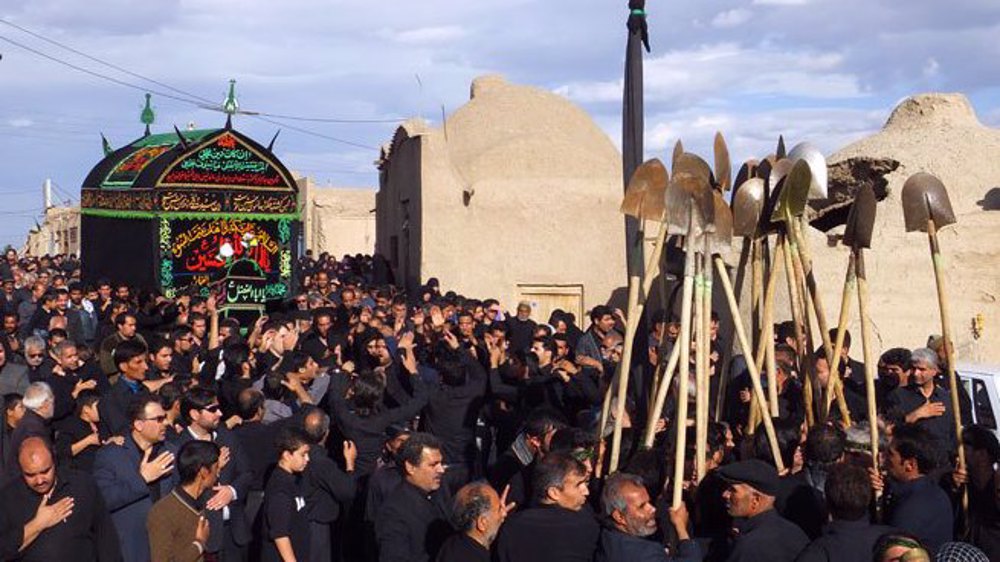
On the day of Ashura, mourners gather carrying agricultural spades, known locally as bil. Forming large circles, participants move in unison, raising the spades toward the sky before leaping into the air and striking the metal blades together while chanting the name of Imam Ali (AS) with the cry of “Heydar Ali.”
The rhythmic clash of metal creates a powerful and resonant sound that echoes throughout the ceremony, reinforcing the solemn atmosphere of mourning.
According to local tradition, the ritual commemorates the tribe of Bani Asad, whose members buried the martyrs of Karbala several days after the battle. The spades carried by participants symbolize the tools used in that sacred task, transforming an ordinary agricultural implement into a powerful symbol of loyalty and remembrance.
Alongside the Bil-Zani procession, mourners also carry symbolic funeral structures known as Nakhl, which represent the funeral corteges of Imam Hussein (AS) and his infant son, Ali Asghar, who were martyred in Karbala.
Through its combination of historical memory, symbolic imagery, and collective participation, Bil-Zani remains one of the most distinctive Muharram observances in eastern Iran, preserving a tradition that has been passed down through generations.
Shah-Hussein (Shakhsey-Vakhsey ritual)
One of the most recognizable Muharram traditions in northwestern Iran is the Shakhsey-Vakhsey ceremony, known locally by its Azarbaijani Turkish name and practiced widely across the region during the month of Muharram and particularly on Ashura.
The ritual begins several days before the start of Muharram and continues until Ashura, gradually building in intensity as the commemoration of Karbala reaches its climax. During the ceremony, participants form long rows, placing their hands on the shoulders or backs of those standing in front of them, creating a unified chain of mourners moving as one body.
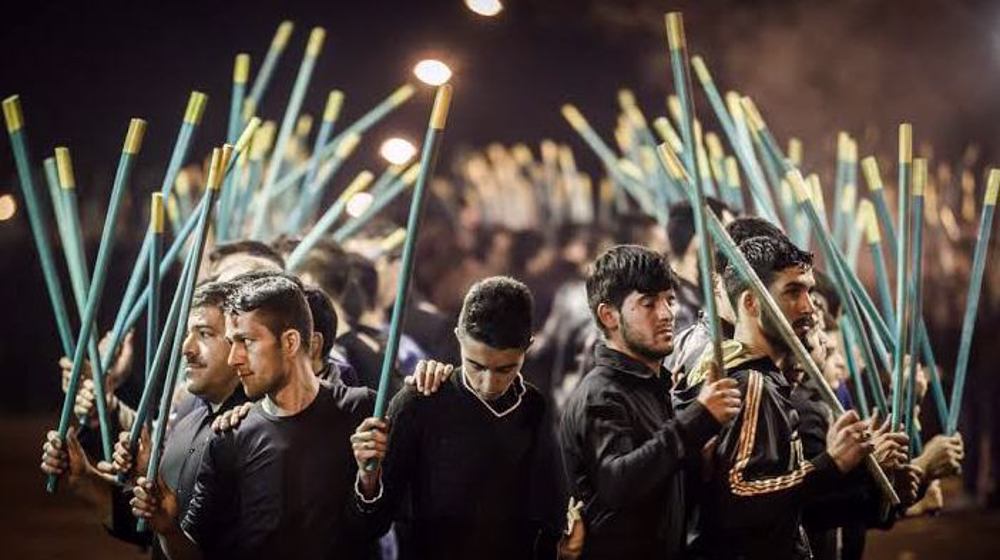
Holding ceremonial sticks, mourners rhythmically raise and lower them from the ground toward their heads while chanting the phrases “Shakhsey” (Shah Hussein) and “Vakhsey” (Woe Hussein).
The synchronized movements, accompanied by the collective chants, create a solemn and deeply emotional atmosphere that resonates throughout towns and neighborhoods.
According to local tradition, the ritual symbolically reenacts the mobilization of Imam Hussein’s (AS) supporters before the Battle of Karbala, evoking the spirit of loyalty, sacrifice, and readiness that defined the Imam’s companions.
Passed down through generations, Shakhsey-Vakhsey remains one of the most enduring and visually distinctive forms of Muharram mourning in northwestern Iran, reflecting both the region’s cultural heritage and its deep attachment to the memory of Karbala.
Chelchela (The forty-lamp ceremony)
Among the lesser-known yet deeply symbolic Muharram traditions of Iran is the Chelchela ritual, an ancient ceremony practiced in the town of Mojan, near Shahroud in central Iran’s Semnan province. Preserved for generations, the mourning ritual has been recognized as part of Iran’s national intangible cultural heritage.
The ceremony begins on the evening of the third night of Muharram, when caretakers prepare the local mourning hall and carefully arrange forty candlesticks, a number that holds profound spiritual significance in many Islamic traditions.
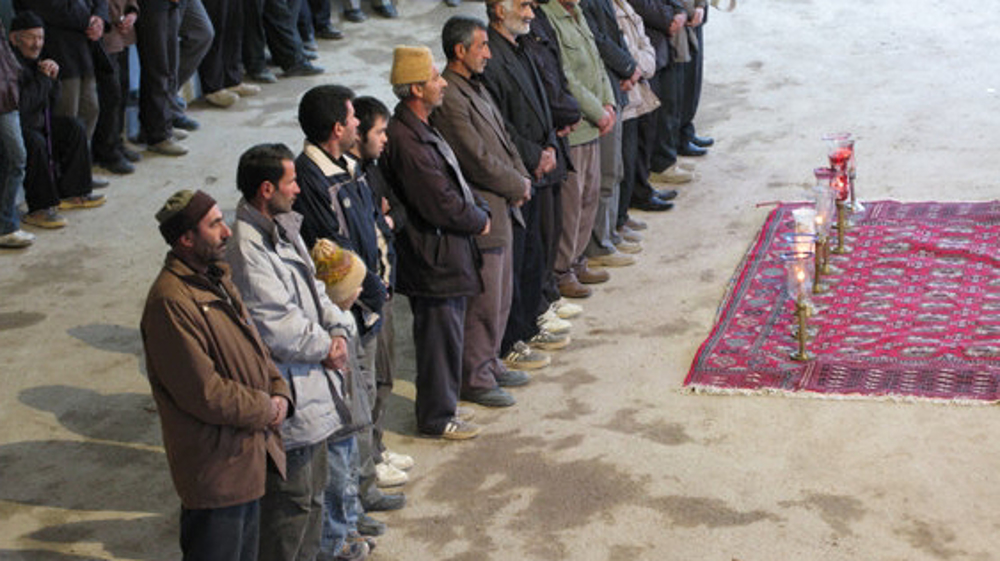
As darkness falls, the hall is illuminated by the glow of the lamps, creating a solemn atmosphere of reflection and devotion.
Community elders lead the gathering in prayers and supplications, while passages from Ziyarat Ashura are recited in remembrance of Imam Hussein (AS) and the martyrs of Karbala.
The most distinctive part of the ritual takes place at its conclusion. Participants pass the illuminated lamps from hand to hand, gently kissing them as a sign of reverence and devotion. During this act, prayers are offered for the sick, the deceased, and those facing hardship, transforming the ceremony into both a commemoration of Karbala and a collective expression of hope, remembrance, and spiritual solidarity.
Ta'zieh (Passion play reenactments)
The town of Tafresh, in Markazi Province, has long been regarded as one of Iran’s foremost centers of Ta'zieh, the traditional dramatic reenactment of the events of Karbala.
For generations, the art form has occupied a central place in the town’s Muharram commemorations, preserving one of the most distinctive expressions of Shia devotional culture.
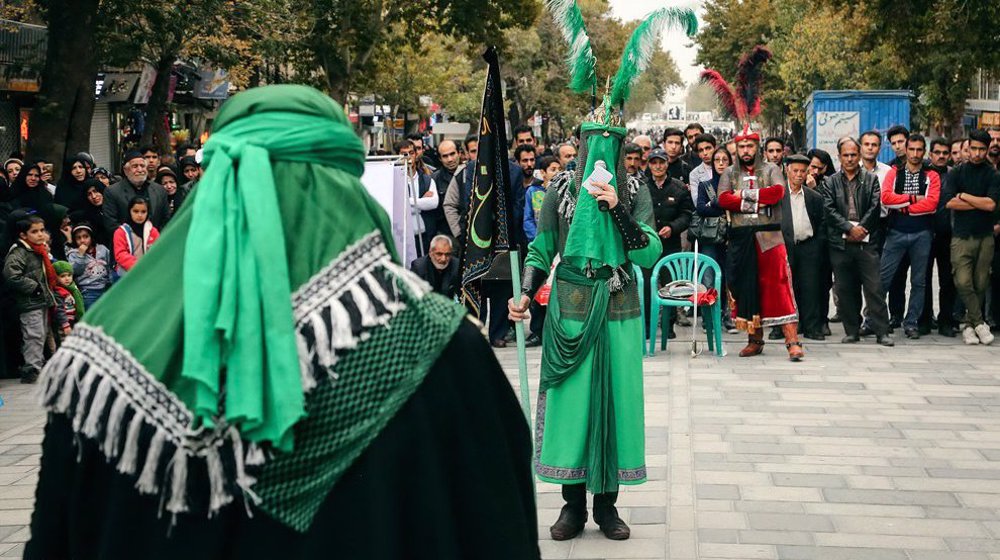
Each year during the months of Muharram and Safar, more than twenty Ta'zieh troupes stage performances across the town, drawing large crowds of mourners.
Through a combination of poetry, music, dialogue, and symbolic staging, the performers recreate pivotal moments from the Battle of Karbala, bringing to life the courage, sacrifice, and suffering of Imam Hussein (AS), his family, and his loyal companions.
These performances serve as acts of remembrance and devotion, allowing audiences to engage emotionally with the events of Karbala and reflect on the enduring values of justice, faith, and resistance embodied by the Imam’s stand.
At the heart of Tafresh’s Ta'zieh tradition stands the historic Zaghram Tekyeh, one of Iran’s oldest mud-brick mourning halls.
With its rich history and distinctive architecture, the venue remains a focal point of Muharram observances in the region, hosting some of the town’s most prominent performances and serving as a living testament to the enduring legacy of Ta'zieh in Iranian religious and cultural life.
Nakhl-Gardani (Carrying the symbolic coffin)
Perhaps the most famous and internationally recognized Muharram tradition in Iran is Nakhl-Gardani, a centuries-old ritual closely associated with Yazd province that attracts visitors, researchers, and pilgrims from around the world each year.
At the center of the ceremony stands the Nakhl, a massive wooden structure that symbolically represents the funeral bier or coffin of Imam Hussein (AS). Towering over the mourners who carry it, the structure is elaborately adorned with black mourning cloths, mirrors, swords, daggers, colorful fabrics, and various ornaments, each carrying symbolic associations with the tragedy of Karbala and the sacrifice of the Imam and his companions.
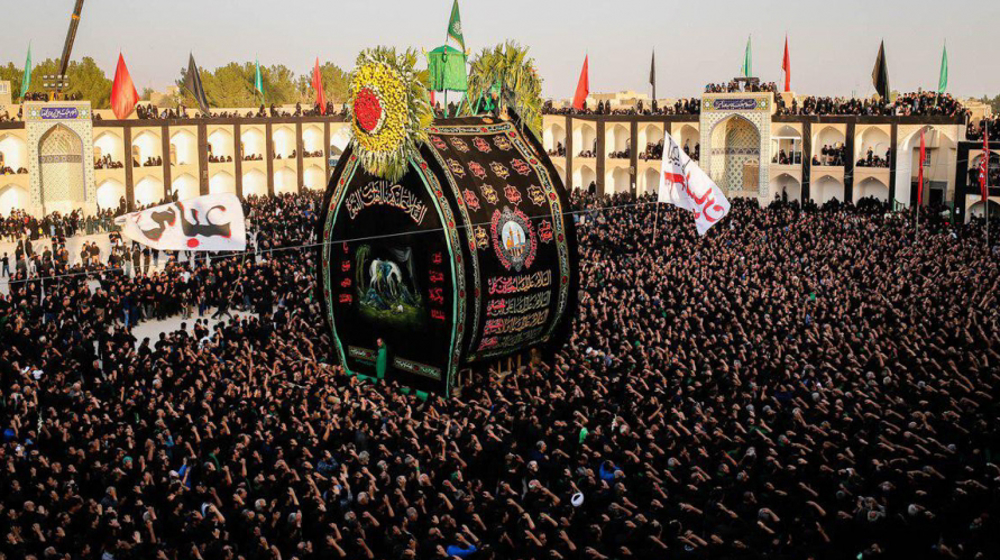
The preparation and decoration of the Nakhl is itself a communal undertaking, often involving entire neighborhoods and reflecting generations of local tradition.
Once assembled, the immense structure is lifted onto the shoulders of hundreds of men who bear its weight through streets and public squares in a powerful display of devotion and collective remembrance.
On the day of Ashura, the Nakhl is ceremonially paraded through the town, accompanied by mourning chants and large crowds of spectators. In many communities, the structure circles a central square three times before being returned to its resting place.
Among the most impressive examples of Nakhl-Gardani are those found in the towns of Taft and Ashkezar, where some of the largest Nakhls in Iran continue to serve as focal points of Muharram commemorations.
Vahed (The climactic chest-beating ceremony)
In the southern province of Bushehr, a distinctive form of Muharram mourning known as Vahed has evolved over the course of the past century, becoming one of the region’s most powerful expressions of collective devotion and remembrance.
The ceremony is centered around a lead chanter, known locally as the Pishkhan (lead reciter), who stands at the heart of the gathering.
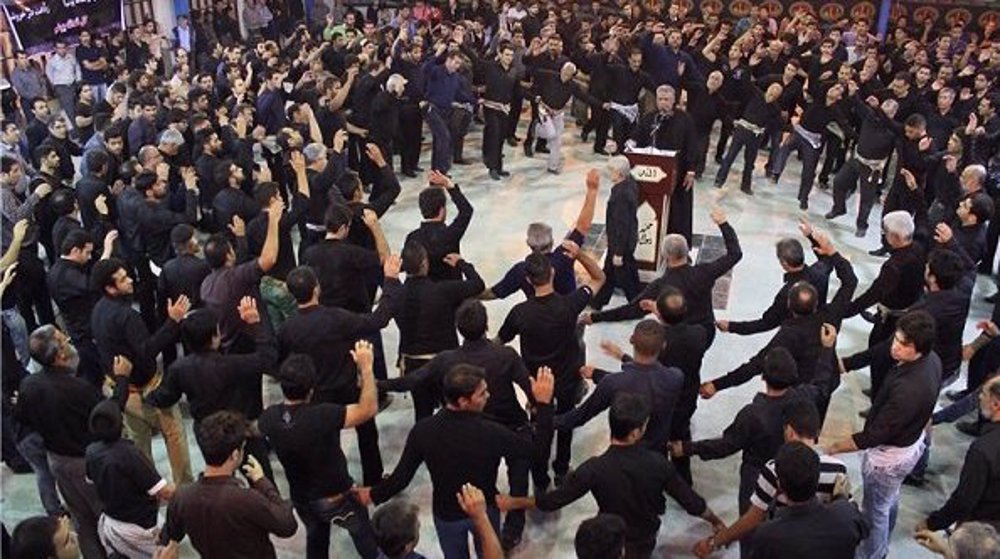
Surrounding him are concentric circles of mourners, known as Bor, whose movements and responses shape the rhythm and emotional intensity of the ritual.
Participants place their left hands around the waists of those standing beside them, forming a unified chain of mourners. As elegies are recited, they rhythmically beat their chests with their right hands while moving in coordinated circles around the lead reciter.
As the ceremony progresses, the tempo of the recitations gradually intensifies, drawing participants into an increasingly emotional state. The climax arrives when the Pishkhan suddenly calls out “Vahed” – meaning “One.” The cry serves as a powerful signal that unifies the gathering at its emotional peak, prompting a synchronized response from the mourners.
The dramatic culmination of the ritual, marked by the harmony of voices, movement, and chest-beating, creates one of the most striking and emotionally charged displays of Muharram mourning in southern Iran.
Muharram mourning in Tehran's Grand Bazaar
Some of Tehran’s oldest and most authentic Muharram commemorations take place in and around the city’s historic Grand Bazaar, a district that has long served as both a commercial hub and a center of religious and social life.
During Muharram, the bustling market transforms into a vast space of mourning, where traditional Ta'zieh performances, horse processions, symbolic tents, and reenactments of key events from Ashura bring the story of Karbala to life.
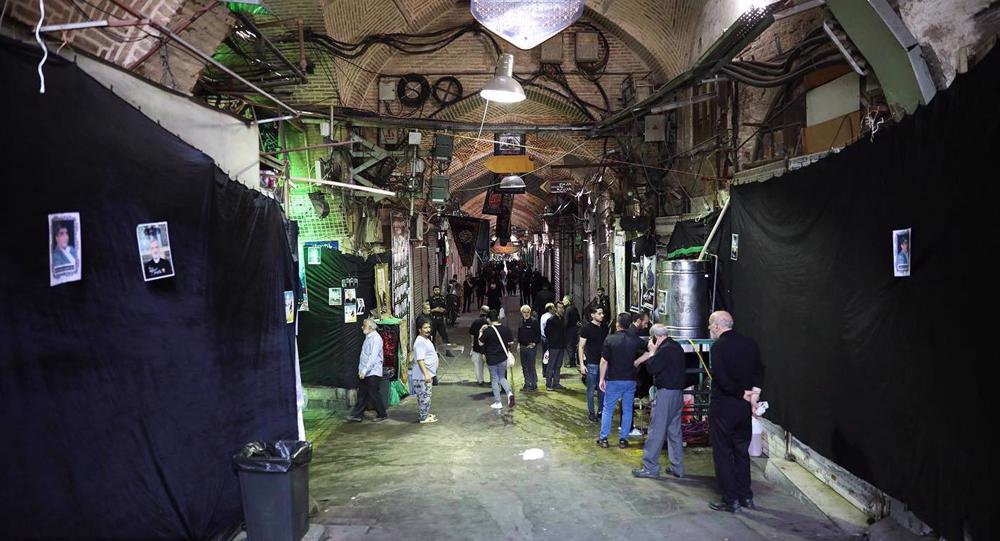
The narrow alleys and historic courtyards of the bazaar become the backdrop for ceremonies that have been preserved for generations.
Many of these observances are organized by Tehran’s trade guilds, whose involvement in Muharram rituals dates back more than a century.
Among the oldest and most respected are the processions organized by Tehran’s textile merchants, whose ceremonies have been passed down from one generation to the next.
Taken together, these traditions illustrate the remarkable cultural diversity of Muharram observances across Iran. Although they all commemorate the same defining tragedy – the martyrdom of Imam Hussein (AS) and his companions at Karbala – each region has developed its own distinctive language of mourning.
By Mina Mosallanejad
Source: Press TV
