


Scholar Explains How Mourning for Imam Hussein Keeps Shia Islam Alive
IQNA – The rituals of Muharram are not mere acts of grief, but for Shia Muslims worldwide, they are the lifeblood of a faith that has endured for fourteen centuries, says a Muslim scholar.
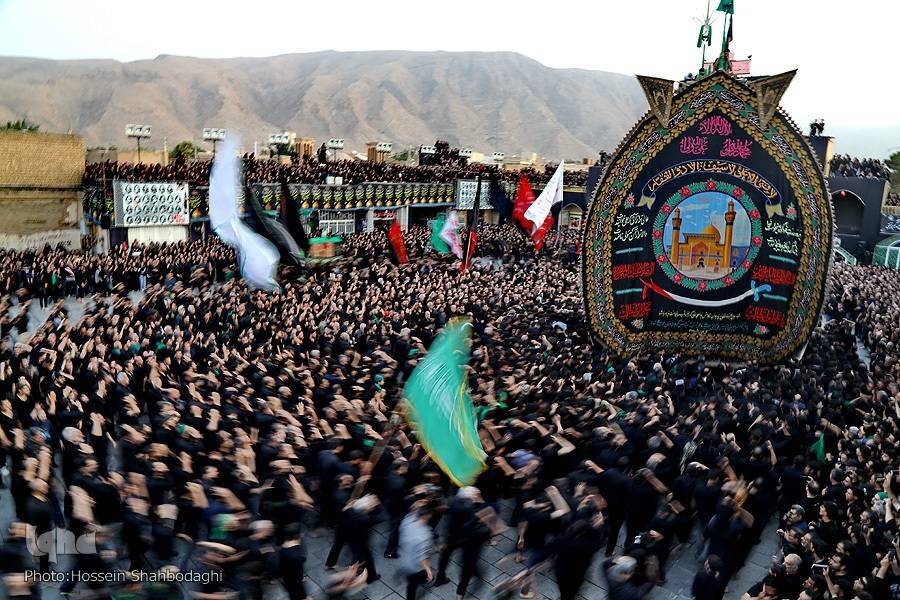
Hojat-ol-Islam Mohammad Masjed-Jamei, a religious scholar and faculty member at the School of International Relations of Iran's Ministry of Foreign Affairs, noted in an interview that mourning rituals have played a major role in sustaining Shia identity.
The story begins in the desert of Karbala, in 61 AH (680 CE). Imam Hussein (AS), the grandson of Prophet Muhammad (PBUH), refused to pledge allegiance to the tyrannical ruler Yazid ibn Muawiyah. On the tenth of Muharram — Ashura — Imam Hussein (AS), his family, and a small band of companions were surrounded and slaughtered by a vastly superior army. His martyrdom was not the end of a movement. It was its beginning.
Masjed-Jamei noted that the survival of Shia Islam is inseparable from the active preservation of Ashura's memory by the Imams who followed.
"What kept Ashura alive and gave Shia Islam its extraordinary vitality was that the Imams, after Ashura, worked to revive it through mourning, by recounting virtues and merits, and by commemorating this day," he said. "This movement was tremendously influential. The continuity of Shia Islam is largely due to mourning for Imam Hussein."
He cited an example from the time of Imam Sadiq (AS), the sixth Shia Imam. A poet came to the Imam, who instructed him to recite verses on the tragedy of Imam Hussein, with a curtain placed between men and women. "He told him: recite in your own local dialect," Masjed-Jamei noted.
At that point, he explained, mourning had not yet become institutionalized. Over generations, it grew into a vast cultural architecture.
That architecture, Masjed-Jamei continued, now spans continents and centuries — from sermons and preaching sessions to household gatherings, seasonal commemorations, and the Arbaeen pilgrimage, one of the largest annual human gatherings on earth, marked 40 days after Ashura.
In countries like India, Pakistan, Afghanistan, and Iran, these rituals have become "a culture, an institution, a tradition, and a part of religion itself."
Read More:
In Iran, where Shia Islam is the official state religion, the cultural expression runs especially deep. Classical art forms such as Ta'zieh — passion plays reenacting Karbala — along with other mourning traditions, have all grown from the roots of Ashura grief.
"If one sincerely participates in these gatherings, they will find deep spiritual tranquility," he said. "This experience has been felt by all classes — urban and rural, young and old, men and women — and through this experience they have come to recognize the truth of Shia Islam."
It is, he maintained, a living tradition — rooted in the blood of Karbala, nourished by centuries of devotion, and still growing.
4358334
Translation by Mohammad Ali Haqshenas
