

‘Living with Quran’ Martyred Leader’s Main Demand from Islamic Ummah

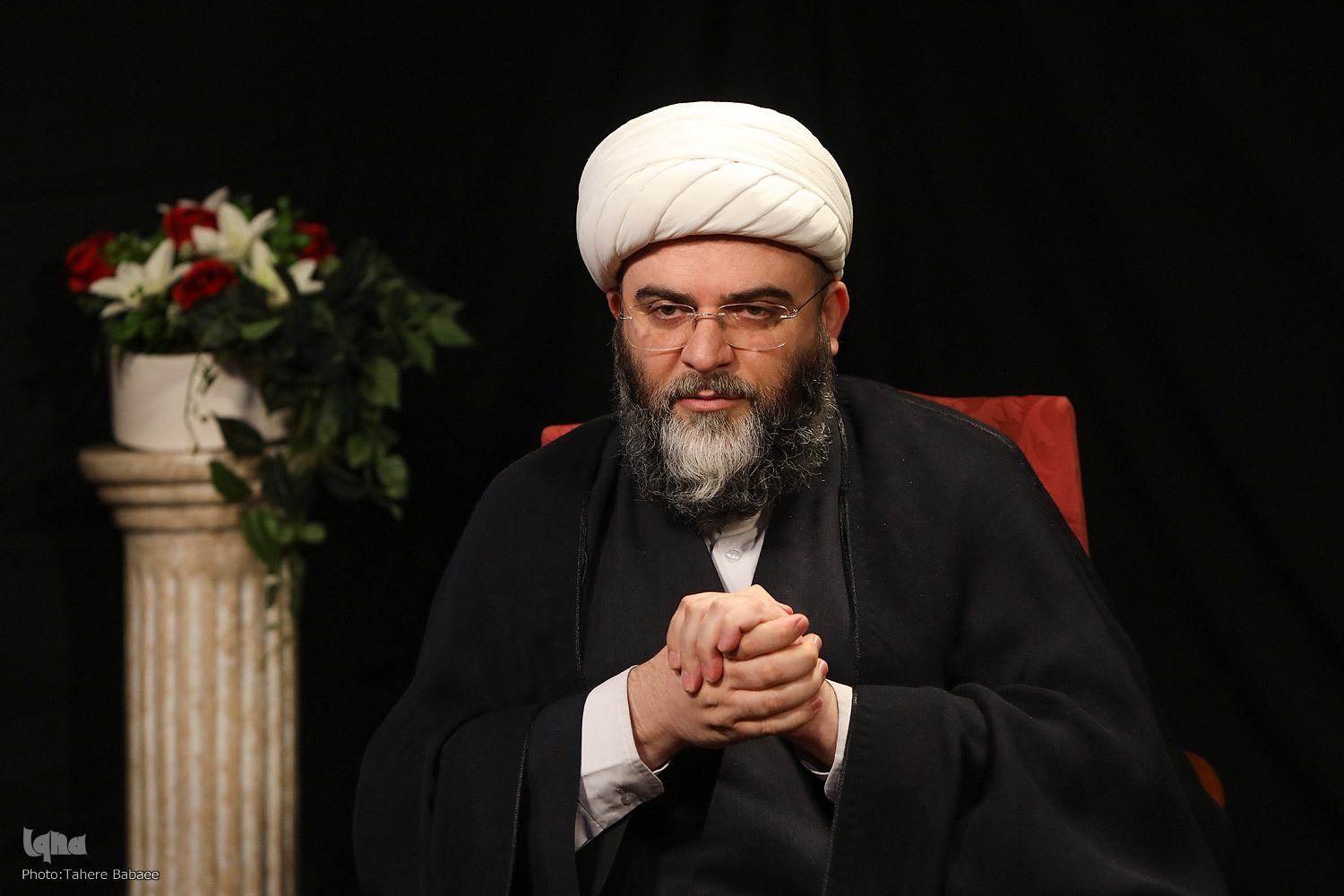
Speaking in an interview with IQNA, Hojat-ol-Islam Muhammad Qomi emphasized that the main concern of the martyred Leader was living with the Quran.
In the intellectual system of the late Leader, recitation, memorization and contemplation of the Quran were not the final goal, but all these components were considered a path to realizing the Quranic lifestyle, he said.
Hojat-ol-Islam Qomi pointed out the different dimensions of the martyred Leader’s Quranic personality and said, “If we want to examine his Quranic personality, we must see it in several layers. The first layer is the area known as the Quranic community; that is, the area of Quran reciters, memorizers, teachers and activists. In this area, the martyred Leader was not just a supporter or audience, but, according to the admission of many Quran activists and specialists, he himself was an expert and familiar with the technical and specialized subtleties of this area.”
The most important reason for calling him a “Quranic leader” is that his intellectual system, analysis of issues and decision-making were fundamentally based on the Holy Quran, he stated.
The cleric added that the late Leader’s mastery of specialized topics of recitation, reading, and memorization of the Quran caused his conversations with reciters and memorizers to be not merely encouraging, but to contain precise technical and expert points, and this has been emphasized many times by prominent Quranic scholars.
The head of the Islamic Development Organization added, “The Quranic personality of the martyred Leader was not limited to this level. He was also a master in a wide range of topics related to the Quran, including interpretation, contemplation, Quranic knowledge, Quranic writing, Quranic arts, and other areas related to Quranic culture, and it is rare to find a personality who has such comprehensiveness in various Quranic fields.”
Emphasizing that the deepest layer of the martyred Leader’s Quranic personality was manifested in the realm of governance, he stated, “In my opinion, and based on what he himself had stated many times, the most important reason for calling him a ‘Quranic leader’ is that his intellectual system, analysis of issues, and decision-making were fundamentally formed on the basis of the Quran.”
Read More:
This same characteristic made his governance also a Quranic governance, Hojat-ol-Islam Qomi went on to say. “He repeatedly used the expression ‘Quranic mind"; meaning a manager
He also referred to the most important Quranic demand of the martyred Leader. “If I were to summarize all his concerns in one sentence, I would have to say that his main concern was living with the Quran. All of his emphasis on recitation, memorization, contemplation, education, and expansion of Quranic activities were, in fact, a prelude to realizing the goal of people incorporating the Quran into their lives.”
The head of the Islamic Development Organization continued, “He emphasized memorization of the Quran, because memorization provides the basis for intimacy with the Quran. He emphasized correct recitation, because correct recitation creates a deeper connection with the word of revelation. He emphasized intimacy with the Quran, because intimacy leads a person to understanding and contemplation, and contemplation is the prelude to acting on the Quran and forming a Quranic lifestyle. Therefore, in the intellectual system of the martyred Leader, none of these components was the final goal, but rather they were all considered the path to achieving a Quranic life.”
Referring to one of the most enduring pieces of advice from the martyred Leader, Hojat-ol-Islam Qomi stated, “What remains in my mind most of all is his emphasis on forming a ‘Quranic mind’; That a person, through contemplation on the Quran, reaches a stage where all his analyses, judgments, decisions, behaviors, and even his decision-making methods acquire a Quranic flavor.”
Realizing a society in which the Quran enters the context of people’s lives is the most important way to pay homage to the martyred Leader, and all Quranic activists must feel responsible in this direction, he emphasized.
“If such a view is formed in society, the Quran will transform from a holy book that is recited only on occasions to a permanent guide for individual and social life, and this is what the martyred Leader was looking for.”
In another part of this interview, Hojat-ol-Islam Qomi mentioned the mission of the country’s Quranic community after Ayatollah Khamenei’s martyrdom and said, “Today, the Quranic society’s duty is not only to hold gatherings and competitions, but they must follow the same roadmap that the martyred Leader has drawn and fulfill his strategic demands in the field of Quranic culture.”
4362502
