


True Islamic Mysticism Manifetsted in Martyred Leader’s Life
IQNA – Martyred Leader of the Islamic Revolution Ayatollah Seyed Ali Khamenei devoted an entire lifetime to self-purification, spiritual wayfaring, striving in the path of God, and serving His creation.
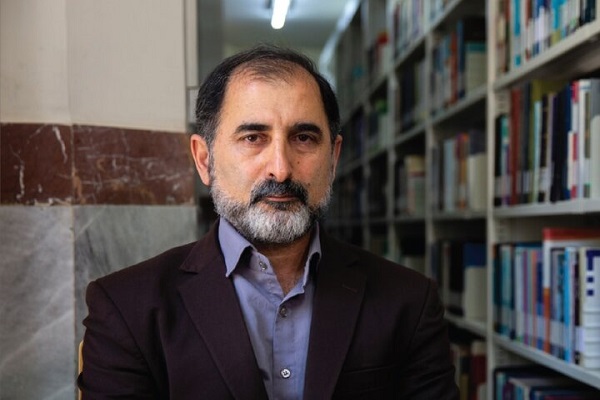
This is according to Iranian scholar Professor Mohammad Fanaei Eshkevari, who, in an article, elabortaed on the martyred Leader’s mystical thought and spiritual wayfaring.
The article is as follows:
The Main Features of Ayatollah Khamenei's Mystical Thought and Spiritual Wayfaring
Mohammad Fanaei Eshkevari
1 The Mystical Thought of the Martyred Imam
According to Ayatollah Khamenei, authentic Islamic mysticism (ʿirfān) constitutes the inner reality and profound essence of religion rather than an independent school possessing principles and teachings distinct from those of Islam itself. This form of mysticism is fundamentally centered upon tawḥīd (Divine Unity), which encompasses broad epistemic, affective, and practical dimensions.
At the epistemic level, tawḥīd is understood as it is presented in the Qur'an and the traditions of the Prophet and the Imams, and subsequently elaborated in the Islamic disciplines of theology (kalām), philosophy (ḥikmah), and mysticism (ʿirfān). As the antithesis of shirk (associating partners with God), tawḥīd comprises ontological, essential, attributive, providential, and devotional dimensions. In its affective and spiritual aspect, it entails love of and attachment to God, constant remembrance of Him, fear and reverential awe before Him, trust in Him, complete submission to His will, and contentment with His decree. Practically, tawḥīd requires servitude and worship of God alone, obedience to His commands, rejection of satanic and tyrannical powers (ṭawāghīt), and active struggle against them.
Among the social implications of tawḥīd is the establishment of divine government—a political order founded upon God's revealed legislative will, whose most salient characteristic is the realization of justice as its governing principle.
The mission of the prophets is to summon humanity to tawḥīd, to strive for the establishment of divine government in order to uphold justice (qisṭ), and to prepare the conditions necessary for the material and spiritual perfection and well-being of humankind. The institution of the Imamate constitutes the continuation of prophethood, and the Imam bears responsibility for both the spiritual guidance and the political and social leadership of the Muslim community. Accordingly, the infallible Imams devoted their lives to teaching religion, providing spiritual guidance, and engaging in political struggle against oppression. During the Occultation, this mission falls upon the scholars of religion. Thus, Islam is not merely a religion concerned with humanity's guidance and ultimate salvation in the Hereafter; it is also a comprehensive social religion that offers a coherent program for human liberation, the establishment of justice, and the realization of both worldly and spiritual felicity.
The supreme exemplar and model of authentic Islamic mysticism are the Prophet Muḥammad (peace be upon him and his family) and the Imams of the Prophet's Household. Genuine mystical wayfaring consists in following the Prophet and infallible Imams and emulating them both in belief and in practice. What is essential in Islamic mysticism is spiritual discipline (sayr wa sulūk) and mystical self-cultivation grounded in Islamic teachings and modeled upon the lives of the infallible guides. Likewise, the guidance offered by religious scholars and authentic mystics, who themselves are disciples of the school of the Imams, plays a decisive role in spiritual education.
Theoretical mysticism (al-ʿirfān al-naẓarī), as an intellectual discipline and a field of philosophical reflection, may indeed be beneficial. Nevertheless, spiritual wayfaring is not substantially dependent upon theoretical mysticism, and engagement with its doctrines alone cannot lead one to genuine mystical realization. Conversely, attaining the highest stages of spiritual perfection is not contingent upon formal study of theoretical mystical doctrines.
Many profound and subtle mystical insights are reflected in the poetry of great mystical poets such as Rumi and Hafez. As Rumi himself declares, the Mathnawī is "the principles of the principles of the principles of religion." Familiarity with this literary heritage and its promotion can serve, in a subtle yet effective manner, to foster and expand spirituality within society.
Institutional or sectarian Sufism does not, in itself, represent authentic Islamic mysticism, and certain beliefs and practices found among some Sufi orders diverge from Islamic teachings. In particular, those Sufi groups that claim adherence to Shiʿism while espousing controversial doctrines and establishing alternative forms of religious authority in opposition to the recognized religious leadership are pursuing a misguided path. At the same time, however, the Sufi ṭuruq (spiritual orders) that exist throughout the Islamic world constitute a positive religious and cultural current deserving of support. Three characteristics of these orders are especially noteworthy: their emphasis on the spiritual dimension of Islam, their devotion to the Prophet's Household (Ahl al-Bayt), and their opposition to rigid Salafi extremism. Indeed, it was largely through these spiritual orders that Islam spread to many regions of the world, including Africa and East Asia, winning the hearts of countless seekers of truth.
The so-called "new spiritualities" or pseudo-mystical movements bear no genuine relationship to authentic mysticism and bring nothing but danger and harm. It is therefore necessary to confront the spread of such rootless and deceptive movements through prudent, intelligent, and well-considered strategies.
In the contemporary era, the Najaf school of Islamic mysticism, together with its eminent masters—including Mullā Ḥusayn-Qulī Hamadānī, Shaykh Murtaḍā Keshmīrī, Sayyid ʿAlī Qāḍī, and ʿAllāmah Ṭabāṭabāʾī—provides authoritative guidance for authentic spiritual wayfaring. Their writings, teachings, and especially their spiritual letters and ethical instructions constitute invaluable resources for mystical training and spiritual development.
The ideal form of Islamic mysticism integrates knowledge and insight, spiritual wayfaring and self-purification, struggle in the path of God, and active political and social engagement aimed at reforming individuals, transforming society, and establishing justice and equity. One shortcoming observable in the legacy of some of the great Muslim mystics has been their insufficient attention to Islam's social dimension. Consequently, greater emphasis must be placed on the social implications of mysticism, liberating it from confinement within the sphere of private spiritual retreat and bringing it into the arena of social engagement and transformative revolutionary action.
2 The Mystical Wayfaring of the Martyred Imam
For a religious scholar and mystic to enter the sphere of transformative social engagement, profound mastery of Islamic teachings alone is insufficient. Such a person must also possess a thorough understanding of the intellectual and cultural currents of his own age, together with its challenges and practical demands, and be equipped with broad knowledge in these fields.
The Martyred Imam himself stands as an outstanding exemplar of the Shiʿi scholar-mystic. In both his character and his life, he united learning and insight, asceticism and spiritual purity, as well as struggle and steadfast jihad. These qualities were evident in him from his earliest youth. This vision is clearly reflected in his work The General Framework of Islamic Thought in the Qur'an, based on lectures delivered in the early 1970s.
His asceticism (zuhd), piety, and detachment from worldly attractions characterized his life from his earliest years as a seminarian until the period of his leadership. These qualities were manifest in his remarkably simple lifestyle, entirely free from ostentation and luxury. It is related that when one of his close friends, Mr. Rabbānī Amlashī, visited Mashhad and stayed in his home for several days, he assumed that the family had moved most of their household furnishings elsewhere. When he learned that the modest furnishings before him constituted the entirety of their possessions, he expressed genuine astonishment.
Alongside his scholarly and political endeavors, the Imam consistently devoted himself to spiritual wayfaring (sayr wa sulūk) and self-purification. He maintained close relationships with distinguished spiritual masters, including Grand Ayatollah Imam Khomeini, Ayatollah Bahjat, and Ayatollah Bahāʾ al-Dīnī, benefiting from their spiritual guidance and sanctifying influence. When he was arrested by SAVAK in Zahedan, the only book he carried besides the Qur'an was Tadhkirat al-Muttaqīn ("A Reminder for the Godwary"), a work containing spiritual instructions and mystical letters by the masters of the Najaf school of Islamic mysticism. This fact itself illustrates the central place that spiritual discipline occupied in his life.
According to the testimony of eyewitnesses, fellow prisoners, and his own memoirs, he spent the days and nights of his imprisonment under SAVAK in worship and Qur'anic recitation. As he himself recalls:
"During the nights of Ramadan [while imprisoned by SAVAK], I found ample opportunity for Qur'anic recitation, supplication, and remembrance of God. I vividly remember that on the night of ʿĪd al-Fiṭr I performed the supererogatory prayer known as the 'One Thousand Qul Huwa Allāhu Aḥad,' in which Sūrat al-Ikhlāṣ is recited one thousand times after Sūrat al-Fātiḥah in the first rakʿah... During my fifth imprisonment, there were opportunities that proved immensely beneficial for self-discipline, turning one's attention toward God, and contemplating the Qur'anic verses and their exalted meanings."
Reliable historical records likewise attest to his tireless resistance and unyielding struggle throughout his repeated arrests, imprisonments, and the severe torture he endured under the Pahlavi regime. In his memoirs, he recounts:
"While I was being flogged, one of the SAVAK interrogators stood over me and demanded that I renounce a certain individual or the Islamic Movement. I refused, and they continued beating me until I lost consciousness."
At times, psychological torture proved even more agonizing than physical abuse. He writes:
"During this imprisonment, I witnessed the torture of several of my closest students. Among them was Sayyid ʿAbbās Mūsavī Qūchānī, who was later martyred during the Iran-Iraq War. Whenever he returned from the torture chamber, he would groan in such agony that it tore one's heart apart. He was subjected to an unprecedented and savage form of torture. One day they took him away, tortured him, and brought him back. An hour later they repeated the ordeal. Then, as soon as bedtime arrived, they summoned him once again for further torture, and even in the middle of the night they would take him back to the torture chamber. Day and night I heard his cries and lamentations, and every cry pierced my heart with anguish. The brutality inflicted upon him was a horrifying display of inhumanity unlike anything I had ever witnessed."
During interrogation, he repeatedly declared with remarkable courage to the SAVAK interrogators that their torture and intimidation were futile, that he had no fear of death, and that he stood ready to embrace martyrdom. Recalling his arrest in Zahedan, he writes:
"I said to him [the police colonel]: 'I had previously been arrested in Birjand and taken before the chief of police. I shall repeat to you what I told him. I said: You are carrying out your assigned duty, and so am I. I am obligated to fulfill my religious mission, and you may likewise carry out the duty entrusted to you. There is nothing you can do to me beyond killing me, and I have already prepared myself for death. So, what is it that you seek to frighten me with?'"
Could an unprotected young man, held captive by a powerful and ruthless enemy, have displayed such steadfastness without profound religious knowledge, the attainment of certainty (yaqīn), love of God, spiritual self-discipline, and complete detachment from worldly attachments? There is little doubt that, had the victory of the Islamic Revolution been delayed, SAVAK would ultimately have been unable to tolerate such a fearless revolutionary and indomitable spirit, and he would most likely have attained martyrdom under torture. Indeed, even after the Revolution, his continued existence remained intolerable to his enemies, who repeatedly sought to eliminate him and ultimately led him to the threshold of martyrdom.
This is the true meaning of Islamic mysticism and spiritual struggle (mujāhadah). By contrast, remaining in the comfort and security of one's home, reclining in ease while engaging in devotional litanies and supererogatory acts of worship, is by no means a difficult undertaking.
Imam Khamenei devoted an entire lifetime to self-purification, spiritual wayfaring (sayr wa sulūk), striving in the path of God, and serving His creation. In the end, by drinking the cup of martyrdom together with members of his family at the hands of the most wretched of his age, he attained the supreme aspiration he had cherished throughout his life—the magnificent triumph of martyrdom.
Blessed is he—indeed, blessed is he.
