


French Politicians Accused of Weaponizing Secularism to Target Muslims
IQNA – French conservative senators have drawn sharp criticism from Muslim community leaders after proposing a new report that recommends measures including banning headscarves for mothers on school trips and prohibiting fasting for minors—steps critics decry as a discriminatory use of laïcité, the country's secular principle.
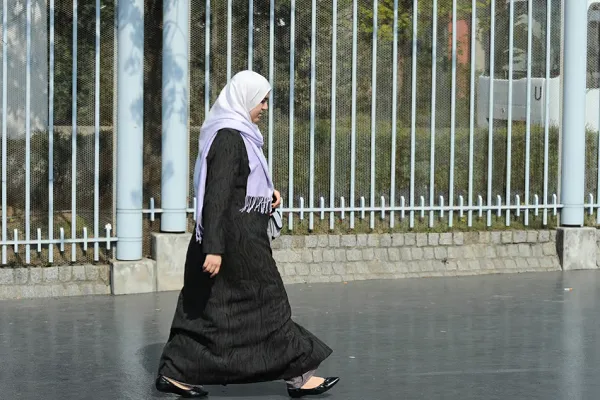
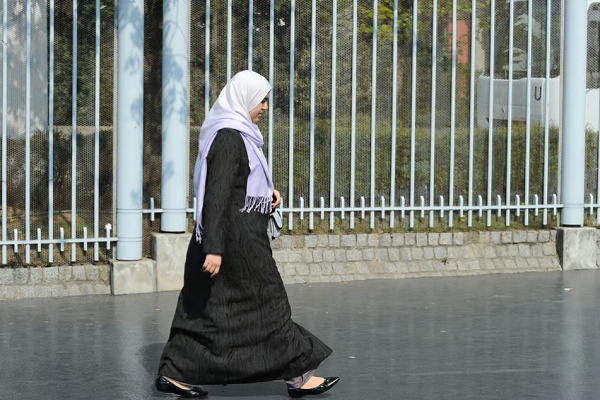
When conservative members of the French Senate published the report on combating “Islamism” in late November, their proposed solutions came as all too familiar reading for representatives of France’s large and diverse Muslim community.
The 17 measures put forward by senators from the right-wing Les Républicains (LR) party ranged from a ban on headscarves for mothers accompanying school trips to the prohibition of Ramadan fasting for youths aged under 16. The report also called for a blanket ban on hijabs in sports, including at the amateur level, in the name of France’s cherished principle of laïcité, loosely translated as state secularism.
Such measures were necessary to combat the “veiling of young girls”, the senators argued, describing Muslim headscarves as “banners for sexual apartheid”.
For critics, however, the report smacked of a growing tendency to target not “Islamism”, but rather Muslims as a whole – an estimated five million people in a country with a total population of over 68 million. It also violated the very laïcité it professed to defend, by curtailing the freedom of worship enshrined in legislation passed 120 years ago today.
A day after the report’s release, Muslim religious leaders, community representatives and grassroots activists wrote an open letter to Senate President Gérard Larcher, a member of Les Républicains, expressing their “weariness” at the repeated “stigmatization” of France’s Muslims.
“This umpteenth report is part of a pattern that has become sadly familiar to millions of French Muslim citizens, that of the systematic political exploitation of their religious practices,” the signatories wrote.
Weaponizing laïcité
The authors of the Senate proposals argue that such measures are necessary to combat the influence of what they call “radical Islamism”.
On November 24, Les Républicains’ top lawmaker in the lower-house National Assembly, Laurent Wauquiez, tabled a draft bill calling for a blanket ban on headscarves for women under 18.
Like many of the proposals put forward by his Senate colleagues, Wauquiez’s bill appears to contradict Article 1 of the hallowed 1905 law on secularism, which guarantees citizens’ “freedom of conscience” and “free exercise of religion, limited only by […] the interest of public order”.
Read More:
The proposals by Les Républicains lawmakers “target only one faith, one category of French citizens, and do not apply the same rules to other faiths. This is a clear case of unequal treatment that violates the principle of equality,” says Nicolas Cadène, a former senior member of the now-defunct Observatoire de la laïcité, a body tasked with advising the government on how to uphold the principles of state secularism.
Cadène argues that such measures follow an increasingly common pattern of politicians weaponizing the principle of laïcité as a “tool to curtail the rights of Muslims”.
‘Combative secularism’
Marine Le Pen's far-right, anti-immigrant National Rally party – whose ideological predecessors once opposed laïcité as an anti-clerical conspiracy – has long used France’s secular rules to target Muslims, often conflating Islam and immigration. So has her rival Eric Zemmour, a former TV pundit and presidential candidate who argues that Muslims must choose between Islam and France, ignoring the overwhelming majority of French Muslims who cherish the country’s laws and values.
Progressives on the left and center of the political spectrum are also torn between rival understandings of French secularism, which disagree on how far the state should go in asserting religious neutrality in the public sphere. Divisions came to a head in the wake of the Charlie Hebdo and November 13 terrorist attacks in 2015, which fueled calls for a more “combative secularism” in the face of a murderous ideology that repeatedly shed blood on French soil.
“It was a time of great confusion, with many politicians exploiting legitimate fears of … terrorism to justify measures that curtailed the freedoms of part of the population,” says Cadène, a frequent target of advocates of this laïcité de combat, who were especially influential during President Emmanuel Macron’s first term in office (2017-2022).
Read More:
Macron’s former education minister Jean-Michel Blanquer declared in 2019 that “the veil is not desirable in our society”, and frequently railed against what he described as the “devastating effects” of “Islamo-leftism” in universities – a notion vehemently rejected at the time by the overwhelming majority of academics. His successor Gabriel Attal would later ban pupils from wearing abayas, long-sleeved dresses of Middle Eastern origin, in state schools.
In 2021, then interior minister Gérald Darmanin secured passage of a bill on combating “separatism” in the French Republic, which rights groups warned would stigmatize minorities and Muslims in particular. It notably allowed the government to exert greater control over charities and NGOs.
The same year, the government scrapped Cadène’s Observatoire de la laïcité, which critics accused of “disarming” laïcité with its liberal, by-the-books take on France's secular rules.
Surveys have shown that the French public itself has only a partial understanding of laïcité – though a large majority believe it is under threat. This sketchy understanding of what is meant to be a cornerstone of French law and the idea of vivre ensemble (national cohesion) has left plenty of room for rival interpretations to thrive and collide, leading to vitriolic debates – and sometimes public embarrassment.
In 2019, a Catholic nun was mistakenly told she could only stay at a retirement home in the town of Vesoul if she stopped wearing religious clothing, prompting the local mayor to apologize. It came days after a politician in nearby Dijon asked a Muslim mother on a school trip to remove her hijab, igniting a fierce debate. There was more turmoil in 2020 when several French lawmakers walked out of the National Assembly in protest at the presence of a student union representative who wore a hijab.
In none of these cases had France’s secular rules – which require the neutrality of civil servants, teachers and pupils in state schools, but not of the general public – been infringed upon.
Cadène – who ran, unsuccessfully, as a left-wing candidate in parliamentary elections last year – says years of debating Islam in France have led to a “great confusion” over secularism laws and shifted public discourse towards a stricter understanding of laïcité. He warns that proposals targeting Muslims are both discriminatory and “counterproductive”, aiding the very radicalism they profess to combat.
“Radical indoctrinators feed off this rhetoric, which provides them with arguments to back their claims that Muslims are discriminated against,” he says, adding that measures specifically targeting Muslims “only accentuate their withdrawal from a public space they feel excluded from”.
Read More:
Interior Minister Laurent Nunez has voiced similar concern about Wauquiez’s proposed ban on minors wearing headscarves in public, describing the bill as “very stigmatizing towards our Muslim compatriots who may feel hurt”.
But his view is not shared by all cabinet members, with Gender Equality Minister Aurore Bergé, whose portfolio includes the fight against discrimination, notably speaking in favor of a ban on minors wearing hijabs in public.
Source: france24.com
