

Hazrat Zahra Perfect Embodiment of Virtues: Christian Author


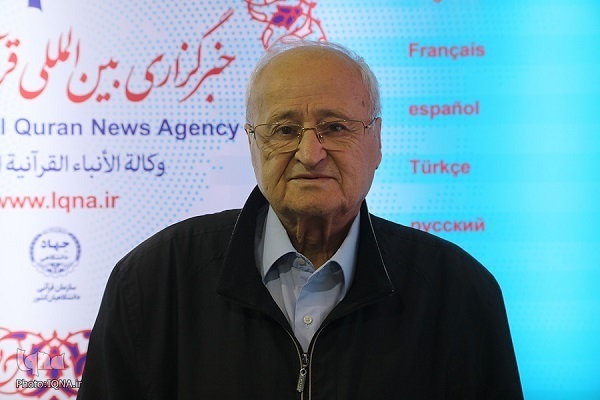
Michel Kaadi, a Lebanese Christian thinker, writer, and writer, in a part of his book titled “Zahra, the Leader of Women of Literature”, writes:
With the birth of Zahra (SA), patriarchy and the burying of girls alive ended. Zahra’s uprising to achieve women’s liberation from tyranny led to women’s freedom. Arab women recognized noble qualities, patience, courage, bravery, knowledge, piety, virtue, and high morals from Zahra. That saint was able to place women in positions of power equal to men.
With her noble feminine personality, Hazrat Zahra (SA) did not accept oppression and humiliation, and instead of oppression, she accepted responsibility and the heavy burden of the divine mission and the laws of Islam, and crystallized the pillar of faith and dignity of women.
She was the one with whom the angels of divine mercy came to earth to speak; for this reason, she is called Umm Abiha, meaning the mother of the Prophet (PBUH), before she was the mother of the stars of the Imamate. Just as the Prophet's lineage began with her, and she was the field of defense of the religion of Islam and the politics of truth.
Therefore, it was no coincidence that the Prophet (PBUH) called Fatima Umm Abiha, meaning the mother of her father. And these verses from the Holy Quran distance the Prophet (PBUH) from any kind of random speech:
“your companion is not in error nor has he gone astray. He does not speak out of his own desires. It is a revelations which has been revealed to him.” (Verses 2-4 of Surah An-Najm)
In this context, Zahra is a role model for women and men and the first female guide and teacher, just as we considered her the first female writer and speaker.
Hazrat Zahra (SA) taught women to defend their chastity and honor and prevented them from falling into the lusts of vulgarity and self-adornment that would lead to their moral collapse and decline, because these vile traits are not characteristic of Arab women. Zahra (SA) considered the hijab as a sword against rebellion and evil.
Read More:
In the eyes of the Holy Prophet (PBUH), the hijab gives women independence and inner dignity, and perhaps this is what drives nuns in Christian monasteries to cover their hair. The hijab means chastity, protection and adherence to moral principles, purity and guidance.
It is not surprising to say that today, thanks to the position and greatness of Hazrat Zahra (SA), the Muslim woman is a pioneer of morality throughout the world.
When the prophetic mission descended upon the Great Prophet (PBUH), its manifestation was also seen in believing men and women; among the men, we can mention Imam Ali Abi Talib (AS), who carried the Quran with him in his heart, soul, and intellect, and among the women, we can mention Fatima Zahra (SA).
With Ali (AS), the power of understanding and comprehension was perfected by the power of God, and with Zahra (SA), this mission reached the highest level, to the extent that we can say that she is undoubtedly a miracle.
If Imam Ali (AS) is the miracle of the Prophet (PBUH), the light of Islam, and the teacher of the Holy Quran, and he memorized it and believed in it, then Hazrat Zahra (SA) is the best witness to this. Jabir bin Abdullah Ansari refers to this in a divine hadith: “O Ahmad, if it were not for Ali, I would not have created you, and if it were not for Fatima, I would not have created the two of you…”
Zahra (SA), with her great virtues that she never separated from for a moment during her life, faces this nation, because she is the mother of her father, the Messenger of God, and it is not surprising because she is from the family of Prophet Muhammad (PBUH) whose position is to reform society from ignorance and tribalism.
Fatima, that chaste lady, was a friend and companion of her father since childhood. Her views were close to the Prophet’s views and in times of hardship, when the Prophet was exposed to the harassment of haters and enemies of the mission, she was his companion and comforter. On many occasions, she wiped the sweat from the Prophet’s forehead with her fingers and was steadfast in her positions, and as long as she had life in her body, she defended the divine light and the affairs of this nation and the future of Muslims and Islam.
Read More:
All of this points to the greatness of Fatima Zahra (SA), just as the Holy Quran refers to Maryam (SA), daughter of Imran, while she was in her mother’s womb, about two thousand years ago. The verses mentioned in the Quran about Maryam (SA), their interpretation and essence also apply to Zahra (SA), as a result of which people have considered her a measure of honorable qualities and noble virtues.
4321865
