


Quranic Knowledge-Based Technologies’ Potential on Display at Quran Expo
IQNA – The director of the AI and Quranic Knowledge-Based Technology Section of the 33rd Tehran International Quran Exhibition highlighted the limited but strategic presence of knowledge-based companies in the expo.
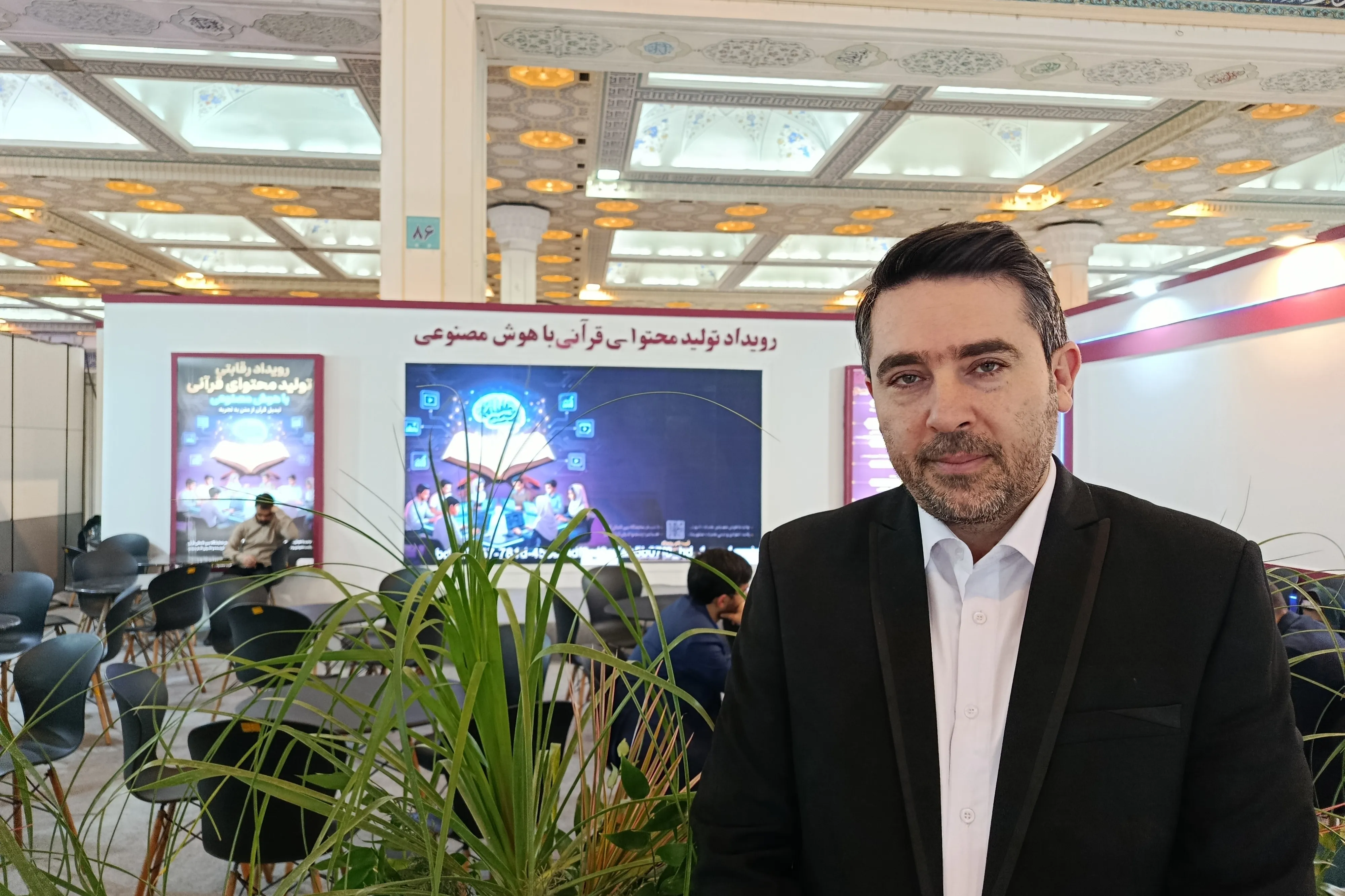
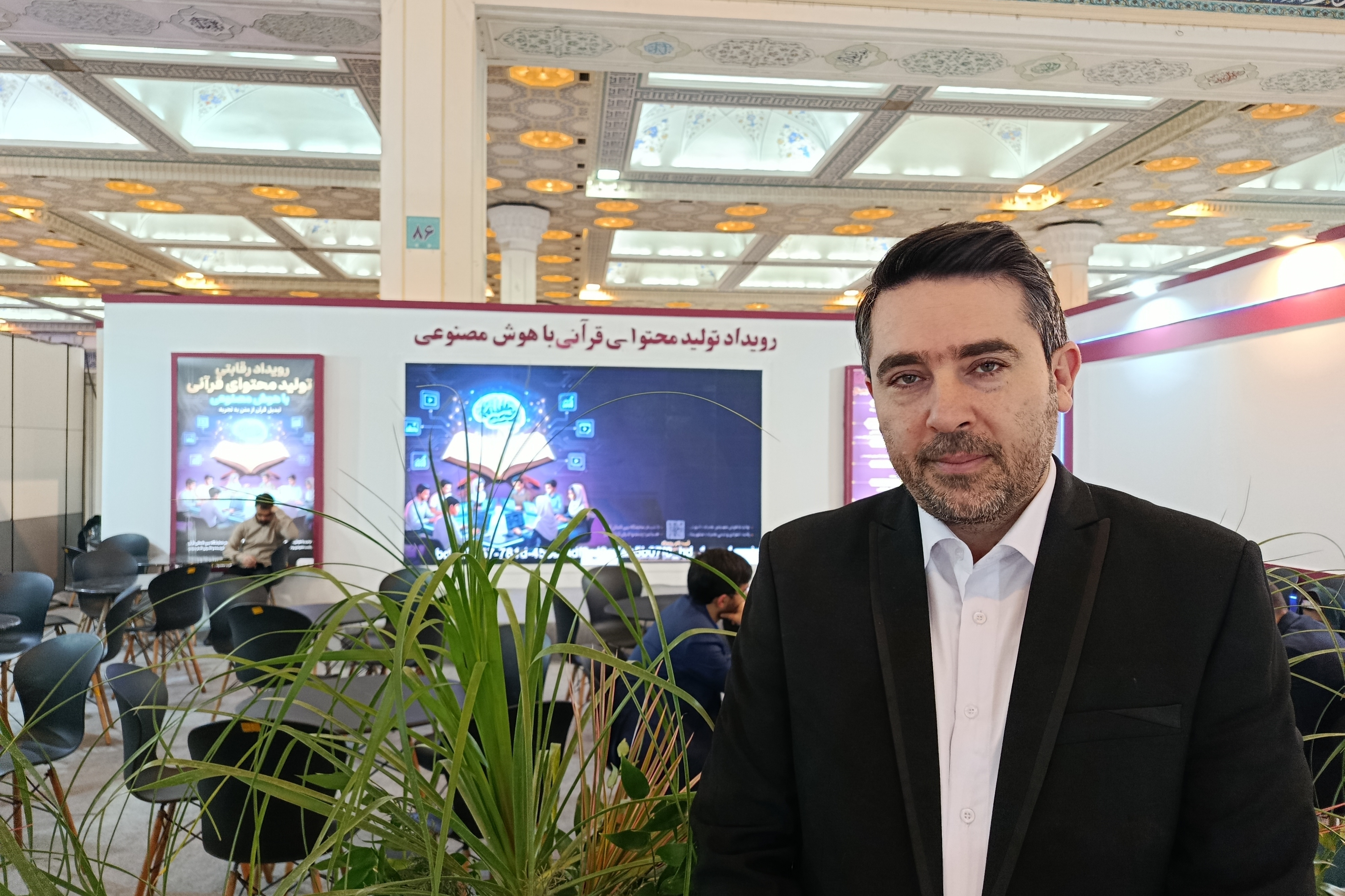
In an interview with IQNA, Seyed Yasser Sajedi announced the unveiling of Quranic chatbots, holding an AI-based content production competition, and interdisciplinary specialized meetings in this section.
“In recent years, the Quranic knowledge-based ecosystem in Iran has been formed and has reached a significant capacity. Our effort during this edition of the exhibition is to make these capacities tangible and present them to the public and introduce Quranic knowledge-based products and services.”
Referring to the limited number of Quranic knowledge-based companies, he added, “Out of the four to five thousand Quranic institutions active in the country, less than 20 companies have succeeded in obtaining the title of knowledge-based through the Ministry of Science and Technology. Of course, not all of these companies were able to attend the exhibition for various reasons, especially economic issues; but every company that announced its readiness was provided with the conditions to attend.”
Sajedi stated that efforts have also been made to introduce the innovative products of the companies not attending the expo in various ways.
Regarding the programs in the field of artificial intelligence, he said, “This year, we tried to create something different in the field of artificial intelligence; However, the capacities of this field in the area of Quran and Etrat far exceed our current capabilities.”
He added that artificial intelligence activities in this area are pursued in two directions. “First, the production of artificial intelligence products to provide services in the field of Quran, such as specialized Quranic chatbots that some groups have designed and that provide the ability to intelligently answer Quranic questions. This field oversees the design of practical tools based on artificial intelligence.”
Sajedi considered the second direction to be the use of “generative artificial intelligence” for content production and said that in this regard, a Quranic content production event has been held in which teenagers participate in teams of four to five people every night from 7 p.m. to 11 p.m. “On average, 60 to 70 people participate in this competition in about 15 teams.”
He also said interdisciplinary scientific meetings have also been designed in the research field of artificial intelligence and its relationship with Quranic studies.
In these meetings, topics such as the relationship between artificial intelligence and Quranic research, the use of chatbots in religious studies, and the theoretical and practical dimensions of this technology will be discussed, he noted.
Sajedi concluded by emphasizing, “Our main goal is to show that modern technologies, especially artificial intelligence, can serve the Quran and the teachings of the Ahl-ul-Bayt (AS) and provide a basis for innovation, content production, and the spread of Quranic culture among the young generation.”
The expo will run until March 6 with the slogan “Iran under the Protection of the Quran”.
Read More:
The Tehran International Holy Quran Exhibition is annually held during the holy month of Ramadan by the Iranian Ministry of Culture and Islamic Guidance.
With various programs including specialized sessions, educational workshops, Quranic gatherings, and activities tailored for children and teenagers, the international event aims to promote Quranic concepts and activities.
The exhibition also serves as a platform to showcase the latest Quranic achievements in Iran and a variety of products dedicated to the promotion of the Holy Book.
4336626
