


I.M.A.M.: An Overview of a Major Shi‘i Religious Institution in North America
IQNA – In the city of Dearborn, Michigan, a long-established Shi‘i institution operates with little public attention but significant communal reach.
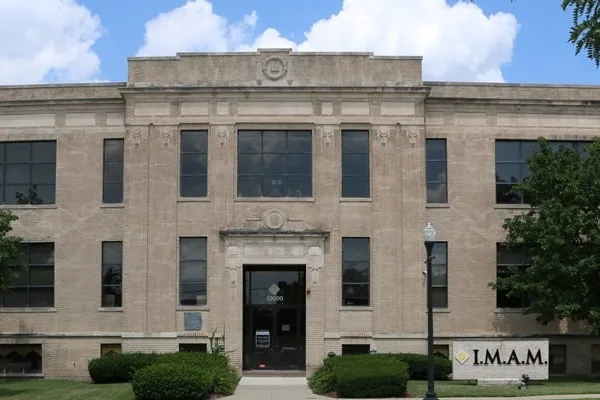

Known as the I.M.A.M. Center, short for Imam Mahdi Association of Marjaeya, the organization serves as the official North American representative office of Grand Ayatollah Sayyid Ali al-Sistani, one of the most widely followed Shi‘i religious authorities in the world.
For more than two decades, the center has functioned as a bridge between the Shi‘i religious authority and communities spread across the United States and Canada.
Its work is largely administrative, educational, and communal. The organization focuses on religious guidance, institutional support, and long-term capacity building within Shi‘i communities living in Western societies.
The center runs under the leadership of Sayyid Mohammad Baqir al-Kashmiri, Representative of Grand Ayatollah Sayyid Ali al-Sistani.
The I.M.A.M. Center is headquartered in Dearborn, a city widely recognized for having one of the largest Muslim populations in the United States.
Within that population, Shi‘a Muslims form a significant section, with deep roots among Arab communities, particularly those of Lebanese and Iraqi origin.
The choice of Dearborn for founders of the center was not incidental. It reflects a deliberate positioning within an existing social fabric. Rather than attempting to create a presence where none existed, the center embedded itself in a city where Shi‘i religious life was already active and visible. This location allows regular interaction with mosques, seminaries, families, and community organizations.
From this base, the center’s activities extend far beyond Michigan. Its reach covers Shi‘i communities across North America, including smaller and geographically dispersed congregations that often lack direct access to senior religious institutions.
Religious and financial services
One of the most visible functions of the I.M.A.M. Center is its role in facilitating religious financial obligations, particularly the payment of khums.
For many Shi‘a Muslims living in the West, fulfilling such obligations can be logistically difficult. Distance from traditional religious centers, uncertainty about proper channels, and concerns over transparency often pose challenges.
Read More:
The center addresses this through an organized digital infrastructure.
It allows believers in the United States, Canada, and other regions to pay khums and religious donations online. Official receipts are issued electronically, creating a clear and documented process.
This system has become one of the primary channels through which Shi‘a Muslims in North America remain practically connected to the marja‘iyya.
Educational engagement: Mufid seminary
A central component of the I.M.A.M. Center’s broader vision is education. This is most clearly expressed through its support for Mufid Seminary, an English-language Shi‘i educational institution based in Virginia, near Washington, D.C.
The seminary represents an effort to cultivate religious scholarship that is fluent in both Islamic tradition and Western academic discourse.
The institution offers structured undergraduate and graduate-level programs. Courses are available both in person and through distance learning.
Faculty members at Mufid typically combine seminary training with advanced university degrees. This dual background allows them to engage students who navigate multiple intellectual worlds.
The curriculum is designed to provide rigorous grounding in Shi‘i theology, law, and ethics, while also equipping students to operate within Western social and academic contexts.
Publishing and knowledge production
The I.M.A.M. Center is also active in publishing. Its own publications are primarily short, accessible booklets in English.
These materials introduce core Shi‘i beliefs, religious practices, and historical figures such as Imam Hussein (AS). The format is concise and practical, aimed at readers with limited prior exposure to Shi‘i Islam.
These publications serve multiple audiences. They are used by Shi‘i communities for outreach and education. They also address non-Muslim readers seeking introductory material presented in clear language.
Alongside this work, Mufid-affiliated publishing efforts focus on translating classical Shi‘i texts into English.
Works associated with early scholars such as Shaykh al-Mufid and Shaykh al-Saduq are rendered accessible to students and researchers who do not read Arabic or Persian.
Academic presence and the AAR conference
One of the most notable aspects of the I.M.A.M. Center’s public engagement is its sustained presence at the annual conference of the American Academy of Religion (AAR).
Over three consecutive years, the center has maintained a booth at the conference’s large academic book exhibition.
The AAR annual meeting is the largest gathering of religious studies scholars in the world. It attracts thousands of researchers and features leading academic publishers from major universities.
During these events, the I.M.A.M. Center’s booth has stood alongside well-known university presses. Notably, it has been the only Islamic, and not merely Shi‘i, presence in the exhibition hall. This positioning has allowed for direct engagement with scholars who shape the study of religion worldwide.
This year’s event was held in late November.
Community outreach and field engagement
Beyond institutional and academic work, the I.M.A.M. Center maintains a consistent on-the-ground presence. One of the key responsibilities of its leadership involves visiting Shi‘i communities across North America.
These visits include large urban centers as well as smaller towns where Shi‘i families may be relatively isolated.
Read More:
Such engagement offers moral support and reinforces a sense of belonging within a broader religious network.
The center also plays a role in advising, supporting, or assisting with the establishment of mosques and community centers. These efforts are typically collaborative and supplemented by local community funding.
Religious coordination and the Islamic calendar
The I.M.A.M. Center maintains close ties with the Council of Shia Scholars of North America. This body is responsible for religious coordination on matters such as moon sighting, the Islamic calendar, and major religious observances across the continent.
Official calendars and announcements issued by the council are linked through the I.M.A.M. Center’s website.
This coordination helps reduce fragmentation and provides a shared religious rhythm for communities spread across vast geographic distances.
Digital presence
The center operates an active website that serves as a central information hub. It provides access to religious guidance, donation services, calendars, and institutional updates.
The website is complemented by a YouTube channel that hosts short educational videos focused on religious rulings and ethical topics.
